Small Island Developing States on a Path to Renewable Energy and Resilience: A Story from Maldives
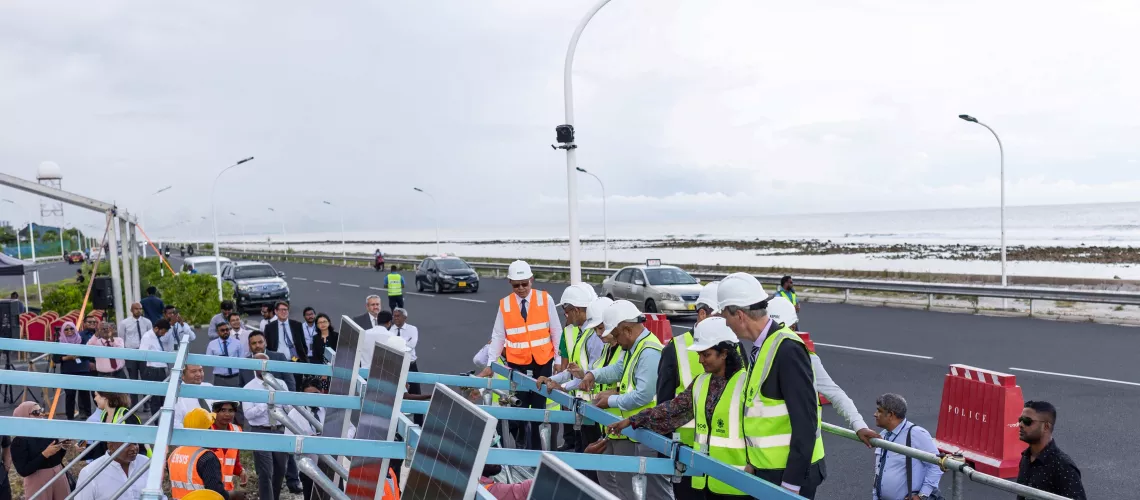
Image Credit: World Bank. Retrieved from blogs.worldbank.org
Small Island Developing States (SIDS), which are home to 65 million people and bastions of biodiversity, face unique challenges. Because they are small, their economies are not diversified and hence particularly vulnerable to external shocks, such as the collapse of tourism during COVID 19 or sky-rocketing energy and food prices in the wake of Russia’s invasion of Ukraine. They are also extremely vulnerable to the rising sea levels and extreme weather brought on by climate change.
Take the Maldives, for example.
Each year, the Maldives spends over 10 percent of its GDP to import diesel to meet its energy needs, and its import bill consequently shot up last year. In 2020, the Maldives GDP contracted by 34 percent as the COVID-19 pandemic shut down its tourism industry- the main driver of economic growth. Much of the country lies just a meter above sea level and on current projections is likely to be fully submerged by rising sea levels by the end of this century.
Many are skeptical that this is possible – but not us at the World Bank Group (WBG). Two WBG supported projects in the Maldives show how with the right financial structure, private investment can become a game changer for scaling up renewable energy, building climate resilience and moving towards decarbonization. With just $12.4 million in World Bank concessional financing, the Accelerating Sustainable Private Investments in Renewable Energy (ASPIRE) and the Accelerating Renewable Energy Integration and Sustainable Energy Project (ARISE) projectsare helping to install a total of 53.5 megawatts of solar panels on the islands and on the open ocean, build 40 MWh of battery storage solutions for the country and upgrade the electricity grid to include cleaner energy sources.