
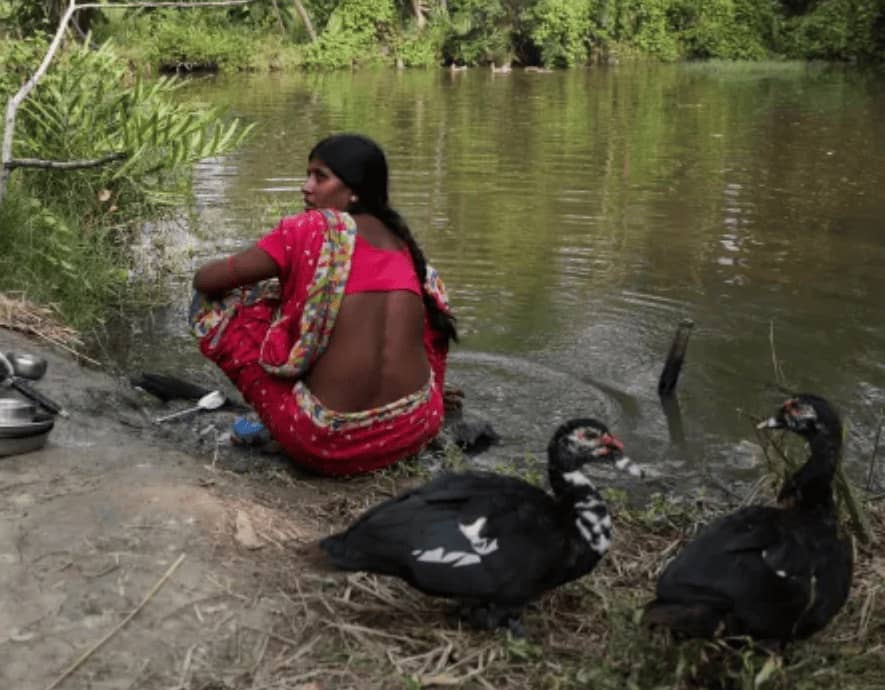
Featured Photo: Anushree Fadnavis/Reuters. Retrieved from aljazeera.com
Panchanan Dolui, who lives on Mousuni Island in the Indian Sundarbans, has shifted homes three times due to floods and river erosion.
Each time, he moves farther from the receding edge of the island to avoid displacement. He has watched the river eat away vast tracts of land. “Where do we go? There is nowhere to go,” he laments.
Located in West Bengal state in eastern India and neighbouring Bangladesh, the Sundarbans forest system is a cluster of low-lying islands and represents the largest mangrove ecosystem in the world. It is home to several endangered species and acts as a natural barrier against cyclones, storm surges and other environmental hazards. The forests are also natural agents of carbon capture and sequestration.
But things are changing fast. Four cyclones that hit the eastern coast of India from 2019 to 2021 – Fani, Amphan, Bulbul and Yaas – point to the increasingly unpredictable weather in the Sundarbans caused by climate change and rising sea levels.
Now, the Sundarbans are increasingly “not safe for human habitation”, says Kalyan Rudra, chairperson of the West Bengal Pollution Control Board.