
Hydrokinetic energy from the waves surrounding Beaver Island could improve electricity reliability and push an emerging technology forward.
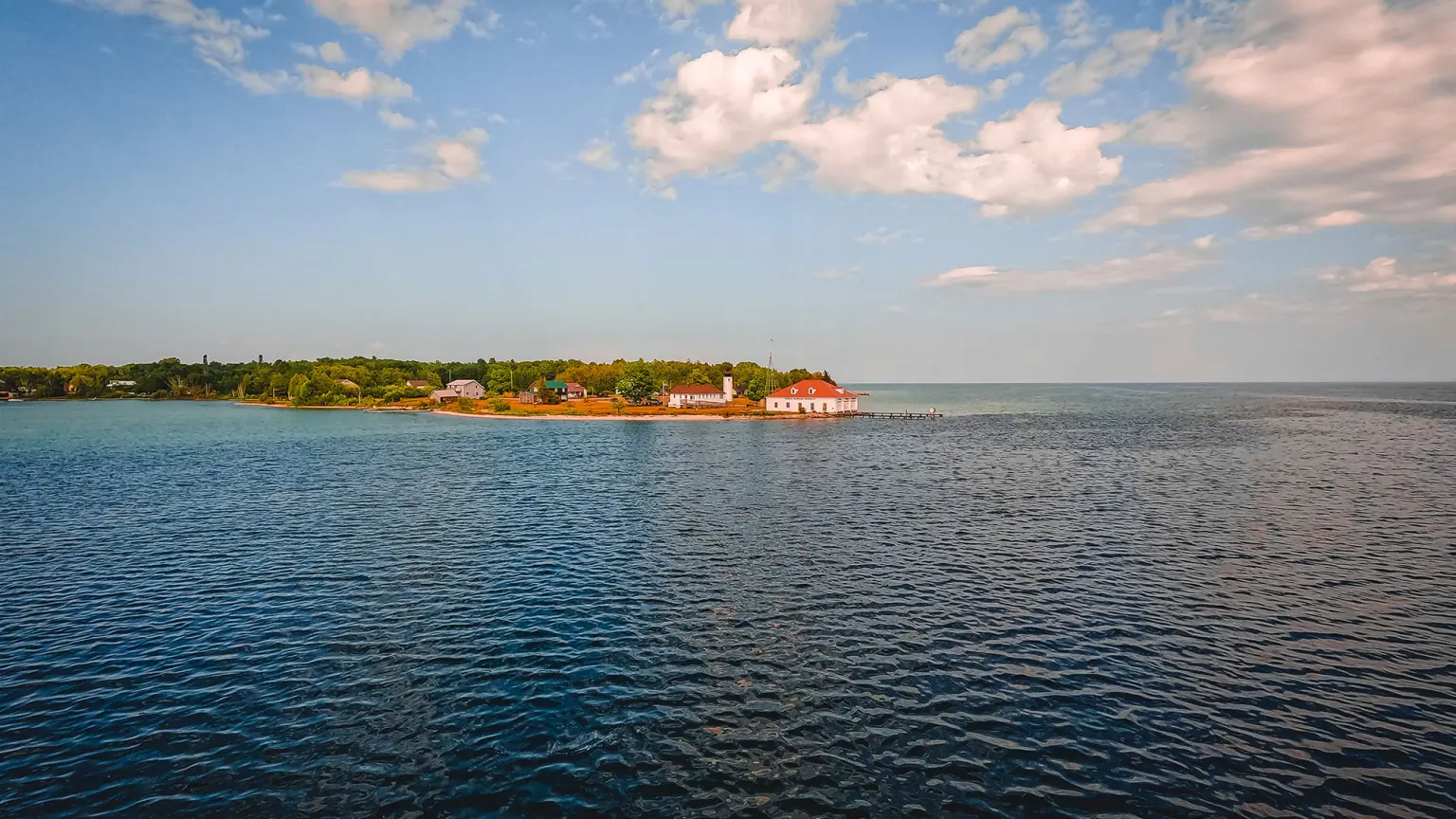
Beaver Island sits in the middle of the northernmost end of Lake Michigan, about 70 miles from the maritime border with Canada. The forested island, just a little bigger than San Francisco in size, is a popular summer destination for tourists and home to about 600 permanent residents. Getting there requires a boat or plane ride.
Getting electricity to the island isn't as easy. Power comes from mainland Michigan through cables that cross roughly 30 miles of lake bed. Outages are common during extreme weather, or when there are problems with the sensitive wires. The devastating ice storm that walloped the state last year knocked out power to the island for weeks.
That's got some residents hoping to see a more reliable source of power that's generated where they live. Turns out, there's an abundant source nearby: the waves that surround the island.
Earlier this month, researchers from the University of Michigan gathered on the shoreline to deploy two devices that convert the kinetic energy of waves into electricity. The gadgets — prototypes that look like small boats framed with PVC pipes and are about the size of a yoga ball — demonstrated their potential by powering a light bulb and charging a cell phone.
The project is one of many efforts across the country to use alternative sources of energy to improve reliability in remote places. In this case, the researchers spent two years gathering input from residents, who said providing a dependable source power to the airport was a priority.
"We need to work with the community together to identify the need and design together with them," said Lei Zuo, an engineering professor at the University of Michigan and the lead researcher on the project.
Several residents already power their homes and businesses with solar panels or geothermal energy, and the island has previously received federal funds to improve access to renewables. Similar programs and grid modernization plans face an uncertain future as the Trump administration cancels grants and programs, raising questions about how such projects will be funded in the years ahead.