
When a renewable energy hero needs to be replaced, how do you maintain its green credentials?
That is the challenge facing the wind farm industry, as turbines across the island begin to reach the end of their useful life.
Thousands of tonnes of wind turbine blade material are expected to require replacement by 2030, leading to the question of what to do with them.
Currently, they largely go to landfill or incineration.
The first ever commercial wind farm on the island of Ireland - Bellacorrick in County Mayo - was decommissioned at the start of the year.
Now, two Northern Ireland companies are working together to make the disposal of its blades as eco-friendly as possible.
From blades to building material
Over the next 15 years, it is estimated that more than 400 turbines in Northern Ireland will need to be replaced.
That means a lot of currently non-recyclable material heading to landfill or incineration.
Scientists from around the world have been working on turning decommissioned blades into other useful products.
Research by Queen's University Belfast (QUB) proved they could be safely used to build bridges and other street furniture.
Other companies are looking at different options.
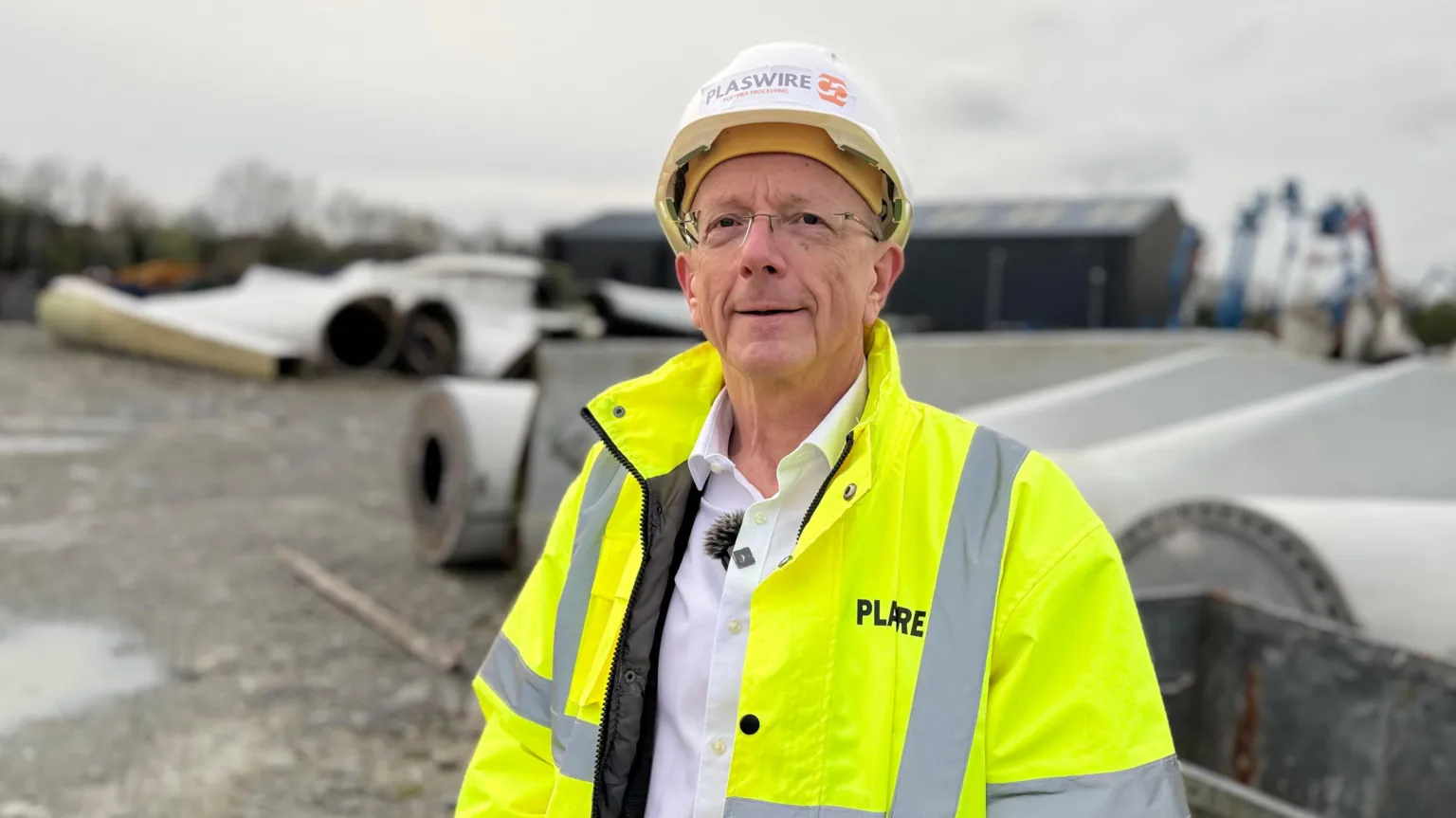
The yard at the Plaswire Ltd site in Lurgan, County Armagh, is covered with wind turbine parts and other kinds of large-scale industrial materials looking for an alternative ending.
Blade waste issue is 'colossal'
The company's Chief Executive Andrew Billingsley said finding a way to take blade waste beyond the end of its useful life is an essential part of creating a green, circular economy.
"The issue today is, I could say, colossal.
"The blades are big - they have been going to landfill and they've been disappearing into quarries and so forth.
"At present, there's somewhere in the region of 125,000 tonnes of blades across the world getting disposed of by one means or another, but very rarely is it done in a sustainable way."
The company turns the blades into a long-lasting reusable material that can be used as an alternative to timber, for fence posts and reusable transport pallets.
Billingsley believes it could even be used an alternative to precast concrete and timber.
"Typically, a tonne of virgin plastic needs about three tonnes of CO2 in the manufacturing.
"We're preventing the incineration of plastics, and burning plastics produces between 2.7 and 2.9 tonnes of CO2 for every tonne burned."
But proving those green credentials is another matter.