
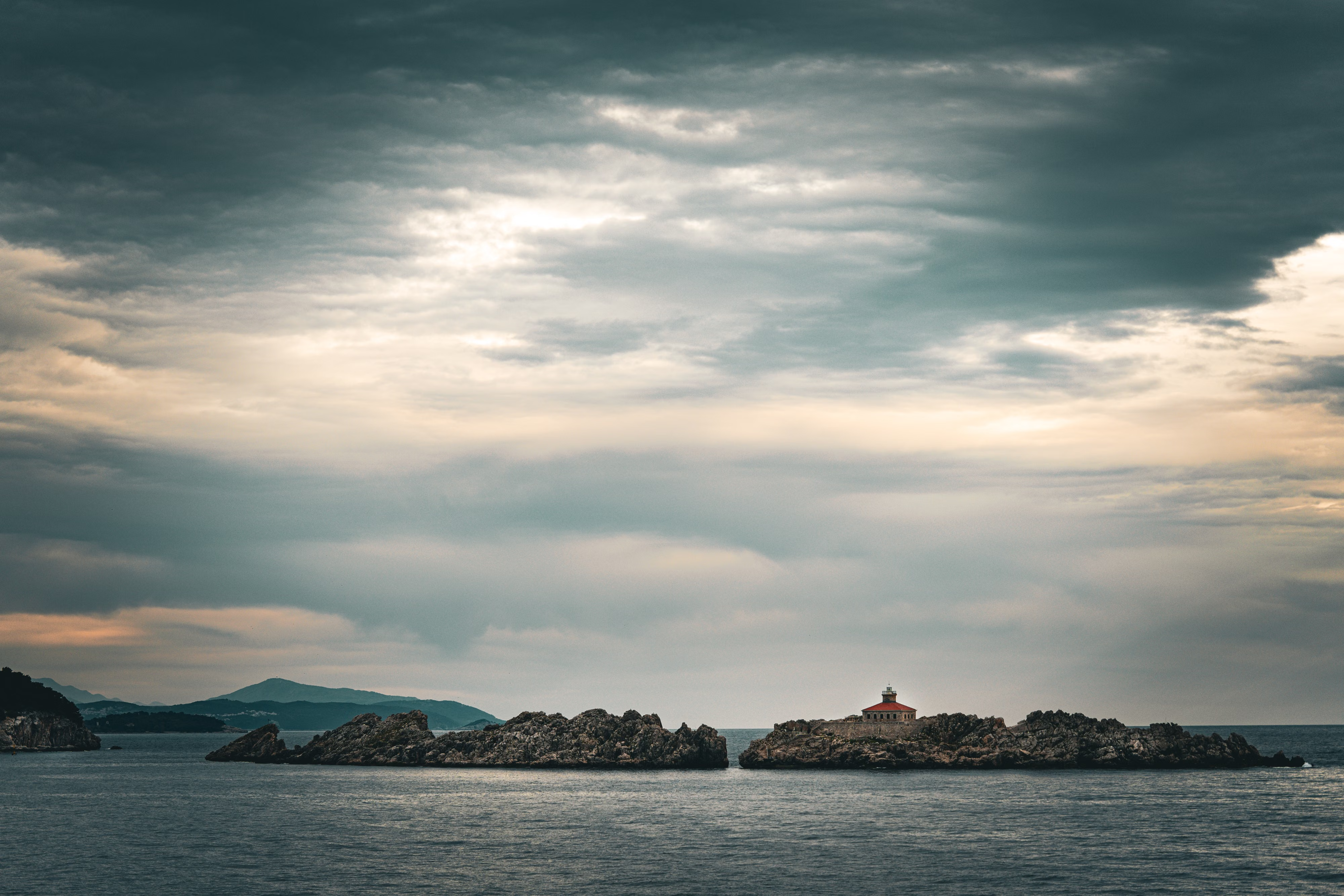
The EU's new strategies for islands and coastal communities recognize that Europe's ocean future will be shaped not only in Brussels or national capitals, but in the places where people live with the sea every day. Together, they mark an important shift in European ocean policy from treating coastal and island territories as endpoints of sectoral policies, toward recognizing them as central actors in Europe's sustainable ocean transition. The Islands Strategy covers around 27,000 EU islands, more than 4,000 of them inhabited, with a combined population of around 17 million people. It focuses on economic development, connectivity, energy security, environmental protection, climate resilience, quality of life, security and governance. The Coastal Communities Strategy focuses on the roughly 95 million people living along Europe's 70,000 kilometers of coastline, recognizing that coastal communities are at the frontline of climate change, marine biodiversity loss, pollution, economic transition, housing pressure and security risks. Both strategies are welcome. But their success will depend on whether Europe can connect local priorities to national and EU-level ocean governance. That is where Sustainable Ocean Plans can play a powerful role. As a framework for managing a country's ocean areas, they can connect conservation, sustainable use and economic development, providing countries with a clear picture.