
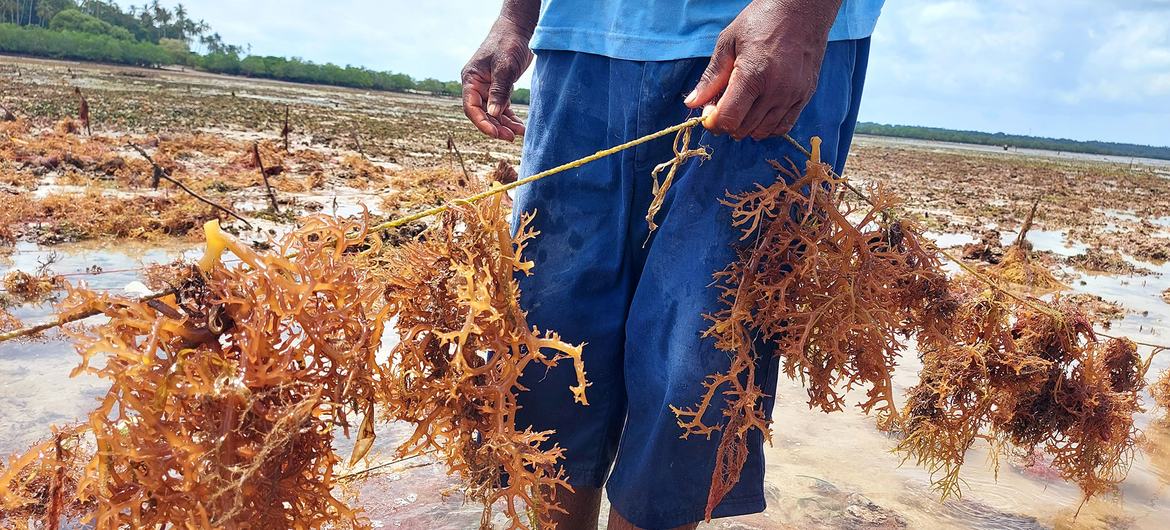
Plastic pollution is choking the ocean, but sustainable alternatives - including seaweed - remain held back by tariffs, fragmented regulations and the overwhelming market advantage enjoyed by fossil fuel-based plastics. Only 10 per cent of all plastics produced are recycled, so most plastics will end up littering streets, entering waterways and reaching the ocean. Each year, some 52 million tonnes of plastic waste enter the ocean, where it stays and affects more than 4,000 marine species. A blue whale, the world's largest mammal, can consume up to 10 million microplastic pieces daily, equivalent to about 43 kilograms. To tackle plastic pollution, material innovation, increasing alternatives to single-use plastic and reducing production are essential, according to the latest World Ocean Assessment, which was released on Monday. For the past six years, the international community has been working toward a global plastics treaty that could cap plastic production and help "turn the tap off" on an industry valued at more than $1.1 trillion in 2023. Negotiations are ongoing, with the next round of talks scheduled for 13 to 24 March 2027. In the meantime, sustainable alternatives to plastics could help to reduce our global dependence, curbing the pernicious effects of plastic pollution on our oceans. However, alternatives must still overcome several major obstacles.