Content Library

News

Curated stories and analysis from islands and sustainability leaders worldwide.

Showing 9 of 98 news items in Circular Economy
Transforming Hazardous Waste into a Circular Economy in the Caribbean
Circular EconomyFebruary 25, 2026

Transforming Hazardous Waste into a Circular Economy in the Caribbean

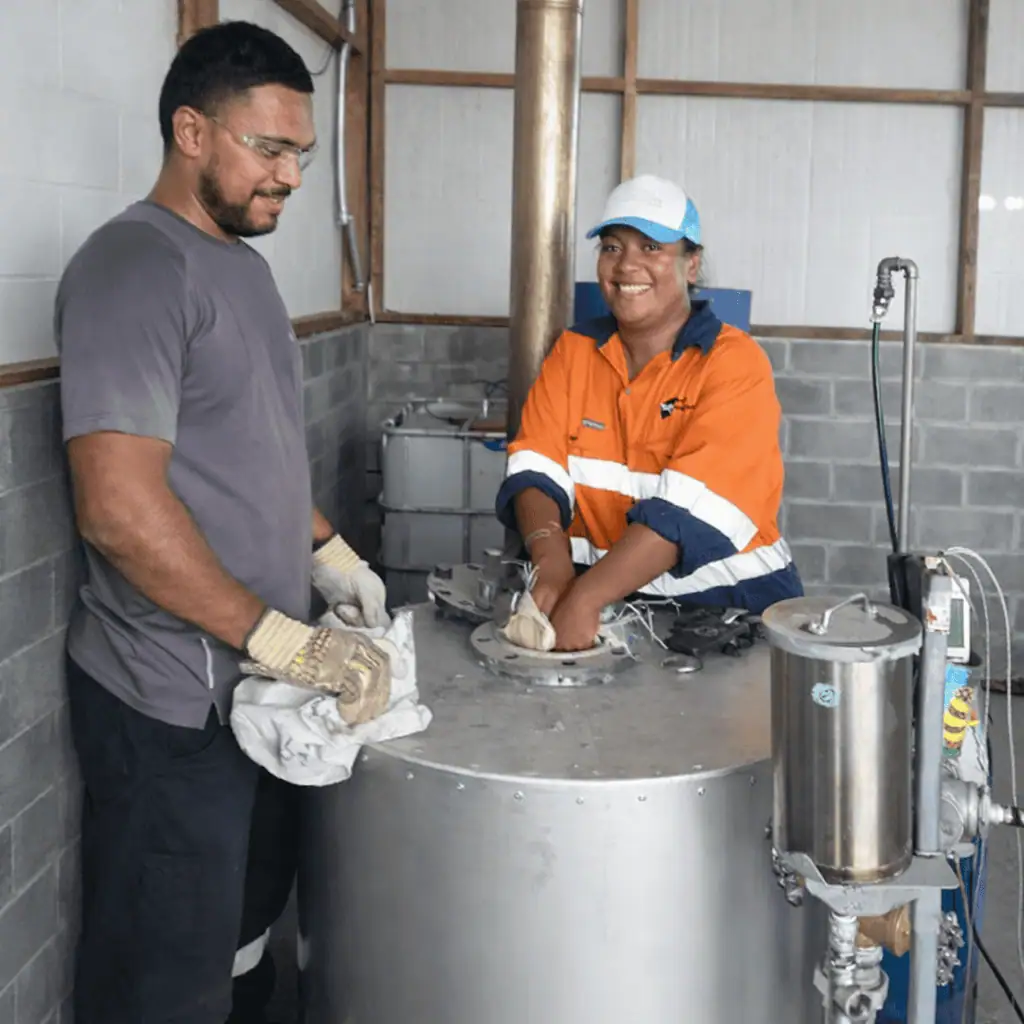
Excerpt from iadb.org When people picture the Caribbean, they imagine white-sand beaches, clear blue seas, and vibrant communities—assets that also underpin the region’s economies. In 2022, services accounted for between 55% and 78% of total GDP in most countries, with tourism remaining the main economic activity and representing an average of 25.4% of regional GDP between 2015 and 2019. Protecting this natural capital through sustainable practices, including circular economy approaches to waste management, is therefore essential to preserve these vital services and sustain long-term economic prosperity. That is why the IDB Group partnered with the Global Environment Facility (GEF) to implement the ISLANDS Program in the Caribbean, approved in 2021 and launched in 2022. This initiative brings together projects across ten Caribbean countries to strengthen waste management systems and advance a circular economy in the region. The program also aligns with the 2024 ONE Caribbean initiative, demonstrating how effective hazardous waste management contributes to climate mitigation, institutional strengthening, and inclusive development.

Read more
Pilot projects aim to break Indonesia’s habit of burning household waste
Circular EconomyFebruary 25, 2026

Pilot projects aim to break Indonesia’s habit of burning household waste

Excerpt from news.mongabay.com When old mattresses and broken chairs are dumped by the roadside in his neighborhood, Erwinsyah faces a choice: leave them there and risk accidents, or set them on fire. The head of a neighborhood unit, or RT, in the city of Bogor, south of Jakarta, Erwinsyah says residents often discard bulky waste such as used spring beds and furniture along the street. Left unattended, they become an eyesore — and a hazard. “The mattresses are already dirty, smelly, full of rat droppings. So they just get placed by the roadside. But that’s an area where people pass by, children go to school,” Erwinsyah told Mongabay. “If a child walks past and it falls on them, then I’m the one who’ll get blamed as the head of the neighborhood unit.” To prevent that from happening, he sometimes burns the items in an empty field away from houses, staying to monitor the flames. What Erwinsyah describes isn’t unusual. Across Indonesia, open waste burning remains widespread despite being prohibited under the country’s 2008 Waste Management Law.

Read more
A model for the circular economy: this is how Gran Canaria overcomes the challenge of insularity in managing its waste
Circular EconomyFebruary 18, 2026

A model for the circular economy: this is how Gran Canaria overcomes the challenge of insularity in managing its waste

Excerpt from elespanol.com Surrounded by the Atlantic Ocean and more than 1,000 kilometers from the peninsula , Gran Canaria manages the daily supply of its population and millions of visitors in an insular and fragmented territory. Dependence on imports (including water and vehicles), heavy maritime and air traffic, and intense tourist pressure – it receives almost four times more tourists per inhabitant than the Community of Madrid – make logistics, consumption, and sustainability permanent challenges. In this island context, where almost everything arrives by sea or air, waste management has become one of the key factors in ensuring the future of Gran Canaria .

Read more
Carrying African islands to the world stage: Inside the Ocean Hackathon Finals 2025
Circular EconomyJanuary 15, 2026

Carrying African islands to the world stage: Inside the Ocean Hackathon Finals 2025

Excerpt from iucn.org Carrying African islands to the world stage: Inside the Ocean Hackathon Finals 2025 On a crisp winter morning in Brest, France, African island innovation stood proudly on the global stage. What began months ago as a bold idea within the IslandPlas project — had now reached the world’s largest Ocean Hackathon arena. By Genovefa Feksi The Ocean Hackathon is a fast-paced innovation event where teams come together (usually over 48 hours) to solve real-world ocean challenges using data, technology, creativity, and entrepreneurship. This year, IUCN ESARO participated as a challenge owner, contributing data from the IslandPlas project. IslandPlas is a regional initiative working across seven African island states to better understand plastic waste systems; from what types of plastic are being used, to where they leak into the environment, who is affected, and what solutions are already emerging locally. The project generates much-needed evidence to guide policy, innovation, and community-led circular economy solutions. Representing IUCN as the Challenge Owner, I had the honour of supporting the Plasticity, the winning team using IUCN IslandPlas data from the Cape Town regional edition, as they presented at the Ocean Hackathon® Global Finals. Supported by IUCN teams across Eastern and Southern Africa (ESARO) and West and Central Africa (PACO) together with OceanHub Africa, the innovators refined a digital prototype designed to help island states track, verify, and repurpose PET waste using data, AI, and community engagement tools. Walking into the venue alongside nine outstanding teams from around the world, I felt the pride of our islands with me — from Cabo Verde, São Tomé & Príncipe, Seychelles, Comoros, Madagascar, Mauritius, and Zanzibar.

Read more
Lanzarote hosts European workshops on waste management in islands
Circular EconomyDecember 15, 2025

Lanzarote hosts European workshops on waste management in islands

Excerpt from lavozdelanzarote.com The Ministry of Ecological Transition and Energy of the Canary Islands Government inaugurated this Tuesday morning on the Islote de Fermina (Arrecife) the European workshop “Waste Management on Islands: Towards a Circular Model,” organized in collaboration with the Clean Energy for EU Islands project and framed within the community initiative “30 for 2030,” which supports 30 European islands—including La Graciosa and La Palma—in their plans towards energy independence based on 100% renewable sources. For two days, public officials, companies, organizations, national and international specialists, and interested individuals will **analyze the specific challenges of island territories in terms of waste, circular economy, and sustainability**, as well as the opportunities offered by the European framework for implementing innovative and replicable solutions.

Read more
'Circular seabird economy' critical for ocean, islands and people
Circular EconomyNovember 10, 2025

'Circular seabird economy' critical for ocean, islands and people

Excerpt from oceanographicmagazine.com New light has been cast on one of nature’s most elegant feedback loops as scientists throw the spotlight on the role of seabirds as powerful connectors between ocean and land. In a groundbreaking global synthesis published today in Nature Reviews Biodiversity, researchers from Lancaster University have revealed how these marine wanderers shuttle nutrients across ecosystems and why protecting them could be a game-changer in tackling the triple planetary crises of climate change, ocean decline, and biodiversity loss. Led by Dr Holly Jones of Northern Illinois University, the research team – featuring scientists and conservation leaders from BirdLife International, The Nature Conservancy, Lancaster University, and Island Conservation – has introduced the concept of the ‘circular seabird economy’ – a natural process by which seabirds move nutrients from sea to land and back again, driving productivity and ecological resilience across entire landscapes.

Read more
Caribbean biodiversity fund launches circular economy projects
Circular EconomySeptember 24, 2025

Caribbean biodiversity fund launches circular economy projects

Photo credit: tvincenttimes.com Excerpt from tvincenttimes.com The Caribbean Biodiversity Fund (CBF) officially launched the implementation phase of projects funded, through its Advancing Circular Economy (ACE) Facility during a three-day Grantee Award and Inception Workshop, held from August 25–27, 2025 in Miami. The CBF’s Nature-Based Economies (NbE) Program was developed to support pollution reduction efforts in the Caribbean. The ACE Facility, a key initiative under the NbE Program, promotes marine litter management across the insular Caribbean. It works with public and private sector partners, as well as regional stakeholders, to fund practical projects that apply circular economy principles to minimize and prevent waste from entering the marine environment and, where possible, remove existing marine litter. “The launch of these projects represents a pivotal moment for the Caribbean,” said Karen McDonald Gayle, CEO of the Caribbean Biodiversity Fund. “It’s about sustainably investing directly in tangible solutions that will not only reduce marine pollution but also foster resilient communities and create new economic opportunities across the region.”

Read more
Zanzibar’s Pemba Island confronts a 230-tonne a day waste problem offering a blueprint Africa can use
Circular EconomySeptember 2, 2025

Zanzibar’s Pemba Island confronts a 230-tonne a day waste problem offering a blueprint Africa can use

Excerpt from africasustainabilitymatters.com A new assessment of Pemba Island, in the Zanzibar Archipelago, has put hard numbers to a long-felt reality: the island generates more than 230 tonnes of waste every day, much of it burned in the open or dumped in informal sites. The study, led by RSK Environment (East Africa) with Lumen Associates and Patrick Matandala for the NGOs LVIA and Oikos East Africa, argues that the crisis is fixable if authorities lean into data-led planning, small-scale processing and community enterprise, a package the team has framed in a locally owned “Theory of Change.” The timing is deliberate; Pemba is one of three Tanzanian cities targeted by the European Union’s Green and Smart Cities SASA programme — a TZS 190 billion (about €75 million) Team Europe Initiative launched in 2024 to bankroll greener infrastructure and jobs. In Pemba, LVIA and Oikos have been contracted to translate that big ticket into block-and-tackle improvements in how waste is collected and treated.

Read more
St. Kitts and Nevis Steps Closer to Single-Use Plastic Ban with Multi-Agency Support
Circular EconomyMarch 17, 2025

St. Kitts and Nevis Steps Closer to Single-Use Plastic Ban with Multi-Agency Support

St. Kitts and Nevis is advancing its phased ban on single-use plastics with collaborative efforts across multiple government agencies and support from the business community. Hon. Dr Joyelle Clarke, Minister of Sustainable Development, Environment and Climate Action and Constituency Empowerment, expressed gratitude to the media, consumers, the Chamber of Industry and Commerce, and other business entities for supporting the government’s ban of single-use t-shirt shopping bags. Legislative and Collaborative Support Minister Clarke emphasised that the transition requires more than just governmental intention, highlighting the necessity of supporting legislation. “We recognise that the shift requires more than just government saying what its intention is, but legislation also needs to support the single-use plastic ban. And so, the Attorney General has confirmed that we will have a plastic regulation bill ready for the ban. The Minister of Trade will also be presenting to us and to the nation the international standards for biodegradable alternatives that all retailers and wholesalers can access to purchase the biodegradable options for importing to St. Kitts and Nevis.”

Read more