Content Library

News

Curated stories and analysis from islands and sustainability leaders worldwide.

Showing 9 of 98 news items in Circular Economy
Jali Local Aboriginal Land Council votes to rebuild its flood-prone Cabbage Tree Island home
Circular EconomyNovember 1, 2024

Jali Local Aboriginal Land Council votes to rebuild its flood-prone Cabbage Tree Island home

Photo: ABC North Coast: Hannah Ross. Retrieved from abc.net.au An Aboriginal community in northern NSW has voted to rebuild its island home almost three years after it was abandoned due to flooding. Nineteen houses will be rebuilt on Cabbage Tree Island near Ballina at a cost of $30 million, funded by the New South Wales Reconstruction Authority and the National Emergency Management Agency. A further $13 million has been allocated to the rebuild of community infrastructure including the Cabbage Tree Island Public School and local health centre. Jali Local Aboriginal Land Council said the decision marked a momentous turnaround from 12-months ago when the state government and the land council [deemed the island too high risk for habitation](https://www.abc.net.au/news/2023-09-01/cabbage-tree-island-flood-rebuild-poses-unacceptably-high-risk/102802630). At the time the NSW Planning and Environment Department wrote to the land council saying the “risks are so high they cannot in good faith financially support a rebuild on the island for residential purposes”.

Read more
Battling ocean plastic on Svalbard
Circular EconomyNovember 1, 2024

Battling ocean plastic on Svalbard

Photo by Louise Krüger. Retrieved from oceanographicmagazine.com As oceanographer with Utrecht University in the Netherlands, Erik Van Sebille, explains: “Svalbard is at the end of a large conveyor belt circulation. A lot of the plastic from the US, Europe and so on, if it stays afloat, may end up there,” he says. The Norwegian Polar Institute estimates that there are over 79,000 tonnes of plastic in the deep water between Svalbard, Greenland and in the Barents Sea – the equivalent weight of about 50,000 cars. Every time there’s rough weather, storms or wind, that plastic washes up on shore and, if not washed out at sea again, stays there. Fortunately, this is about to change – at least for today. Only an hour after we’ve arrived and are settled in on the ship, we gear up in survival suits and head to the nearest beach. Wijdefjorden, the longest fjord of [Svalbard](https://oceanographicmagazine.com/features/svalbard-the-last-hunt-for-the-future/), opens out towards the northern coastline, and basking in the sun, it seems far from ghastly. Two volunteers and today’s polar bear guards disembark first to ensure the coast is clear. One of them is Sund. She swiftly dances out of her survival suit, steps into hiking boots and ascends the nearest hill. “Clear,” she radios back. Once confirmed, no bears in sight, the rest of us enter land, wiggling our way out of our survival suits, grabbing white plastic bags, and spreading along the beach to cover as much ground as possible. As if the race has begun, we start hunting for all pieces of trash we can find.

Read more
UNDP Supports Sustainable Land Management Practices in Rodrigues
Circular EconomyNovember 1, 2024

UNDP Supports Sustainable Land Management Practices in Rodrigues

Excerpt and Photo from UNDP.ORG A three-day consultative workshop was organised in Rodrigues from 22 to 24 October under the ‘[Sustainable Land Management and Biodiversity Conservation in the Republic of Mauritius](https://www.undp.org/mauritius-seychelles/projects/mainstreaming-sustainable-land-management-and-biodiversity-conservation-republic-mauritius)’ (SLM) Project. Chaired by the Department Head of the Commission for Agriculture, Fisheries, Food Production, Forestry and Plant and Animal Quarantine, the workshop was attended by over 50 representatives from the various commissions of the Rodrigues Regional Assembly, institutions, NGOs and Farmers Associations. This initiative aimed at engaging key stakeholders, and gathering additional data and insights to inform project implementation and decision making. The Sustainable Land Management Project is funded by the Global Environment Facility, and implemented by the Ministry of Agro-Industry and Food Security, through the Forestry Service, in collaboration with the United Nations Development Programme (UNDP). It aims to address these issues by scaling up the adoption of sustainable land management in production landscapes in Mauritius and Rodrigues. The expected outcomes include a strengthened policy and institutional framework; the development of skills, tools and incentives to pilot and implement SLM practices; and improving knowledge management and gender mainstreaming. **Strengthening policy and institutional framework** The first day of the workshop focused on the legal component of the project and included presentations which highlighted specific laws on sustainable land management in Rodrigues. Participants engaged in group sessions on current unsustainable land management practices, gaps in existing legislation, and the main challenges preventing the implementation of these laws on the island. Discussions also touched on the effective implementation of regulations concerning Environmentally Sensitive Areas, noting that in Rodrigues, around [80% of the land area](https://ecosud.mu/wp-content/uploads/2019/09/ESA-Classification-Report-FINAL.pdf)falls within one of the designated ESA types. The feedback received from participants will help to strengthen the policy and institutional framework for the promotion of SLM in Rodrigues.

Read more
Islanders upcycle washed up plastic waste into boats
Circular EconomySeptember 26, 2024

Islanders upcycle washed up plastic waste into boats

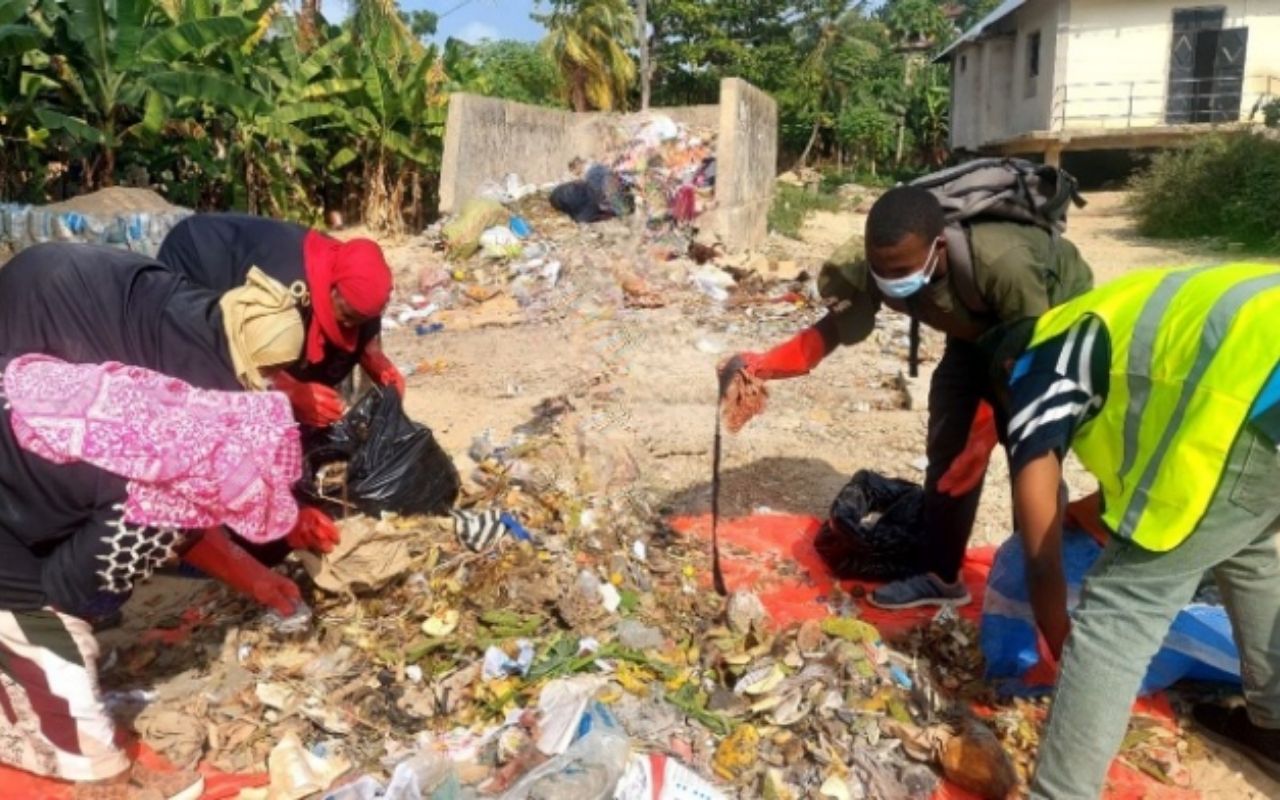
**On the Lamu island, off Kenya’s east coast, 47-year-old Usmail collects plastic which he then sells onto the Flipflopi Project.** The NGO was founded in 2016. It upcycles the waste into boats and furniture. Lamu is contending with mounds of plastic waste – some washed up on its beaches, others genrated by its residents. “We started collecting plastics a while ago,” Usmail says. “There used to be a lot of plastic waste in this area, Lamu. We collect the plastic waste and sell it to the organization at Ksh16 per-kilogram or about 16 cents in dollars, We do not have a job. That is where we get money to educate our children and also make a living.” The Flipflopi Project receives grants from other NGOs which they then use to buy plastic waste from locals. The co-founder detailshow the process unfolds at this facility. “We go to the community, and because we have some grant, we buy from the community,” Ali Skanda starts.

Read more
Tabarca’s dilemma: Balancing sun, sea, and sustainability
Circular EconomySeptember 17, 2024

Tabarca’s dilemma: Balancing sun, sea, and sustainability

Known for its ecological importance, [Tabarca](https://euroweeklynews.com/2024/06/28/from-cauldrons-to-culinary-delight-legacy-of-tabarcas-el-caldero/) became a marine reserve in 1986. Despite its small size of 0.3 square kilometres and a population of about 60 residents, it attracts many visitors, especially in summer. In 2023, about 230,000 people visited Tabarca, with some summer days seeing over 10,000 tourists. This high number of visitors is putting pressure on the island’s fragile ecosystem. Originally, Tabarca relied on fishing, but now its economy depends on day-trippers. This shift has created an urgent need to preserve the island’s natural and cultural heritage while managing tourism sustainably.

Read more
BLUE ECONOMY: Draft territorial plan for the development of marine aquaculture in Saint-Martin
Circular EconomySeptember 6, 2024

BLUE ECONOMY: Draft territorial plan for the development of marine aquaculture in Saint-Martin

**Development plans offer territories, particularly island territories, the opportunity to diversify their supply methods for seafood products, reduce pressure on fish stocks and ensure greater food security.** This project must be built with the entire population and in particular marine stakeholders, in order to arrive at a concerted project that meets local expectations. For the territory of Saint-Martin, this territorial plan identifies the potential species to be developed and the suitable sites for each species in order to guarantee the good development of this sector. In addition, marine aquaculture is also a relay for social and economic growth that provides sustainable jobs. This public consultation concerns the future draft territorial plan for the development of marine aquaculture in the territory. The complete file can be consulted from yesterday, Monday, September 2, until Wednesday, October 2, 2024, either on the website of the Collectivité of Saint-Martin (see information), or at the public service in the reception hall of the Collectivité hotel. Public participation in the project can be sent until October 2, 2024 by email to [[email protected]](/cdn-cgi/l/email-protection) or on the register made available in the reception hall of the Hôtel de la Collectivité.

Read more
Barbados: From Beach Paradise to Tech Haven
Circular EconomyAugust 5, 2024

Barbados: From Beach Paradise to Tech Haven

In the heart of the Caribbean, an unexpected revolution is brewing. Barbados, long celebrated for its pristine beaches and vibrant culture, is rapidly transforming into a hotbed of innovation and entrepreneurship. This small island nation, barely visible on a world map, is making big waves in the global startup ecosystem, challenging perceptions and redefining its economic landscape. For decades, Barbados has relied heavily on tourism and offshore financial services to drive its economy. However, a new generation of ambitious Barbadians is writing a different story – one of technological innovation, social impact, and economic diversification. From fintech to edtech, healthtech to transportation solutions, Barbadian startups are addressing local challenges with global potential. At the forefront of this transformation is MedRegis, a startup that’s revolutionizing healthcare management in Barbados. In a country where paper-based medical records were the norm until recently, MedRegis is bringing healthcare into the 21st century with its digital platform. By digitizing medical records, MedRegis is not only improving patient care but also opening up possibilities for data-driven healthcare policies. The potential impact extends beyond Barbados, offering a model for other Caribbean nations grappling with similar healthcare challenges.

Read more
Closing the Caribbean Plastic Tap: propelling Caribbean SIDS towards a plastic-free future
Circular EconomyAugust 5, 2024

Closing the Caribbean Plastic Tap: propelling Caribbean SIDS towards a plastic-free future

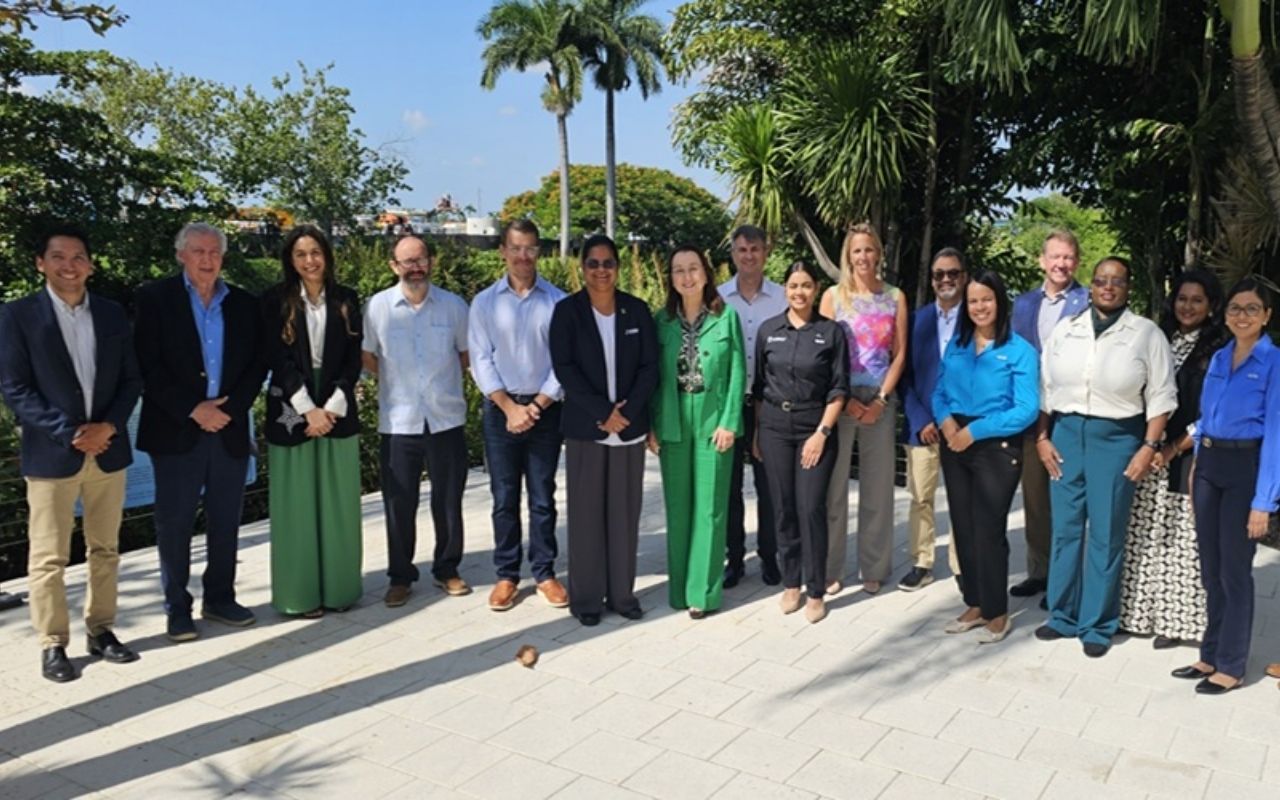
PHOTO: @JOAO SOUSA/IUCN. Retrieved from iucn.org Managing plastics, micro-plastics, and plastic waste effectively is a critical global issue. In 2017, plastic production surpassed 8.3 billion tonnes and has continued to grow annually. Packaging materials and single-use items accounted for 40% of this global plastic production, the majority of which is disposed of in landfills or the open environment. It is estimated that up to 13 million tonnes of plastic end up in the oceans annually. The Caribbean islands, which constitute one of the world’s 35 biodiversity hotspots and one of the areas with the greatest endemic biodiversity on the planet, are severely threatened by plastic pollution. The World Bank estimates that the Caribbean coasts are contaminated with an average of 2,014 objects per kilometer, one-fifth of which are plastic bottles. In this context, the Closing the Caribbean Plastic Tap project, a 2M€ initiative funded by the Italian Agency for Development Cooperation (AICS), aims at supporting the reduction in plastic waste generation and leakage in Antigua and Barbuda, Grenada, St. Lucia, St. Kitts and Nevis and Saint Vincent and the Grenadines, by implementing effective, socially inclusive solutions to advance circular economy. On June 28th and July 10th, National Inception Workshops were held in Saint Lucia and St. Kitts and Nevis respectively, bringing together different stakeholders and partners at national level, and emphasizing the importance of mutual collaboration for the achievement of the project’s goal and outcomes.

Read more
Niue looks to Solomon Islands for workers
Circular EconomyAugust 5, 2024

Niue looks to Solomon Islands for workers

Excerpt and Photo from abc.net.au A labour agreement between the Solomon Islands and Niue is expected to see Solomon Islanders travel to Niue to fill employment gaps there. “We have a population of less than 2,000, our people are New Zealand citizens so they can freely migrate out,” said Gaylene Tasmania, chair of Niue’s Labour Mobility Steering Committee. “In order to meet the service needs of our people, we need labour. “It just so happens Solomon Islands had an excess of workers that were ready … we need health care workers.”

Read more