Content Library

News

Curated stories and analysis from islands and sustainability leaders worldwide.

Showing 9 of 98 news items in Circular Economy
The Great Nicobar Misadventure: Yet Another ‘Development’ Disaster
Circular EconomyApril 25, 2024

The Great Nicobar Misadventure: Yet Another ‘Development’ Disaster

Can the world’s most unique, diverse and endangered regions be saved from turning into a jungle of concrete? Is our current model of development bereft of a policy to preserve the natural habitat, lifestyle, and dialects of the aboriginals? [Andaman and Nicobar](https://www.nationalheraldindia.com/environment/the-great-nicobar-misadventure-yet-another-development-disaster#), a group of 572 islands located in the south-eastern part of the Bay of Bengal in the Indian Ocean, away from the mainland, is passing through such a dilemma these days. These islands are located near Indonesia and Thailand. In 2013, they were included in UNESCO’s Man and the Biosphere Programme. The place is home to rich biodiversity and an extraordinary variety of wildlife. According to the government, it is one of the best-preserved tropical rain forests in the world. The so-called ‘holistic development’ of [Great Nicobar](https://www.nationalheraldindia.com/environment/the-great-nicobar-misadventure-yet-another-development-disaster#) is under question also because the project was initiated towards the end of 2020 when the world had come to a standstill due to the pandemic. On the one hand, there was an orgy of death and instability—the country was in a grave economic crisis—and on the other hand, machinations were on for expediting approvals to such a huge project. In terms of investment and size, this project is much bigger than any scheme proposed earlier.

Read more
These Bell Island students are turning trash into art — and learning about sustainability
Circular EconomyApril 17, 2024

These Bell Island students are turning trash into art — and learning about sustainability

**Photo: Ife Alaba/CBC. Retrieved from cbc.ca. Excerpt from cbc.ca** How many bottle caps do you think it takes to make a mural the size of three plywood sheets? That is exactly what students at St. Augustine’s Elementary recently decided to find out, with the help of environmental artist Brian Burke. The only elementary school on Bell Island, in Newfoundland’s Conception Bay, St Augustine’s is celebrating its 40th anniversary and to commemorate the milestone, students are building a mural made out of bottle caps. Through funding from ArtsSmarts — a government program that incorporates art and artists in school curricula — the school began working on the mural in December, with the students sorting and ironing thousands and thousands of bottle caps. Before embarking on the larger mural, students started small, practising by using the bottle caps to make their initials, and once they mastered that, they started on the harder stuff.

Read more
James Ellsmoor | SIDS4 offers opportunity to set ambitious tone for global development
Circular EconomyApril 15, 2024

James Ellsmoor | SIDS4 offers opportunity to set ambitious tone for global development

Next month, Antigua and Barbuda will be host to a bevy of international diplomats, civil society experts, and policymakers – all working together to define the development pathways of small island developing states (SIDS) for the next decade. Taking place May 27-30, the Fourth International Conference (SIDS4) will be a pivotal moment for island communities the world over. Key agenda issues such as long-term resilience building and adaptation to climate change, as well as the unique sustainability challenges faced by islanders, are set to be discussed and create the framework for the 2024-34 development plan, the Antigua & Barbuda Accord. SIDS4 comes at a time when the voices of island leaders and their communities are increasingly strengthening on the global stage. As one of the groups the most affected by climate change, islanders have become more vocal on the international stage in recent years. From addresses by Barbados Prime Minister Mia Mottley and Tuvalu Foreign Affairs Minister Simon Kofe to the appointment of Grenadian diplomat Simon Stiell as UNFCCC secretary, or innovative blue economy policies adopted in Fiji and Palau – SIDS also stand as beacons of hope, rather than vulnerability.

Read more
Ministry Of Agriculture On Nevis Donates Fruit Plants In Support Of Anguilla’s Plant A Tree Day Initiative
Circular EconomyApril 11, 2024

Ministry Of Agriculture On Nevis Donates Fruit Plants In Support Of Anguilla’s Plant A Tree Day Initiative

Excerpt and Photo from thestkittsnevisobserver.com In a gesture of intra-regional cooperation the Ministry and Department of Agriculture on Nevis have donated 28 plants to Anguilla for its “Plant a Tree Day” initiative on April 20, 2024. Deputy Premier the Honourable Eric Evelyn, Minister of Agriculture in the Nevis Island Administration (NIA) was at the Vance W. Amory International Airport (VAIA) on Monday, April 08, when the shipment of plants left for Anguilla. The Deputy Premier said the Department was delighted to make this contribution toward such an important and impactful initiative on a neighbouring island. “Someone from the Ministry of Agriculture in Anguilla reached out to us here on Nevis and they were interested in us donating some plants for their initiative “Plant A Tree Day”. We were of course delighted to assist and to continue the excellent cooperation that we have with Anguilla.

Read more
Innovative experiment converts discarded fish skin into sustainable leather products
Circular EconomyMarch 28, 2024

Innovative experiment converts discarded fish skin into sustainable leather products

Photo: Laufaleaina Lesā. Retrieved from undp.org An innovative experiment, known as the 100% Fish Use project, that successfully tested the conversion of discarded fish skin into sustainable fish leather and leather products, was showcased today by the United Nations Development Programme (UNDP), at the ‘fish hub’ at Taufusi. This initiative addresses critical environmental and economic challenges faced by Pacific island countries like Samoa. The vast oceanic resources surrounding Samoa make fish a vital source of food and economic security, but threats such as climate change, pollution, and overfishing endanger ocean ecosystems and livelihoods. In response, UNDP continues to support the Government of Samoa and its people to balance ocean conservation with community needs. The Accelerator Lab (AccLab), UNDP’s in-house innovation engine, proposed innovative solutions to diversify ocean-dependent livelihoods and aid in ocean conservation. Recognized for its potential impact, AccLab Samoa won the 2023 Japan SDG Challenge, supported by the Cabinet of Japan.

Read more
Recycling Revolution: St. Kitts And Nevis Embrace Environmental Stewardship
Circular EconomyMarch 28, 2024

Recycling Revolution: St. Kitts And Nevis Embrace Environmental Stewardship

Excerpt and Photo from thelabourspokesman.com Basseterre, St. Kitts – The Federation of St. Kitts and Nevis is witnessing a remarkable transformation in environmental conservation, with recycling practices becoming ingrained in every community’s daily routines. This significant cultural shift is largely attributed to the successful collaboration between the Taiwan International Cooperation and Development Fund and the local St. Kitts Solid Waste Management Recycling Project. Initiated on June 20, 2022, this recycling project has been pivotal in promoting the Sustainable Island State Agenda’s vision for a No-Plastic Future. It encourages the Federation’s citizens to conscientiously recycle plastic bottles, caps, and aluminum cans, contributing to a greener and more sustainable environment. The project’s impact is evident in the steadily increasing volume of recyclables collected at designated drop-off stations across the island. These stations, set up weekly in various urban and rural locations, have seen a surge in usage, reflecting the community’s growing commitment to recycling. The data speaks volumes: from 38,749 lbs of recycled plastic collected in 2022, the figure almost doubled to 73,492 lbs in 2023. This remarkable increase underscores the Federation’s dedication to combating plastic pollution and fostering a culture of environmental responsibility.

Read more
On International Women’s Day, UNFPA is supporting climate-affected women in Fiji for resilience building
Circular EconomyMarch 18, 2024

On International Women’s Day, UNFPA is supporting climate-affected women in Fiji for resilience building

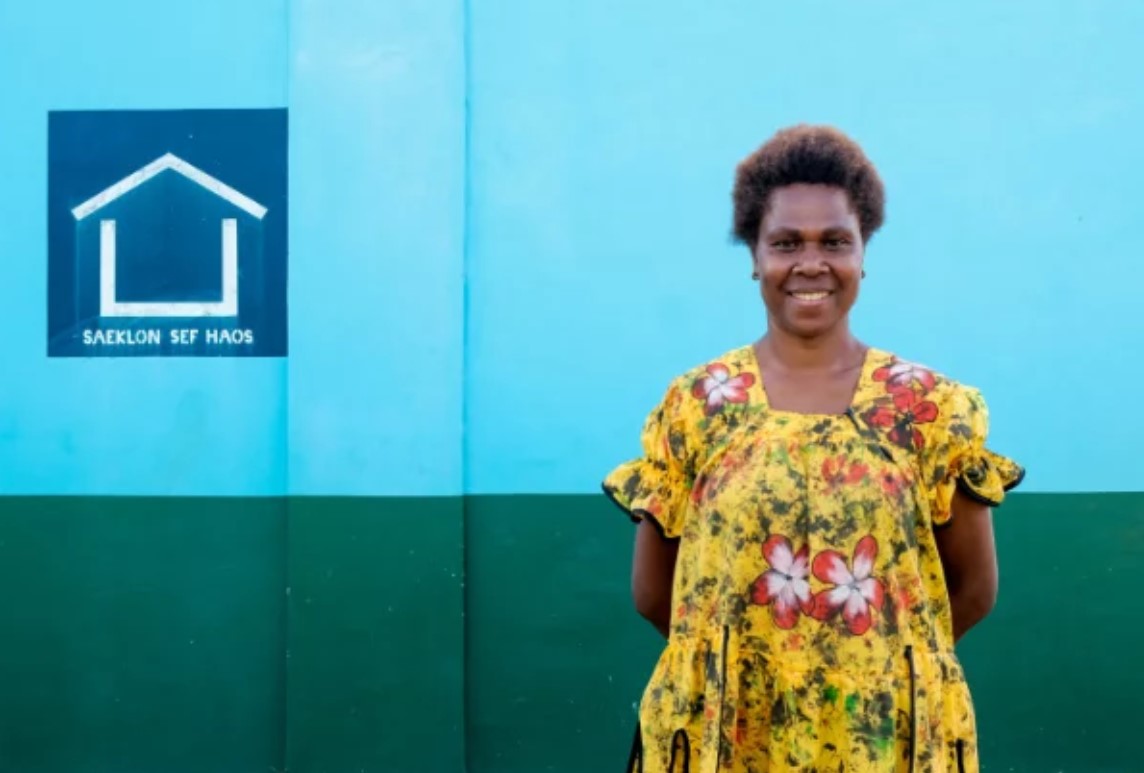
Photo: UNFPA. Retrieved from reliefweb.int As the world comes together to celebrate the International Women’s Day (IWD) on 8 March, the United Nations Population Fund (UNFPA) Pacific is assisting Fiji Northern Division Commissioner’s Office and communities in supporting rural women and girls on the island of Vanua Levu, including those affected by climate crises, to reach their full economic potential and build back better. In line with the global theme for this year’s IWD, ‘Invest in Women, Accelerate Progress’, UNFPA Pacific is supporting the local government and the rural communities in Vanua Levu, by providing sewing machines, brush cutters, gum boots, refrigerators and other items to women and young people for their economic empowerment, strengthening their capacity to learn, earn, and lead. This initiative, under UNFPA’s Multi-Country Programme (2023-2027) for 14 Pacific small island developing states (SIDS) including Fiji, employs an integrated approach to ‘community resilience’ building by incorporating women’s economic empowerment as part of enhancing climate crisis-prone communities’ preparedness and response capacity. Ever since the island of Vanua Levu was hit hard by the consecutive large-scale Tropical Cyclones Yasa and Ana in 2020-2021, UNFPA Pacific has been collaborating closely with the Northern Division Commissioner’s Office, the Ministry of Rural and Maritime Development and Disaster Management and other partners to support vulnerable villages, especially women and youth.

Read more
Bahamas, Dominica and Grenada to join Development Bank of Latin America and the Caribbean (CAF)
Circular EconomyMarch 18, 2024

Bahamas, Dominica and Grenada to join Development Bank of Latin America and the Caribbean (CAF)

Excerpt and Photo from caf.com The Board of Directors of CAF met in Punta Cana, Dominican Republic, and authorized the allocation of its shares to facilitate the entry of new Caribbean countries through the incorporation of Bahamas, Dominica, Grenada as Series “C” members. This will allow these countries to access the technical, financial and knowledge services offered by the bank to its member countries to improve the quality of life of citizens. “Our positioning in the Caribbean will give a new dimension to an organization that was created by six Andean countries (Bolivia, Chile, Colombia, Ecuador, Peru and Venezuela), which now fifty-six years later, has 21 shareholder countries and is one of the main sources of multilateral financing in the region. This expansion of CAF in the Caribbean will lead us to become the development bank with the widest coverage in Latin America and the Caribbean,” said Sergio Díaz-Granados, Executive President of CAF. CAF took an important step 18 months ago to establish its Regional Office for the Caribbean, based in Trinidad and Tobago, with the aim of consolidating its development assistance to the Caribbean, particularly in support of climate action, water, energy, and food security, sustainable tourism, modernization of infrastructure and digital transformation, among other sectors. Shortly after, CAF integrated the Caribbean into its official trademark and logo, which is now the Development Bank of Latin America and the Caribbean.

Read more
Tuvalu preserves history online as rising seas threaten existence
Circular EconomyMarch 18, 2024

Tuvalu preserves history online as rising seas threaten existence

Two years after he delivered a speech to the United Nations climate conference standing knee-deep in seawater to highlight the threat to the nation of Tuvalu, minister Simon Kofe said they were on their way to becoming a digital nation. The Pacific island nation, halfway between Australia and Hawaii, had completed a detailed 3D scan of its 124 islands and islets, which will be the basis for creating a digital clone of itself, he said in a message in December. Authorities are also archiving Tuvalu’s cultural heritage, as well as exploring a digital identity system to connect the diaspora, and a digital passport so citizens can register births, deaths and marriages, and participate in polls and other events. “We are taking these practical steps because we must … ensuring our continuing sovereignty in the face of a worst-case scenario,” said Kofe, minister of justice, communication and foreign affairs. “We cannot outrun the rising tides, but we will do what we can to protect our statehood, our spirit, our values.”

Read more