Content Library

News

Curated stories and analysis from islands and sustainability leaders worldwide.

Showing 9 of 98 news items in Circular Economy
Cesspools to solutions: Initiative targets Pacific islands’ wastewater woes
Circular EconomyMarch 1, 2024

Cesspools to solutions: Initiative targets Pacific islands’ wastewater woes

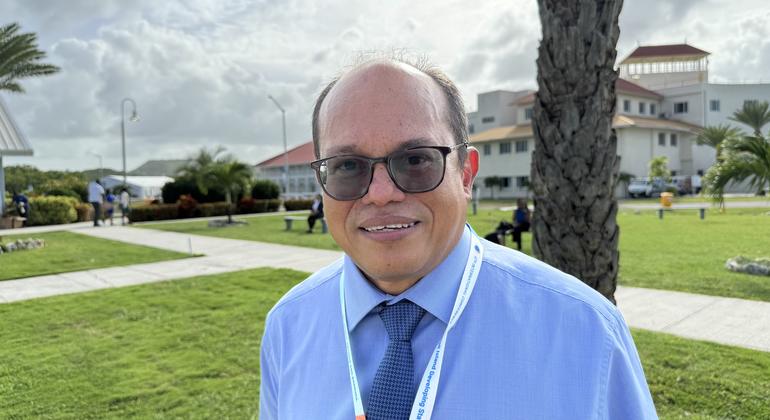
Excerpt and Photo from hawaii.edu A notable challenge for island water resources is wastewater management, often reliant on inadequate cesspools. In Hawaiʻi, the 83,000 cesspools across the state are estimated to leak 52 million gallons of untreated wastewater daily into the environment, endangering aquifers and coastal areas. To address this issue, researchers from the University of Hawaiʻi at Mānoa’s [Water Resources Research Center](https://www.wrrc.hawaii.edu/) and [College of Engineering](https://www.eng.hawaii.edu/) will work with a team from several other universities and organizations to develop wastewater management technologies tailored to island environments. The project earned a $650,000 grant from the National Science Foundation (NSF). It is [one of 15 projects nationwide selected for theNSFConvergence Accelerator program](https://new.nsf.gov/funding/initiatives/convergence-accelerator/updates/nsf-invests-advance-equitable-water-solutions) to develop innovative technologies and solutions to improve U.S. freshwater systems. “Treated wastewater creates a new source of clean water for non-potable purposes, such as irrigation and firefighting, significantly reducing pressure on freshwater supply and contributing to a more sustainable water future,” said Zhiyue Wang, project co-principal investigator and assistant professor from the [Department of Civil, Environmental and Construction Engineering](http://www.cee.hawaii.edu/) and Water Resources Research Center.

Read more
Transforming Lives and Health Care: The Rise of Māori Representation in Taranaki’s Health Workforce
Circular EconomyMarch 1, 2024

Transforming Lives and Health Care: The Rise of Māori Representation in Taranaki’s Health Workforce

Excerpt and Photo from bnnbreaking.com In the heart of New Zealand’s North Island, a quiet revolution is reshaping the landscape of healthcare. At the Taranaki District Health Board (DHB), an initiative spearheaded by the non-profit organization Why Ora is not only changing the face of the health workforce but also the lives of many Māori individuals. From a modest beginning over a decade ago, this initiative has seen the proportion of Māori in the DHB’s workforce jump from 6 percent to an impressive 10 percent, a testament to a decade of dedicated effort and cultural integration. The journey began with a vision to address the underrepresentation of Māori in the health sector, recognizing the vital role that cultural understanding and diversity play in delivering effective healthcare. Why Ora’s initiative was not just about numbers; it was about bringing meaningful change to the community and the healthcare system. By focusing on education, training, and support, the organization has paved the way for many Māori individuals to enter and thrive in the health workforce. The story of one recent recruit, featured by Taranaki Whanganui reporter Robin Martin, underscores the personal and professional transformation that has become a hallmark of this initiative.

Read more
To plan a sustainable future for seafood access in small island developing states, researchers highlight solutions hiding in plain sight
Circular EconomyFebruary 26, 2024

To plan a sustainable future for seafood access in small island developing states, researchers highlight solutions hiding in plain sight

In the middle of the Pacific Ocean, the small island developing state of Kiribati is a collection of 33 far-flung tropical islands that are home to more than 126,000 people. Kiribati depends on seafood as a cornerstone of local food systems, but the nation’s marine resources are increasingly threatened by climate change and other environmental, social, and economic threats. Other nations around the world face similar issues. So, to better understand how fisheries-based food systems might respond to change, researchers took a deeper look at the strategies that people in Kiribati currently use to access seafood. The research team’s findings, published in [Proceedings of the National Academy of Sciences](https://www.pnas.org/doi/10.1073/pnas.2305424121), share lessons from Kiribati, including how different strategies impact local diets, and how successful strategies could potentially be bolstered in the face of growing challenges. UC Santa Cruz Assistant Professor of Environmental Studies Katherine Seto led the study, which used machine learning to analyze data from a nationally representative household income and expenditure study and a village resource survey. She says the study’s focus on understanding current pathways to seafood access lays an important foundation for efforts to ensure stable and sustainable food systems into the future.

Read more
Six months after the Maui fires, an uncertain economy for the island
Circular EconomyFebruary 13, 2024

Six months after the Maui fires, an uncertain economy for the island

Photo: Deanne Fitzmaurice for NPR. Retrieved from npr.org It was six months ago that deadly wildfires swept through Lahaina, killing 100 people and destroying the historic town, [as well as homes](https://www.npr.org/sections/pictureshow/2023/08/18/1194381656/kula-upcountry-fire-lahaina-maui-wildfires-death-toll-hawaii)in central Maui. In the immediate aftermath of the fires, officials discouraged all non-essential travel to West Maui, where Lahaina is located. And visitor arrivals for the whole island dropped precipitously – in August they were down [almost 58%](https://dbedt.hawaii.gov/blog/23-50/) from August the previous year.

Read more
This Caribbean Island Is Making A Fortune From AI
Circular EconomyFebruary 2, 2024

This Caribbean Island Is Making A Fortune From AI

AI has made a lot of people very rich over the past couple of years, but for one small Caribbean Island it’s been transformational. So much so that Anguilla now generates around a third of its government’s revenue from AI—without writing a single line of code. Back in the 1980s, when the Internet Assigned Numbers Authority was dishing out the geographic two-letter domains, Anguilla had the good fortune to be awarded .ai. That good fortune has turned into an actual fortune, with a huge influx in domain registrations over the past couple of years that have massively boosted the island’s economy. The boom in .ai domain sales was triggered by the arrival of ChatGPT in November 2022. “In the five months after that, our sales went up by almost a factor of four,” Vince Cate, who manages domain registrations for the Anguillan government, told [IEEE Spectrum](https://spectrum.ieee.org/ai-domains). “Then they sort of leveled off at this new, much higher level. It’s just wild—we’re already like a third of the government’s budget.”

Read more
Indigenous-centred prawn farm collaboration to make a splash on Tiwi Islands
Circular EconomyJanuary 30, 2024

Indigenous-centred prawn farm collaboration to make a splash on Tiwi Islands

Photo: Pilot farm, Larrakia Country in Darwin. Retrieved from csiro.au On the serene Tiwi Islands, Simon Irvin and his five-person team are reshaping tiger prawn farming. Northern Australia holds untapped potential for sustainable prawn farming. Simon is our aquaculture biology team leader. He and his team are building opportunities and improving outcomes for remote communities. In a co-design model, we have partnered with [Tiwi Resources](https://www.tiwiresources.com.au/) and the Portaminni Trust. This means all partners collaboratively design the pilot to create a path to a more sustainable future for the Tiwi Islands. Our [Indigenous Science and Engagement Program](https://www.csiro.au/en/research/indigenous-science) worked with the Northern Steering Committee to facilitate engagement, leverage resources and provide an extra cultural lens for CSIRO. These partnerships helped Traditional Owners and other stakeholders travel to Vietnam to learn from their successful prawn farming industry.

Read more
As Development Alters Greek Islands’ Nature and Culture, Locals Push Back
Circular EconomyJanuary 23, 2024

As Development Alters Greek Islands’ Nature and Culture, Locals Push Back

With a deluge of foreign visitors fueling seemingly nonstop development on once pristine Greek islands, local residents and officials are beginning to fight back, moving to curb a wave of construction that has started to cause water shortages and is altering the islands’ unique cultural identity. Tourism is crucial in Greece, accounting for a fifth of the country’s economic output, and communities on many islands depend on it. But critics say the development has spiraled out of control in some areas, particularly on islands like Mykonos and Paros, where large-scale hotel complexes have mushroomed in recent years. Teachers and other professionals in those and other Cycladic islands, a popular cluster in the Aegean Sea, have struggled to find affordable housing amid an influx of visitors and home buyers, fueling [growing protests by locals](https://www.nytimes.com/2023/08/15/world/greece-beach-towel-protests.html) over the repercussions of rampant tourism. The islands, at the forefront of Greece’s tourism boom, are facing increasingly urgent calls to preserve their natural and cultural heritage.

Read more
Guadeloupe in murky waters: French islands hit by wastewater treatment scandal
Circular EconomyJanuary 22, 2024

Guadeloupe in murky waters: French islands hit by wastewater treatment scandal

Located in the heart of the French Caribbean, Guadeloupe is best known for its beaches, rivers and waterfalls. But beyond the postcard image, more than 70 percent of wastewater treatment plants in the island are out of order – or nearly – despite significant funding, particularly from the European Union. The result is a health and environmental catastrophe that threatens all the bathing waters in this French overseas archipelago. FRANCE 24’s Karina Chabour investigated years of poor management.

Read more
Grenada, Dominica lead charge in OECS waste management transformation
Circular EconomyJanuary 16, 2024

Grenada, Dominica lead charge in OECS waste management transformation

Excerpt and Photo from stvincenttimes.com New Waste Characterisation****Reports are in for Dominica and Grenada. The findings are critical for tailoring the Recycle OECS Model framework to the waste landscape of these Member States. Dominica and Grenada are selected OECS territories implementing Model Demonstration projects, paving the way for the rest of the OECS Waste Management sector. **Dominica:**For Dominica, the Waste Characterisation exercise could not have been more urgent, as plastic usage trends have significantly altered the waste landscape from 2002 when the Dominica Solid Waste Management Corporation last conducted a waste study. Between July 22 – 28, 2023, the Dominica Solid Waste Management Corporation (DSWMC) conducted a dual waste classification exercise covering co-mingled municipal solid waste and source-separated recyclable packaging waste at the Fond Cole Sanitary Landfill Site. It also sought to identify the sub-categories of plastics within the waste stream and assess the potential for recycling under the Recycle OECS initiative. According to the 2023 Study report, plastics make up 24% of Dominica’s solid waste stream with film plastics being the dominant component at 53%. Plastics rank second to organics, at 29%, followed by paper and paperboard at 17%. Within the Recycle OECS project’s focus on PET and HDPE plastics, a detailed breakdown shows film plastics at 53%, Clear PET at 24%, Other plastics at 15%, and HDPE containers at 8%.

Read more