Content Library

News

Curated stories and analysis from islands and sustainability leaders worldwide.

Showing 9 of 98 news items in Circular Economy
Harm Done To The Ocean Is A Direct Attack On Our Way Of Life
Circular EconomyJuly 3, 2023

Harm Done To The Ocean Is A Direct Attack On Our Way Of Life

Photo: Retrieved from ejfoundation.org We may not know all of the life that inhabits the ocean, but we do know that the process of mining will generate large amounts of waste and sediment that will travel untold distances, which will harm marine life and pollute the ocean. This sediment can travel great distances and affect ecosystems far beyond the mining site. The potential for accidents and spills during deep sea mining is very real, and the consequences could be catastrophic. We have seen the devastating effects of oil spills on our coastlines and our marine life, and we cannot afford to risk similar disasters in the deep sea. **In these conversations on mining, there’s no consideration that we come from this space. It’s about minerals, it’s about resources, it’s about extraction, with no regard for culture.** This culture of ours is based on our intimate relationship with the ocean, and any harm done to the ocean is a direct attack on our way of life. Our ancestors understood this connection and respected the ocean as a living entity, not a resource to be exploited for profit. We must respect them in turn. We believe that the ocean is not something we own, but rather a gift that we are entrusted to care for and protect for future generations. This is the foundation of our indigenous knowledge, and it is a responsibility that we take very seriously. To the miners I say that there is a culture of the deep seas. And that is why I want to be a voice of our ancestors. I want to be the one that says: we come from this place. **This is our home, and you are now intruding upon it.** And you have asked no permission. Deep-sea mining is a dangerous and destructive practice that threatens the ocean we depend upon. We cannot allow this to happen.**I call on all those who share my love and respect for the ocean to join this fight against the mining companies.**We must work together. Stand up for the ocean, stand up for the earth and stand up for all things that are going to help to bring balance back.

Read more
A gallery’s new island residency in the Philippines focuses on sustainability and the local community
Circular EconomyJune 26, 2023

A gallery’s new island residency in the Philippines focuses on sustainability and the local community

Photo: A view of Kopiat Island, home to Silverlens’s new artist residency. Courtesy of Neli Go. Retrieved from theartnewspaper.com. Manila-based art gallery Silverlens is launching an artist residency on an island in the southern Philippines, where residents will use found materials to create public art installations. The Lubi Art Residency takes its name from the Visayan word for coconut and is held at the Dusit Thani Lubi Plantation Resort on Kopiat Island in the Davao Gulf, which until the 1990s was largely agricultural. Artists will use materials from the island like driftwood, bamboo and debris washed ashore for installations that will be allowed to deteriorate over time, making their projects during the residency carbon-neutral. “In Southeast Asia, our lives revolve around the environment: storms, earthquakes and volcanoes. There is respect for nature, because we are the first hit,” says Rachel Rillo, one of the gallery’s two co-owners. “Because we live in the islands, we know that nothing is permanent. Things will degrade, they will rot because of humidity and storms or the heat of the sun. Things will eventually return to nature.” Using recovered materials from the island isn’t only carbon-neutral, it’s also pragmatic, minimising the need for costly shipping to and from the island. Silverlens selected artists who already use found objects as part of their practices, says Isa Lorenzo, the other co-owner. The first cohort of artists includes Corinne de San Jose, Gary-Ross Pastrana, Wawi Navarroza, Christina Quisumbing Ramilo, Bernardo Pacquing and James Clar.

Read more
New app helps turn the tide on plastic waste
Circular EconomyJune 9, 2023

New app helps turn the tide on plastic waste

Photo credit: Richard Whitcombe/Shutterstock. Retrieved from thegef.org The [Implementing Sustainable Low and Non-Chemical Development in Small Island Developing States](https://www.gefislands.org/) (ISLANDS) program calls on young climate activists today, launching a new app to encourage over 100,000 young people around the world to turn the tide on plastic pollution. The [Tide Turners App](https://www.gefislands.org/TideTurners) builds on the momentum of the [Tide Turners Plastic Challenge](https://tide-turners.org/Index) developed as part of [UNEP’s Clean Seas Campaign](https://www.cleanseas.org/) to promote youth focused community-based solutions for the prevention of plastic pollution. Since February 2019, Tide Turners has been rolled out in 35 countries, reaching over 588,000 young people. The ISLANDS program, funded by the [Global Environment Facility](https://www.thegef.org/), has reimagined the original challenge as a social and gamified app, complete with a leader board and story sharing functionality, with users encouraged to complete three challenges: The app was developed in collaboration with young people from Small Island Developing States (SIDS) and is targeted at those aged 12–25, particularly in SIDS. Children account for near [30 percent](https://www.unicef.org/child-alert/children-uprooted-caribbean) of the population in the Caribbean.

Read more
Channelling Disaster Finance Resources in Small Islands in the G20 Countries
Circular EconomyMay 18, 2023

Channelling Disaster Finance Resources in Small Islands in the G20 Countries

Image Source: retrieved from orfonline.org Of the G20 countries, Indonesia, Japan, Australia, the US, China, Brazil, and certain EU countries (Netherlands, France, and Italy) have significant populations on their small islands. Small islands refer to “islands with at least 1.5 million population”. The small islands’ often-distant location from the mainland and unique topographies have resulted in somewhat varied economic growth levels compared to the countries, primarily in states with low GNI per capita, such as Indonesia, India, Brazil, and Mexico. As such, in addition to climate change impacts, these small islands must also confront challenges such as limited economic activity and the dearth of investments. China, the US, India, Russia, and Japan—all G20 countries—are the top five carbon emitters globally, contributing to 56 percent of global carbon emissions. As such, the G20 must act on this issue. Climate change is predicted to result in a global rise in sea levels in the coming century. Coastal areas, including small islands, will be severely impacted. The interests of the small islands within the G20 countries need to be better represented in terms of their funding needs to tackle climate-related events. The G20 must establish a facility to allocate finance fairly to these prioritised areas within the grouping. The projected global mean sea level is about 0.43-0.84 m by 2100 relative to 1986-2005 levels. This will depend on significant local and regional variations and warming scenarios. Figure 2 indicates that the urban atoll islands with relatively lower GNI than the resource-rich coastal cities will have considerable additional risk due to sea-level rise.

Read more
Teaching Agriculture Through Passion in Milne Bay Province
Circular EconomyMay 11, 2023

Teaching Agriculture Through Passion in Milne Bay Province

Image Source: postcourier.com.pg/ A teacher in the remote Trobriand Group of Islands, Milne Bay Province, is making an impact in his community through his passion for agriculture. Nathan Kabisawali (pictured), a teacher at Kiriwina High School, devotes himself to teaching his students sustainable farming practices and food security. Kabisawali’s upbringing in the Trobriands and his firsthand experience of the challenges his community faces due to climate change, inspired him to study agriculture at the University of Environment and Natural Resources. “I want to help people on the island increase their garden produce using sustainable methods of farming,” he said. In 2017, Kabisawali was diagnosed with spinal tuberculosis. It affected his right leg. Since then, he has switched from being an agriculturist to being a teacher, determined to continue his mission of providing extension services and information to island communities.

Read more
WMU & OECS Work Together to Advance the Blue Economy
Circular EconomyApril 27, 2023

WMU & OECS Work Together to Advance the Blue Economy

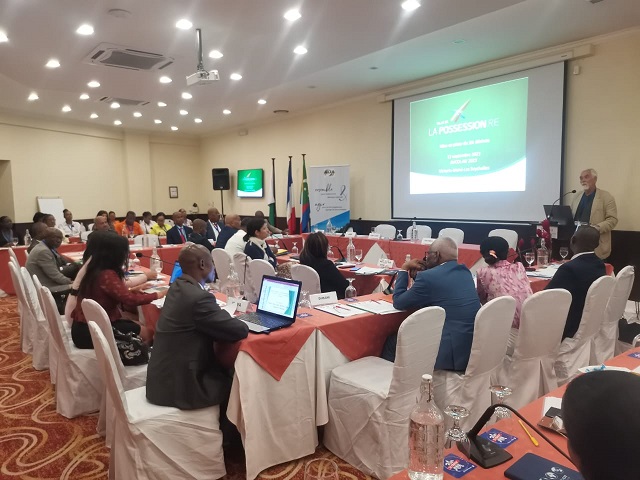
Photo: Retrieved from stvincenttimes.com The Organisation of Eastern Caribbean States (OECS), in collaboration with the World Maritime University (WMU), lead by the WMU – Sasakawa Global Ocean Institute team based in Malmö Sweden, conducted a Marine Spatial Planning (MSP) Workshop in Saint Lucia from April 3-5, 2023. The workshop provided decision makers in OECS Member States with an overview of the theoretical concepts and practical approaches of coastal and Marine Spatial Planning (MSP) in the region. The programme was developed based on a range of existing planning frameworks and practical experiences and comprised modules which underpin the elements of ecosystem-based planning and management. Sarah Mahadeo, Research Fellow with the WMU under the WMU Closing the Circle Programme funded by The Nippon Foundation and a workshop facilitator said: “The workshop focused on key planning principles, application of systems thinking, and the important role that members of the OECS Ocean Governance Team (OGT) have as Blue Leaders in advancing efforts in their countries for the transition to a Sustainable Blue Economy. MSP is an iterative process, therefore it is critical that institutional capacities be strengthened and maintained over time. The hope is that we can continue working with the region towards this goal.” –

Read more
Remote island in Chile shares lessons on sustainability
Circular EconomyApril 14, 2023

Remote island in Chile shares lessons on sustainability

Before this spring, third-year law student Mischaël Cetoute said he had never considered taking a walk barefoot in the rainforest. But when Cetoute signed up for a class on coastal management that sent him to an island off the coast of Chile, he recognized he was in for an adventure. Despite his reservations, Cetoute said he is glad he embraced the experience, because the “Baño de Bosque,” or guided rainforest meditative walk, helped him connect with the picturesque natural surroundings. It also set the tone for the coming week. “Initially, I was very apprehensive about the idea, but I really appreciated that experience and would love to do it again in the future,” said Cetoute. “It made me realize, ‘Wow, there’s this great opportunity to engage with one the world’s most unique ecosystems.’ ” Cetoute and Feltz were also fascinated by Chile’s leadership in environmental protection, including its network of preserves and national parks that make up more than a fifth of Chile´s land area and 41 percent of the nation’s territorial waters. This broader viewpoint is exactly what Suman hopes his students gain from the experience.

Read more
Maldives’ Thilafushi – the story of a trash island’s journey to sustainable waste management
Circular EconomyApril 7, 2023

Maldives’ Thilafushi – the story of a trash island’s journey to sustainable waste management

Thilafushi is often referred to as a “trash island” or a “rubbish island” because it was originally created as a landfill to handle the Maldives’ waste. As the population of the Maldives grew and tourism increased, so did the amount of waste generated. Yes, that’s the ugly side of tourism. Over time, Thilafushi became a dumping ground for all kinds of waste, including hazardous materials like batteries and electronics. The island quickly became overwhelmed with waste, and the landfill began to spill over into the surrounding waters, causing environmental damage to the marine ecosystem. No surprise there! But here’s that twist – today, though Thilafushi is still used as a waste management and recycling center, efforts are being made to improve the island’s infrastructure and reduce the impact of waste on the environment. As we have mentioned earlier, Thilafushi is not your typical tourist destination, as it is primarily an industrial and waste management hub rather than a place for leisure or recreation. But now, with ardent efforts to change things, if you are someone who is interested in environmental issues and want to see firsthand how waste is managed and recycled, Thilafushi could be an interesting place to visit.

Read more
From ukuleles to reforestation: Regrowing a tropical forest in Hawai‘i
Circular EconomyApril 7, 2023

From ukuleles to reforestation: Regrowing a tropical forest in Hawai‘i

The Hawaiian Islands, one the world’s most far-flung island archipelagos, have become known as the extinction capital of the world. Ninety-five of their original 142 bird species have gone extinct since humans first arrived. With 11 more species now among the missing, it’s possible three-fourths of the islands’ birds are already gone. Scientists believe an additional 100 plants have gone extinct, with 200 plant species down to just 50 or so individuals in the wild. Invertebrates are in trouble too, but lack of baseline data makes it hard to know how many species have vanished. A [recent study](https://conbio.onlinelibrary.wiley.com/doi/abs/10.1111/cobi.12565) hints at what’s likely been lost, cataloging the survival of only 15 land snails out of 325 species. To understand why Hawai‘i and other isolated islands have lost so much, one has to understand how island habitats work. The discipline of [island biogeography](https://web.stanford.edu/group/stanfordbirds/text/essays/Island_Biogeography.html), or insular biogeography, was a field greatly advanced in the 1960s by ecologist [Robert H. MacArthur](http://www.nasonline.org/publications/biographical-memoirs/memoir-pdfs/mac-arthur-robert-h.pdf) and biologist [E.O. Wilson](https://en.wikipedia.org/wiki/E._O._Wilson). An insular environment is defined as an area of habitat suitable to a particular ecosystem, but surrounded by unsuitable habitat. This can be an island isolated by ocean, a mountaintop encircled by lowland, or wildland hemmed in by human-altered landscape (forest restoration in all three of these insular habitat types are explored in this Mongabay mini-series). But as the years went by, and the native plantings thrived, Kristen says the NGO has grown more confident, but there’s always more to learn. “I’ll never know everything [and] whenever we have different experts come and visit, they always teach us something new, but I do believe that we have probably a 90% grasp on what we’re doing.” These climate impacts could be expanded greatly if Saving Hawai‘i’s Forests is able to achieve its future restoration goals, or if it inspires similar projects across the Hawaiian archipelago.

Read more