Content Library

News

Curated stories and analysis from islands and sustainability leaders worldwide.

Showing 9 of 123 news items in Connectivity & Digitization
UNESCO and the European Union facilitated training for young Caribbean musicians at the Chigiana Summer Academy 2024
Connectivity & DigitizationSeptember 17, 2024

UNESCO and the European Union facilitated training for young Caribbean musicians at the Chigiana Summer Academy 2024

Photo: Chigiana / Roberto Testi. Retrieved from unesco.org From 15 July to 2 September 2024, the [Accademia Musicale Chigiana](https://www.chigiana.org/) in Siena, Italy, hosted an unprecedented initiative. Eighteen young musicians from the Caribbean, hailing from Barbados, Cuba, the Dominican Republic and Trinidad and Tobago took part in an advanced musical training programme. The participation of these artists was made possible through collaboration between the Academy and the UNESCO programme [Transcultura: Integrating Cuba, the Caribbean and the European Union through Culture and Creativity](https://www.unesco.org/en/transcultura?hub=66907), funded by the European Union. The opportunity included free online application, with no fees required, for one of the Academy’s courses and full coverage of travel and accommodation expenses for the selected musicians. We are proud of the success of this extraordinary international cooperation initiative. We are deeply grateful to UNESCO and the European Union for creating this important institutional partnership with the Accademia Chigiana and for extending their support to the merit and talent of the young candidates.

Read more
Caribbean women to lead AI engagement in Global South summit
Connectivity & DigitizationAugust 30, 2024

Caribbean women to lead AI engagement in Global South summit

Excerpt and photo from antiguaobserver.com How does artificial intelligence (AI) fit into a Caribbean context, and who will benefit? Those are some of the questions that two St Lucian women will be answering when they host the inaugural AI Global South Summit from October 29-31 in St Lucia. Kem-Laurin Lubin and Gale Rigobert are co-chairs of the not-for-profit foundation, and have extensive expertise in both AI and education. Rigobert, an international education consultant, and a former Education Minister in St Lucia, has over a decade in academia specialising in international relations and in political leadership, while Lubin is completing her doctorate in artificial intelligence and a scholarship at the University of Waterloo in Canada. The duo aim to spark critical conversations about AI, dispelling fears that the technology will replace human jobs and helping Caribbean nations keep pace with global technological advancements. “The Global South always seems to be lagging behind because of lack of resources, lack of know-how, not investing adequately in research and development. So, we find ourselves being consumers and downloaders and not active participants in the creation of technology,” Rigobert explained.

Read more
Devon Warner, Chairman of the Barbuda Council, to speak at VIS2024 – 10,000 attendees expected at summit
Connectivity & DigitizationAugust 20, 2024

Devon Warner, Chairman of the Barbuda Council, to speak at VIS2024 – 10,000 attendees expected at summit

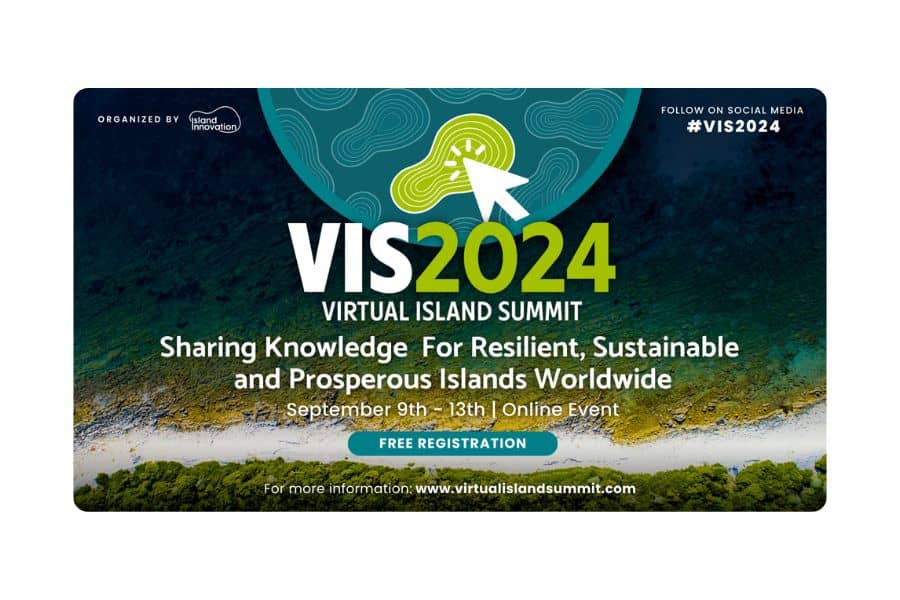
Excerpt and Photo from antiguanewsroom.com The VIS has become one of the largest knowledge-sharing opportunities for island stakeholders, with the free zero-carbon event promoting public participation and understanding of sustainable island solutions, while also providing access to expert speakers from civil society, academia, the private sector as well as government officials. The first set of speakers announced include: During his address at the 2023 VIS **Grenada Prime Minister Hon. Dickon Mitchell** noted: “Every year since 2019 this innovative zero carbon Initiative brings together leaders from island states across the world  to share ideas, network and develop sustainable strategies to address pressing issues that are unique to our island reality. Let me begin by commending the organizers for recognizing and underscoring the importance of unity among island states especially in the face of the climate crisis. Our destinies are undoubtedly intertwined and our survival will depend on our ability to work together and support one another.”

Read more
The greenest games ever? How claims of Olympic sustainability hit a reef in Tahiti
Connectivity & DigitizationJuly 29, 2024

The greenest games ever? How claims of Olympic sustainability hit a reef in Tahiti

A greener games? Certainly that is what Paris promised when it made environmental sustainability, innovation and leadership central to its successful bid to host the 2024 Olympic and Paralympic Games. The Organising Committee [promised](https://www.france24.com/en/france/20230725-greenest-in-history-how-paris-aims-to-halve-the-olympics-carbon-footprint) “historic” progress on climate goals, [halving the carbon footprint](https://olympics.com/ioc/news/paris-2024-high-ambitions-for-lower-carbon-games) of previous games in Rio and London. To achieve this, Paris will cut carbon emissions across travel, construction and operations such as catering and accommodation. All Olympic sites will connect to the public electricity grid, avoiding diesel electricity generation. To enhance social, economic and environmental sustainability, new construction has been minimised by using existing and temporary venues.

Read more
Guarding the Federated States of Micronesia’s Digital Frontier: How CSOs are Laying the Groundwork to Protect the Island From Online Vulnerabilities
Connectivity & DigitizationJuly 23, 2024

Guarding the Federated States of Micronesia’s Digital Frontier: How CSOs are Laying the Groundwork to Protect the Island From Online Vulnerabilities

Excerpt and Photo from undp.org The Pacific Digital Democracy Initiative, funded by the European Union, extends its efforts in enhancing digital readiness and promoting democratic engagement across the Federated States of Micronesia (FSM). This initiative focuses on two major components: (1) Increasing government capacity development; and (2) Partnering up with civil society organizations (CSOs) to protect the digital landscape from cyberthreats and supported through Low Value Grants. The project aims to promote whole-of-society digital transformation through extensive capacity building with civil society and providing training to government officials on digital transformation leadership. By doing so, it seeks to make public service delivery more transparent and efficient, ultimately benefiting citizens across the region.

Read more
Digital disconnect in remote Indigenous communities limits Far North’s economy and career opportunities
Connectivity & DigitizationJuly 5, 2024

Digital disconnect in remote Indigenous communities limits Far North’s economy and career opportunities

Picture: Samuel Davis. Retrieved from cairnspost.com.au First Nations digital creators across Far North Queensland risk being left behind with poor internet service hurting economic development in remote communities, leaders say. Innovation Minister Leanne Linard announced two funding initiatives aimed at increasing Aboriginal and Torres Strait Islanders’ digital skills in Cairns on Tuesday. But remote communities north of Cairns risked missing out on taking advantage of such opportunities if patchy services didn’t improve, Seisia-based community organiser Talei Elu said. “It’s not just internet and phone reception, it’s also power outages that trigger connectivity issues as well,” the [former Queensland Young Australian of the Year said](https://www.cairnspost.com.au/news/cape-york/talei-elu-of-seisia-in-cape-york-wins-queensland-young-australian-of-the-year/news-story/0d1f4c091d0cacb7c8b2f0e0317dd4c5). “A lot of jobs in the future will be tech-based and we hardly talk about those innovations like 3D printing, AI and other developments in our communities and schools.

Read more
Catching Up with the Fellows Who Dreamed Up the Island Institute Fellows Program
Connectivity & DigitizationJuly 5, 2024

Catching Up with the Fellows Who Dreamed Up the Island Institute Fellows Program

The [introduction of the Island Institute Fellows program, in 1999](https://downeast.com/land-wildlife/how-the-island-institutes-fellowship-program-became-a-maine-coast-fixture/), helped cement the organization’s reputation. “We didn’t invent this model,” Conkling notes, “but we knew what kind of fellow would work in which community, and we were good at matching them, and we were good at identifying future leaders.” Soon, communities up and down the coast were reaching out to the Island Institute to request fellows of their own for help with local projects. “There’s a wicked-tight network out there, and the coconut wireless is pretty effective,” Ralston adds. “People started coming to us for all sorts of things.” Recently, the old pals and colleagues met up at Ralston’s photography gallery, in Rockport, to reflect more on the long run of the fellowship program. **Where did the idea for the fellowships first come from?** **Conkling:** The backstory is that in the 1990s there was a lot of cognitive dissonance about what was happening to the lobster fishery in Penobscot Bay. The federal scientists who make the regulations were saying the fishery was on the verge of collapse and the industry needed to be cut back by 50 percent, but fishermen were saying the population was booming. The government was basing their decision off landings data, but some other crucial population statistics were missing. So, in 1998, we got a big federal grant to study lobster dynamics in Penobscot Bay. The only way to collect that missing data was to station graduate students on lobsterboats, which required the trust and participation of fishermen, which is what we brought to the table. We thought if we got a dozen boats to participate in this sea-sampling project, that would be a win. But that first summer, we got on 78 lobsterboats, which was a complete revelation. The insight on a larger scale was that the grad students were young, they didn’t pretend like they knew everything, and they were meeting the lobstermen on their home territory.

Read more
In Assam, Solar Energy Helps Doctors & Medicines Reach Island Dwellers on Boats
Connectivity & DigitizationJuly 5, 2024

In Assam, Solar Energy Helps Doctors & Medicines Reach Island Dwellers on Boats

Excerpt and Photo from thebetterindia.com Primary healthcare was a distant dream for the remote riverine community until 2009 when floating health clinics were introduced. Prior to this, hundreds of thousands of rural residents remained isolated in want of healthcare services. Interestingly, these [boat clinics](https://thebetterindia.com/348884/senior-citizens-healthcare-boat-clinic-in-sundarbans-shis-foundation-abdul-wohab-sabitri-pal/#google_vignette)harness solar energy to efficiently run the programme. The brains behind this project was Sanjoy Hazarika, a journalist and filmmaker who started the non-profit [Centre for North East Studies and Policy Research](https://thebetterindia.com/6801/hope-floats-assams-boat-clinics-help-women-plan-families/) (C-NES), driven by the tragedy he had witnessed on a ferry. In collaboration with the National Rural Health Mission, the non-profit launched the boat clinics in 2005 to bridge the healthcare divide. Since then, monthly health camps have been organised across 14 districts including Dibrugarh, Tinsukia, Jorhat/Majuli, Sonitpur, and Nalbari. For this purpose, 15 such floating health clinics are operating along the river to cater to the isolated communities.

Read more
SIDS Future Forum working paper series
Connectivity & DigitizationJuly 2, 2024

SIDS Future Forum working paper series

In May 2024, the [4th International Conference on Small Island Developing States (SIDS4)](https://sdgs.un.org/smallislands/about-sids4) took place in Antigua and Barbuda under the theme of “Charting the course toward resilient prosperity”. The conference, which aimed to assess the ability of SIDS to achieve sustainable development, resulted in an intergovernmentally agreed 10-year roadmap for SIDS, the “Antigua and Barbuda Agenda for SIDS: A Renewed Declaration for Resilient Prosperity”. Earlier in 2024, the [SIDS Future Forum 2024](https://islandinnovation.co/events/sids-future-forum/) gathered policymakers, researchers, development partners and community leaders in a collaborative effort to begin building this 10-year roadmap. Discussions were underpinned by a series of 12 working papers commissioned by the [Resilient and Sustainable Islands Initiative (RESI)](https://odi.org/en/about/our-work/resilient-islands/).

Read more