VIS 2026VIS 2026 — Virtual Island Summit|Also: GSIS 2027GSIS 2027
Island Innovation Logo
About
Services
The Network
Events
Content Library
Contact Us

Subscribe to our newsletter. By submitting, you agree to our Privacy Policy.

Island Innovation

Island Innovation works with governments, institutions, and partners worldwide to support island-led sustainable economic development.

We Support The UN Development Goals

SDG 9: Industry, Innovation and Infrastructure
SDG 11: Sustainable Cities and Communities
SDG 12: Responsible Consumption and Production
SDG 13: Climate Action
SDG 14: Life Below Water
SDG 17: Partnerships for the Goals

Explore

AboutServicesNetworkEvents

Content

ArticlesNewsCareers

Ready to Connect?

Join the island innovation community

Get in Touch

About

  • About us
  • Case Studies
  • FAQs
  • Press
  • Careers
  • Contact

Services

  • Services Overview
  • Public & Media Relations
  • Strategic Communications

Network

  • The Island Network
  • Academic Council
  • Newsletter

Events

  • Our Events
  • Watch Past Events

Content

  • All Content Library
  • Videos
  • Articles
  • News
Privacy PolicyTerms of ServiceContact

© 2025 Island Innovation. All rights reserved.

    News

    Curated stories and analysis from islands and sustainability leaders worldwide.

    Filter by Core Theme

    All ThemesCircular EconomyClimate ActionConnectivity & DigitizationCulture & CommunityEnergy & TransportGreen Finance & EconomyOcean & BiodiversityPolicy & GovernanceTourism & Remote WorkWater & Food
    Showing 9 of 87 news items in Green Finance & Economy
    Empowering Pacific Island countries to advance their hydrological and water resources capacities
    Green Finance & EconomyAugust 5, 2024

    Empowering Pacific Island countries to advance their hydrological and water resources capacities

    In a significant stride towards enhancing disaster preparedness and resilience in the Pacific, a pivotal workshop was held in Nadi, Fiji, aimed at initiating the Pacific Early Warning Systems for Flood and Flash Flood Guidance System projects. This workshop brought together representatives of National Meteorological and Hydrological Services (NMHSs) and National Disaster Management Offices (NDMOs) from six countries—Fiji, Kiribati, Samoa, Solomon Islands, Tonga, and Vanuatu—with the collective goal of establishing a robust, regional approach to managing and mitigating flood-related risks. The two projects are being supported by the United States Agency for International Development through its Bureau for Humanitarian Assistance (USAID/BHA). Floods including flash floods are recurrent threats in the Pacific region, often leading to significant loss of life and property. The workshop provided a platform for sharing knowledge and challenges in the Pacific for early warning systems. Experts in hydrology, meteorology, and disaster risk management engaged in discussions and breakout sessions, focusing on the development and implementation of the two projects tailored to the unique climatic and geographical conditions of the Pacific islands.

    Read more
    12345678910
    Caribbean anti-corruption chiefs endorse AI solutions to tackle illicit financial flows
    Green Finance & EconomyJune 28, 2024

    Caribbean anti-corruption chiefs endorse AI solutions to tackle illicit financial flows

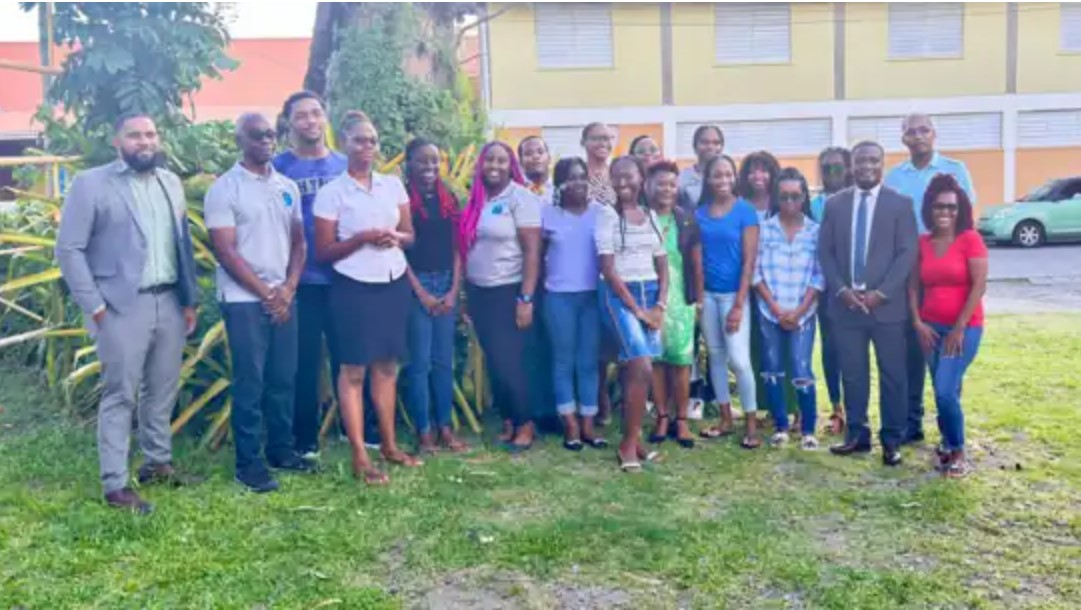
    Excerpt and Photo from thecommonwealth.org **Heads of anti-corruption agencies in the Commonwealth Caribbean concluded their annual conference in Nassau, The Bahamas, last week with a unanimous pledge to leverage artificial intelligence (AI) in the fight against corruption.** Commissions and Anti-Corruption Bodies was hosted by the Commonwealth Secretariat and the Bahamas Public Disclosure Commission as well as the Association of Integrity Commissions and Anti-Corruption Bodies in the Commonwealth Caribbean, under the theme, **‘Best Practices in implementing Integrity and Anti-Corruption Laws in the Caribbean in the age of Artificial Intelligence’**. Towards the end, delegates from Commonwealth Caribbean countries also adopted a communiqué, outlining key priorities and recommendations for member countries to implement over the coming years. They also agreed to enhance collaboration at international, national, and regional levels to bolster anti-corruption efforts.

    Read more
    Mauritius’ next growth phase: a new plan is needed as the tax haven era fades
    Green Finance & EconomyJune 21, 2024

    Mauritius’ next growth phase: a new plan is needed as the tax haven era fades

    Mauritians will head to the polls [by November 2024](https://africacenter.org/spotlight/2024-elections/mauritius/) and politicians are considering the economic direction of the island country. For the last two decades, the country’s economic growth has depended heavily on its offshore sector – the provision of financial services by banks to foreign firms. As an isolated country located in the south-western Indian Ocean, Mauritius has linked itself to global financial sectors by easing the flow of capital into and out of its economy. It has signed double taxation avoidance agreements with other countries, and its capital gains taxes are attractively low. Through double taxation avoidance agreements, foreign entities can establish funds in locations outside their home countries, to take advantage of lower taxes.

    Read more
    Azerbaijani president moots creating fund for “small island states”
    Green Finance & EconomyJune 21, 2024

    Azerbaijani president moots creating fund for “small island states”

    Photo: president.az. Retrieved from eurasianet.org Azerbaijani President Ilham Aliyev seems intent on channeling the spirit of former Egyptian leader Gamal Abdel Nasser as a role model for de-colonization and advocacy of small nations. In the run-up to the annual UN climate conference, COP29, to be hosted by Azerbaijan, Aliyev is taking up the cause of South Pacific island states threatened by rising sea levels. It appears Aliyev hopes to use COP29, which will take place in November in Baku, as a springboard to prominence among the countries of the Global South in the broadest sense of the term. Such ambitions were on display in early June at Baku Energy Week. In his [opening remarks](https://president.az/en/articles/view/66181), Aliyev quickly touted his government’s efforts to reduce poverty and build what he described as “an inclusive society.” He then suddenly switched topics, announcing that Azerbaijan is “actively working with small island developing states,” and even planning to create a fund to support them. Aliyev’s fixation on the South Pacific may have a connection to enmity between Azerbaijan and France. Baku has long [bristled](https://eurasianet.org/armenia-azerbaijan-macron-stirring-things-up-in-the-caucasus) at France’s unwavering support for Armenia in the long-running Karabakh conflict. In May, France accused Aliyev’s administration of [stirring up](https://eurasianet.org/azerbaijan-baku-denying-french-accusations-of-meddling-in-new-caledonia) protests by pro-independence islanders in the French colony of New Caledonia.

    Read more
    Beyond GDP: Cayman needs a new yardstick for measuring success
    Green Finance & EconomyJune 21, 2024

    Beyond GDP: Cayman needs a new yardstick for measuring success

    Limited control over imports: SIDS often depend heavily on imports due to their small size, isolation, and resource scarcity, which traditional economic theories do not account for. Vulnerability to external shocks: SIDS are particularly susceptible to global economic changes, natural disasters, and shifts in major trading partners’ economies. Need for resilience and adaptation: Economic policies for SIDS should prioritise resilience, sustainability, and adaptation to external shocks. Unique development goals: SIDS prioritise goals like social inclusion, cultural heritage preservation, and environmental protection over mere GDP growth. Innovation and entrepreneurship: There is significant innovation potential in sectors like renewable energy and sustainable tourism, which should be considered. Global cooperation and support: SIDS require international support, including debt relief, finance access, technology transfer, and fair-trade practices.

    Read more
    Brain drain, ageing, slow growth facing Caribbean populations
    Green Finance & EconomyJune 17, 2024

    Brain drain, ageing, slow growth facing Caribbean populations

    Excerpt and Photo from caribbean.loopnews.com Low fertility rates, ageing, non-communicable diseases, limited opportunities for youth, and outmigration have emerged as some of the latest demographic trends for the Caribbean region. These and other issues of importance to Caribbean populations were at the forefront of a global policy dialogue among a panel of experts which took place at the Fourth International Conference on Small Island Developing States (SIDS4) in Antigua & Barbuda. Hosted by the United Nations Department of Economic and Social Affairs (UN DESA) the discussion centered on the findings of the UN DESA report, “[Population Prospects of Countries in Special Situations”](https://desapublications.un.org/file/20501/download) and featured the voices of John Wilmoth, Director, Population Division, UN DESA, Jenny Karlsen, Deputy Director, Sub-Regional Office for the Caribbean, United Nations Population Fund (UNFPA), Ashley Lashley, Executive Director, The Ashley Lashley Foundation, Li Junhua, UN Under-Secretary-General for Economic and Social Affairs, Mayor Bernard Wagner of Belize City, and moderator, Caribbean journalist, Daphne Ewing-Chow. The UN-DESA report provides an analysis of current and projected population trends from the current period to 2050 for 110 vulnerable countries or territories— among these— Small Island Developing States.

    Read more
    Empowering Small Island Nations: The Path to Resilient Prosperity
    Green Finance & EconomyJune 17, 2024

    Empowering Small Island Nations: The Path to Resilient Prosperity

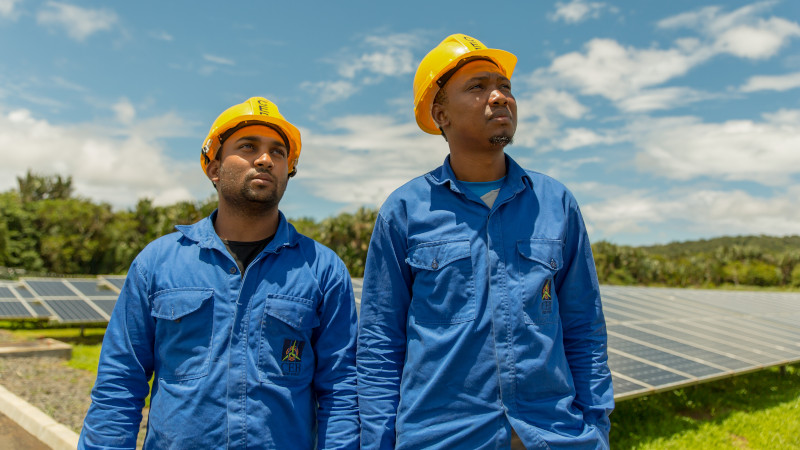
    From the Pacific to the Caribbean, there is a palpable shift in the air as both regions forge new sustainable development trajectories. The end of the [4th International Conference on Small Island Developing States (SIDS4)](https://sdgs.un.org/conferences/sids2024) last month saw the world’s islands take stock of their development and agree on the frameworks for the next ten years of policy. The once-in-a-decade conference, this time held in Antigua and Barbuda, was a showcase of expertise, resilience, and innovation in action. It highlighted that despite the complex situations islanders find themselves in around the world, there is a level of solidarity and collaboration between these communities that enables them to lean on one another for knowledge and support. Heading into SIDS4, the [Pacific Island Development Forum (PIDF)](https://www.pidf.int/) and [United Nations Development Programme (UNDP)](https://www.undp.org/), alongside several international partners, wrapped up a successful solar project that spanned 10 Pacific nations — exemplifying the regional and international cooperation needed to maximize sustainable development. A $1.3 million USD programme funded by the Government of India aimed at highlighting the benefits of solar energy and providing training for green jobs, the [“Solarization of Residences of Pacific Heads of State Project”](https://www.pidf.int/%F0%9D%90%8E%F0%9D%90%9F%F0%9D%90%9F%F0%9D%90%A2%F0%9D%90%9C%F0%9D%90%A2%F0%9D%90%9A%F0%9D%90%A5-%F0%9D%90%8B%F0%9D%90%9A%F0%9D%90%AE%F0%9D%90%A7%F0%9D%90%9C%F0%9D%90%A1-%F0%9D%90%A8%F0%9D%90%9F/) saw 12 public buildings in the region equipped with solar panels. This included the official residences or offices of the governments of the Federated States of Micronesia, Fiji, Kiribati, Palau, the Marshall Islands, Solomon Islands, Tuvalu, and Vanuatu. Nauru saw panels installed on the island’s Dialysis Center, as did Tonga’s National Women’s Council.

    Read more
    From Sustainable Agriculture to Water Security, DISGS Grants Propel Economic Growth and Social Change in Fiji
    Green Finance & EconomyJune 17, 2024

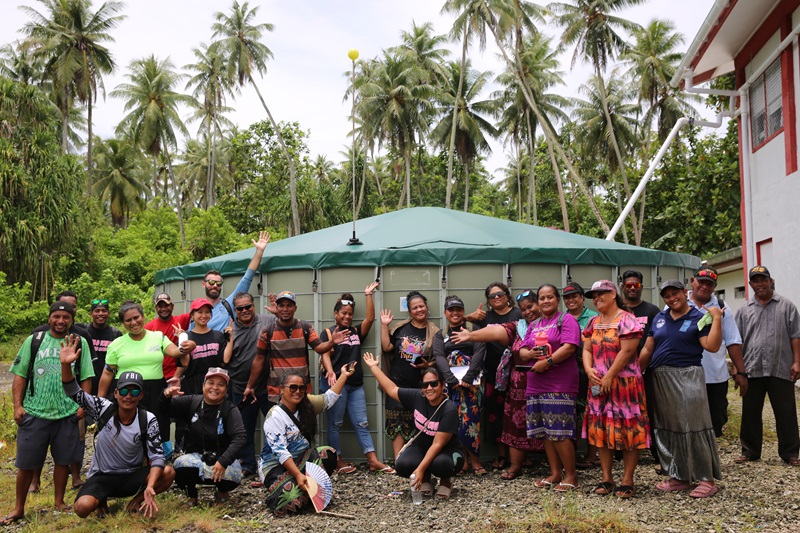
    From Sustainable Agriculture to Water Security, DISGS Grants Propel Economic Growth and Social Change in Fiji

    Excerpt and Photo from undp.org In the very heart of Fiji’s scenery and dynamic community life, a quiet but impactful change is happening, thanks to the Drua Innovation Small Grant Scheme (DISGS). Beyond its aims of fostering economic development and sustainability, this pioneering initiative is fundamentally changing lives, not just for its recipients but for their workers and families as well. Partnering with the Government of Fiji, the UN Development Programme (UNDP) Pacific Office in Fiji, and with support from the Government of Luxembourg, this initiative is supporting transformative development, not just for its recipients but for their workers and families as well. Aligned with the global goals of UNDP, the DISGS plays a pivotal role in driving economic growth, sustainability, and gender equality in Fiji.

    Read more
    Niue works towards ‘self-sustaining’ future with New Zealand
    Green Finance & EconomyJune 11, 2024

    Niue works towards ‘self-sustaining’ future with New Zealand

    An MP in Niue wants New Zealand to support the realm to stand on its own two feet economically. “How we can grow with New Zealand towards the next 50 years, and possibly to be self-sustaining, not to be dependent more on New Zealand every time we need cash,” Niue MP Emani Fakaotimanava-Lui told RNZ Pacific. New Zealand Prime Minister Christopher Luxon landed in Niue on Tuesday, on his first official visit to the Pacific after assuming office. The trip marks five decades since Niue made a decision to self-govern in free association with New Zealand. Niue is not independent, instead it is a realm of Aotearoa. “The independence part would have to be decided upon by those at the time,” Fakaotimanava-Lui said. With [less than 1700 people](https://niuestatistics.nu/) living on the island, and many more tagata Niue in Aotearoa, he said there are more immediate issues than independence. He said his hope for the next 50 years is to see Niue generating its own revenue.

    Read more