VIS 2026VIS 2026 — Virtual Island Summit|Also: GSIS 2027GSIS 2027
Island Innovation Logo
About
Services
The Network
Events
Content Library
Contact Us

Subscribe to our newsletter. By submitting, you agree to our Privacy Policy.

Island Innovation

Island Innovation works with governments, institutions, and partners worldwide to support island-led sustainable economic development.

We Support The UN Development Goals

SDG 9: Industry, Innovation and Infrastructure
SDG 11: Sustainable Cities and Communities
SDG 12: Responsible Consumption and Production
SDG 13: Climate Action
SDG 14: Life Below Water
SDG 17: Partnerships for the Goals

Explore

AboutServicesNetworkEvents

Content

ArticlesNewsCareers

Ready to Connect?

Join the island innovation community

Get in Touch

About

  • About us
  • Case Studies
  • FAQs
  • Press
  • Careers
  • Contact

Services

  • Services Overview
  • Public & Media Relations
  • Strategic Communications

Network

  • The Island Network
  • Academic Council
  • Newsletter

Events

  • Our Events
  • Watch Past Events

Content

  • All Content Library
  • Videos
  • Articles
  • News
Privacy PolicyTerms of ServiceContact

© 2025 Island Innovation. All rights reserved.

    News

    Curated stories and analysis from islands and sustainability leaders worldwide.

    Filter by Core Theme

    All ThemesCircular EconomyClimate ActionConnectivity & DigitizationCulture & CommunityEnergy & TransportGreen Finance & EconomyOcean & BiodiversityPolicy & GovernanceTourism & Remote WorkWater & Food
    Showing 9 of 254 news items in Policy & Governance
    The European Commission Launches the First Strategic Framework for Islands
    Policy & GovernanceJune 18, 2026

    The European Commission Launches the First Strategic Framework for Islands

    Brussels – "For the first time, the European Union has adopted specific strategic frameworks for its island and coastal regions." This was announced today (10 June) by the Executive Vice-President for Cohesion and Reforms, Raffaele Fitto, on the occasion of the adoption of the EU's first strategies for islands and coastal communities. Fitto explained that the two plans have been introduced because the European Union comprises three coastal Member States (Cyprus, Ireland and Malta) and 4,000 islands, where, according to Commission estimates, 17 million people live. "The islands face challenges similar to those of other European territories, yet the impact is often exacerbated by a specific condition: insularity," the Vice-President pointed out, emphasising that the issue is not merely "a geographical fact," but a real economic cost. "The cost of insularity," explained Fitto, is a figure "that millions of EU citizens and businesses pay every day simply because of where they live and operate, with a consequent long-term structural negative effect on their income and competitiveness." According to the data presented by the Commission, compared to the mainland, transport costs on islands can be 300 per cent higher, public spending 30–50 per cent higher, and house prices 75–130 per cent higher. Most European islands have a GDP of 70 per cent of the EU average. In Italy, it is estimated that insularity can reduce GDP in Sicily by 7 per cent and in Sardinia by up to 36 per cent. As for employment rates, the average for the islands is 59 per cent of the EU average. The strategy for the islands is therefore structured around four key pillars: economic development, connectivity, competitiveness, and innovation; energy security, environmental protection, and climate resilience; community and demography; security and crisis preparedness. On this point, Fitto reiterated that "the scope of this strategy has not been defined in Brussels" and that the strategies are "the result of an in-depth and ongoing dialogue with local areas and communities" after the executive had, in recent months, "organised meetings, missions, and discussions across Europe and in Brussels and issued a formal call for contributions, in which 358 stakeholders from 18 Member States took part."

    12345678910
    Read more
    French Polynesia: The Senate Unanimously Agrees on Better Compensation for Victims of Nuclear Tests
    Policy & GovernanceJune 11, 2026

    French Polynesia: The Senate Unanimously Agrees on Better Compensation for Victims of Nuclear Tests

    On Thursday, May 28, the Senate adopted a bill to improve compensation for people exposed to nuclear tests in French Polynesia, where nearly 200 tests were carried out between 1966 and 1996. The bill, drafted by MPs Mereana Reid Arbelot (Communist group) and Didier Le Gac (Renaissance), which originated from a parliamentary inquiry and was adopted by the National Assembly earlier this year, has been unanimously approved by the Senate. It aims to reform the right to compensation for victims of nuclear tests in French Polynesia, in order to improve a system deemed "complex" or "discouraging" for local populations suffering from illnesses they believe are caused by radiation exposure, primarily cancer. "The Republic always grows stronger by recognising the limits of its action, by repairing everything that can be repaired, by paying tribute to all those who have played their part in our national history," said the Minister Delegate for the Armed Forces, Alice Rufo, who was in favour of adopting a "balanced" text. The adopted text thus eliminates the precise exposure criterion, a dose of at least one millisievert (mSv) per year, currently in force, in favour of an "irrefutable" presumption of exposure. In practical terms, any person with a radiation-induced illness who is present in specific areas and during specific periods will be eligible for compensation, as will their dependents.

    Read more
    Kiribati Minister Makes History as First Pacific Islander Elected to UN Gender Body
    Policy & GovernanceJune 11, 2026

    Kiribati Minister Makes History as First Pacific Islander Elected to UN Gender Body

    Kiribati's Minister for Women, Youth, Sport and Social Affairs, Ruth Maryanne Cross Kwansing, has become the first Pacific Islander elected to the United Nations Commission on the Status of Women, marking a historic milestone for the region. Ms Kwansing, who also serves as the Pacific Islands Forum (PIF) Political Champion for Gender and Social Inclusion, was elected to the global body in April for the 2026-2030 term and said the achievement felt like a miracle. "From Kiribati, we were so excited and extremely humbled by what we think is a real miracle in how it happened," Ms Kwansing said.

    Read more
    EU Doubles Funding for Caribbean Territories, Including Curaçao
    Policy & GovernanceApril 21, 2026

    EU Doubles Funding for Caribbean Territories, Including Curaçao

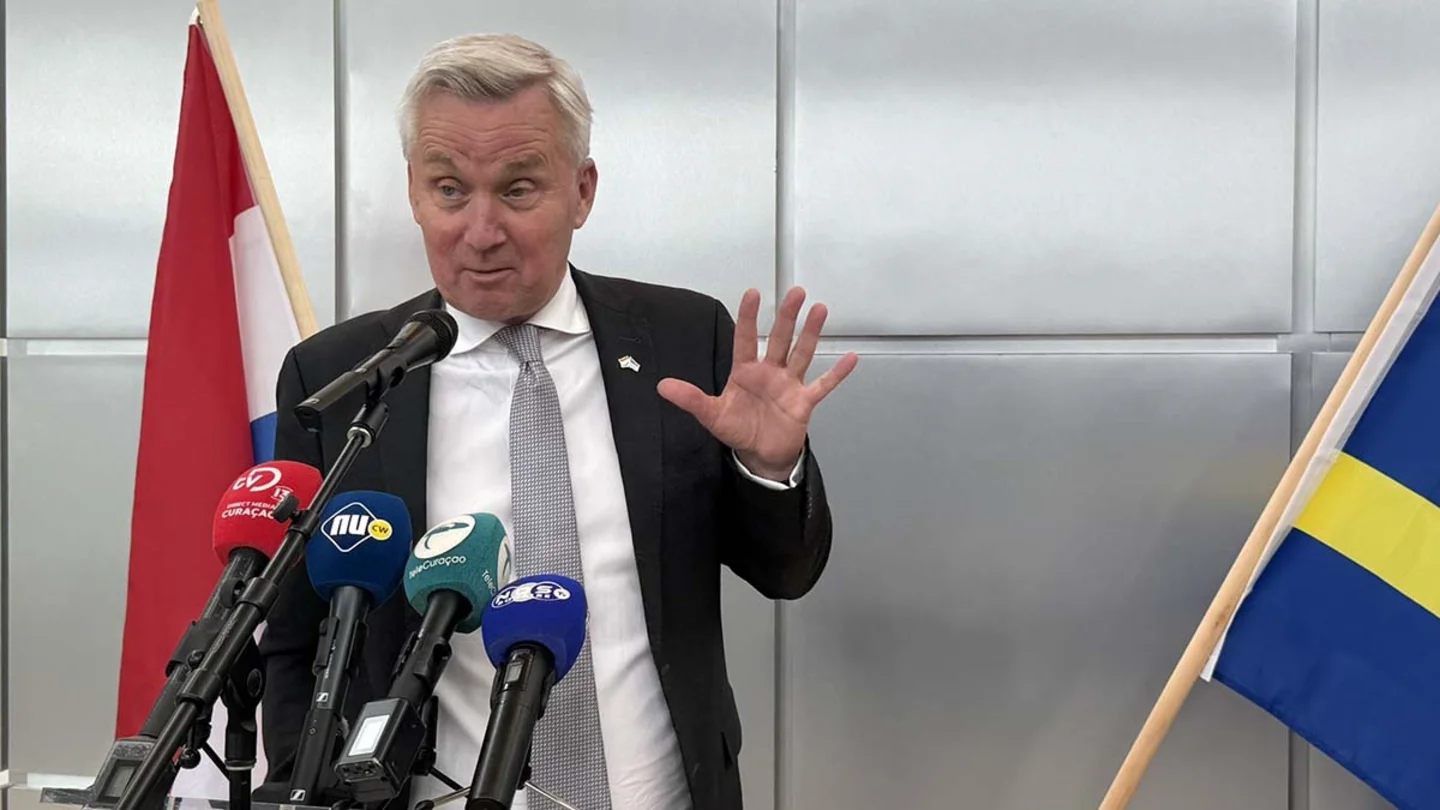
    Excerpt from curacaochronicle.com ORANJESTAD – The European Union has nearly doubled its financial support for Overseas Countries and Territories (OCTs), including Curaçao and Aruba, increasing funding from €500 million to €999 million. The announcement was made during the OCT-EU Forum currently taking place in Aruba, where European and Caribbean leaders are meeting to strengthen cooperation. According to European Commissioner Jozef Síkela, the increase reflects a shift in approach. The partnership is no longer viewed as development aid, but as a strategic investment aimed at strengthening the resilience and long-term future of the territories. The funding boost is being described as one of the most significant outcomes of the forum, which has also seen the launch of several initiatives focused on sustainability, biodiversity, disaster management, and economic development. Mike Eman emphasized that the forum is producing concrete results rather than just discussions, pointing to new programs that are already being set in motion.

    Read more
    UMass Dartmouth, Azores students unite to break stigma around addiction
    Policy & GovernanceApril 21, 2026

    UMass Dartmouth, Azores students unite to break stigma around addiction

    Excerpt from heraldnews.com Students from UMass Dartmouth and the University of the Azores have been learning how stigma — often stemming from misinformation, fear and deeply entrenched social stereotypes — is one of the main barriers to treatment for substance use disorders on both sides of the Atlantic. Eight UAc students, along with three professors, were in the Southcoast from April 7 to 14 as part of the "Bridging the Atlantic" international nursing student exchange program between the two universities. “This is our 11th year, and 240 students have gone through the program,” said Dr. Maryellen Brisbois, who coordinates the "Bridging the Atlantic" program at UMass Dartmouth. “Every year, we look at a community health issue in the United States and the Azores. We talked about a lot of challenges in both countries, that we had seen and the students had seen, and it seemed substance use was very important at this moment.”

    Read more
    'No island is too small to make an impact': Germany builds closer ties with Tonga, seals diplomacy with Niue
    Policy & GovernanceMarch 2, 2026

    'No island is too small to make an impact': Germany builds closer ties with Tonga, seals diplomacy with Niue

    Excerpt and Photo Credit: pacificislandtimes.com Germany’s foreign minister recently embarked on an Indo-Pacific tour to shore up relations and build a backstop against China. Tonga was the last leg of Johann Wadephul’s tour, and to some observers, it the curious part of the itinerary, which began in Singapore and Brunei before moving on to New Zealand and Australia. How does Tonga, a tiny island kingdom in the South Pacific with a population of approximately 104,000, share the interests of economic powerhouse Germany, a country it has so little in common with? Lord Fakafanua, Tonga’s prime minister, said Wadephul’s visit reflected the “strength and longevity” of the two countries' relationship and their shared focus on sustainable development and climate resilience, both vital to their future. While in Tonga, Wadephul met with Niue's prime minister, Dalton Tagelagi, to seal Germany's diplomatic relations with Niue, marking another step toward closer ties in the Pacific region.

    Read more
    All hands on paddles: Why COP31 needs the full strength of Pacific women
    Policy & GovernanceMarch 2, 2026

    All hands on paddles: Why COP31 needs the full strength of Pacific women

    Photo Credit and Excerpt from themandarin.com.au I watched our children trundle home from their first day back at school, their giggles drifting across the heat-haze of dusty roads. It reminded me of the girl I once was, and of thousands of girls across our Blue Pacific for whom school is not guaranteed. I was one of the fortunate ones: my parents invested in me, and I had access to a good education. It was my mother who nudged me toward politics. When I veered off this path, she pulled me back to it.

    Read more
    Fiji, Palau and Tuvalu set to show world leaders climate change impact ahead of COP31
    Policy & GovernanceMarch 2, 2026

    Fiji, Palau and Tuvalu set to show world leaders climate change impact ahead of COP31

    Excerpt from abc.net.au Fiji, Palau and Tuvalu look set to host world leaders and climate change ministers in the lead-up to COP31 in a bid to encourage larger countries to accelerate cuts to emissions. Both Fiji and Palau had offered to host the "pre-COP" meetings secured for the Pacific under a complicated deal struck last year that saw hosting rights for the main climate summit go to Türkiye while giving Climate Change Minister Chris Bowen a key position in global climate negotiations. Australia and Pacific Islands nations have declared they want to use the opportunity to publicise the Pacific's existential battle with climate change. But negotiations on who should host events in the lead-up to the summit have dragged on.

    Read more
    Trump’s Greenland threats put crucial climate change research at risk
    Policy & GovernanceFebruary 18, 2026

    Trump’s Greenland threats put crucial climate change research at risk

    Excerpt from japantimes.co.jp U.S. President Donald Trump’s vows to take over Greenland have chilled relationships between American and Greenlandic researchers, halting some projects and making future collaborations uncertain. Ross Virginia, a professor emeritus of environmental studies at Dartmouth College, said a climate program he ran with Greenlandic colleagues was halted by “mutual agreement” due to the tensions. “Direct cooperation is paused while we determine what a future vision for collaborative science diplomacy — particularly involving education and younger students — could look like,” he said. Another U.S. scientist, who asked not to be identified for fear of jeopardizing relationships, said some of his research partnerships in Greenland were paused even before Trump escalated talk of annexation in early January, and that he suspended fieldwork out of respect for Greenlanders.

    Read more