Content Library

News

Curated stories and analysis from islands and sustainability leaders worldwide.

Showing 9 of 96 news items in Tourism & Remote Work
Pilot program empowers this Hawaiʻi Island community to manage tourism themselves
Tourism & Remote WorkJuly 26, 2023

Pilot program empowers this Hawaiʻi Island community to manage tourism themselves

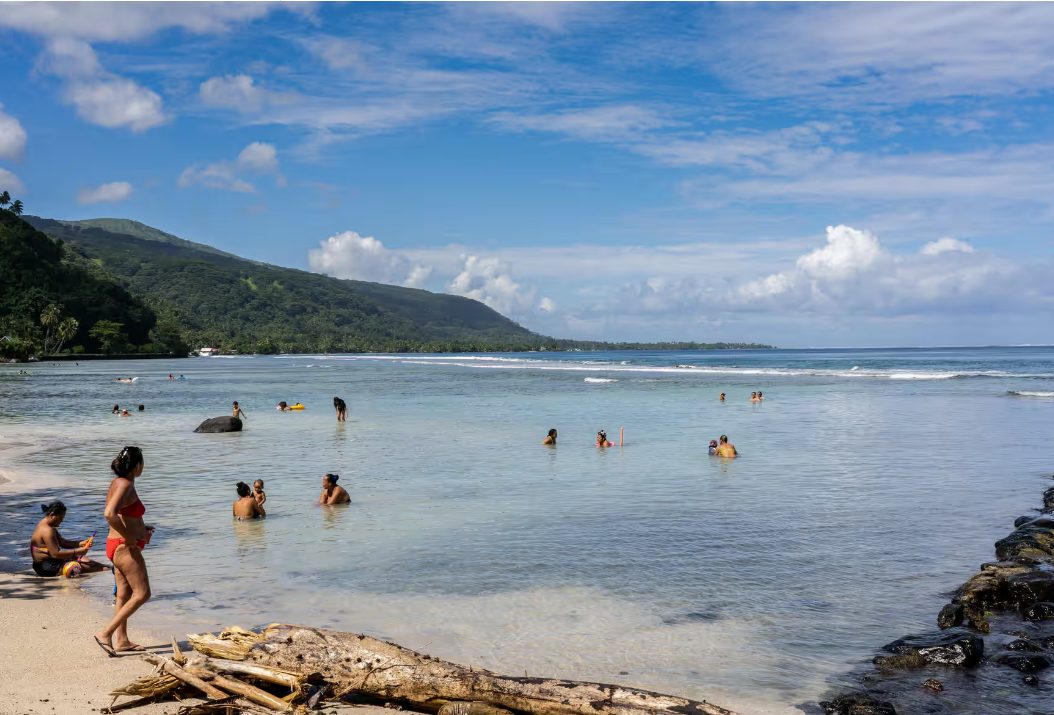
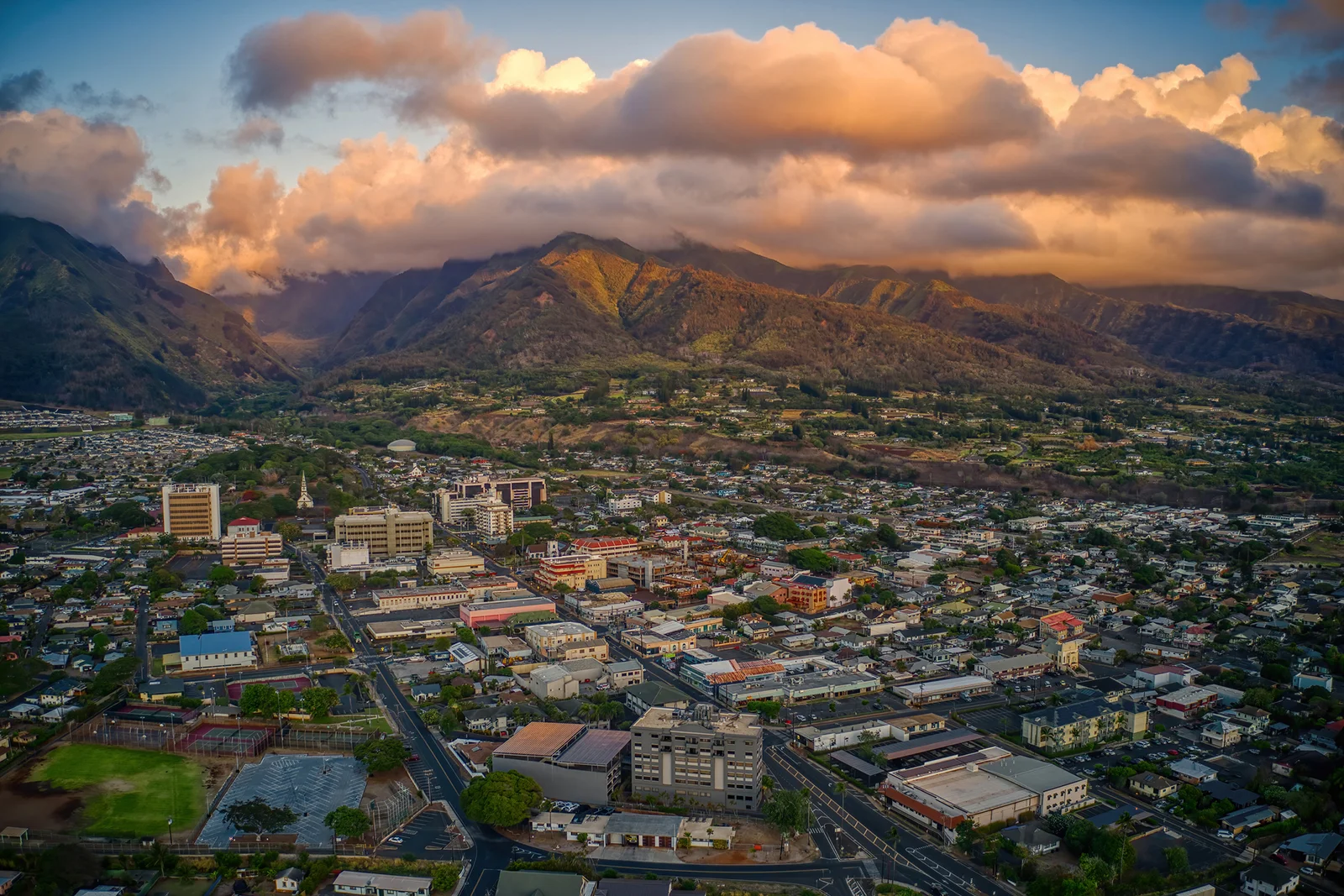
Photo: Kuʻuwehi Hiraishi/HPR. Retrieved from hawaiipublicradio.org The coastal community of Keaukaha on Hawaiʻi Island has been flagged as a tourist “hotspot” by the Hawaiʻi Tourism Authority. Residents there say they have been feeling the pressure for years. A new pilot program aims to empower the Keaukaha community to manage the impacts of tourism themselves. Lehia native ʻĀinaaloha Ioane’s family has been coming to Waiuli Beach Park for generations. “So kēia, this loko iʻa is Honokea. The ocean is Waiuli, our lae over there is Puakahinano. Then after Puakahinano, we hit Lehia,” Ioane said. Ioane is the project coordinator for the [Keliʻi William Ioane Legacy Foundation](https://www.hawaiipeoplesfund.org/keli%CA%BBi-william-ioane-legacy-foundation/). The organization is the community lead for the Keaukaha Stewardship Program. “The intent of the stewardship program right now is to first identify what’s happening. And once we can understand what’s happening then we can have discussions with our community about, ‘Okay, how do we feel about what we see is happening?’” Ioane said.

Read more
The wild, remote island at the heart of a billion-dollar industry
Tourism & Remote WorkJuly 3, 2023

The wild, remote island at the heart of a billion-dollar industry

Photo: NELL LEWIS/CNN. Retrieved from edition.cnn.com The rain-lashed isle of Islay off Scotland’s west coast is not always easy to get to. Temperamental ferries run three times a day from the mainland port of Kennacraig and frequent sea mists can****disrupt the small passenger planes that fly daily from Glasgow. Even so, the island attracts hundreds of thousands of visitors from all over the world each year. What do they come for? Whisky. Despite its small size and a population of just 3,000,****Islay is home to nine – soon to be 11 – of Scotland’s 145 active distilleries. The distinctive smoky flavor of its single malt has won it fans globally.****A single page from the visitors’ book at Ardbeg distillery on the south of the island lists addresses from the UK, US, Australia, Ukraine, the Netherlands, Germany, Denmark and Taiwan. Part of the reason is that when it comes to an Islay single malt, the place and the taste are so deeply intertwined. The salty breeze that blows in from sweeping white sand beaches settles in ancient peat bogs, which are harvested to fuel the kilns that dry the barley, giving the whisky its smoky, earthy flavor. “It’s a liquid that runs through people’s veins,” says Thompson. “It’s very much part of the lifeblood and the real beating heart of Islay – you just have to go to the pub on a Friday or Saturday night and you’ll feel that very strongly.”

Read more
Rum bidding for Dark Sky Island status to boost astro-tourism
Tourism & Remote WorkJune 1, 2023

Rum bidding for Dark Sky Island status to boost astro-tourism

Photo: STEVEN GRAY. Retrieved from bbc.com A Scottish island where stargazers can view the Milky Way with the naked eye is bidding to protect its clear night skies and boost visitor numbers. Residents on Rum are hoping it will be recognised as a Dark Sky Island. They have been preparing an application to the International Dark Sky Association. It combats light pollution worldwide, and grants official recognition to areas which implement policies which reduce artificial light. Scotland currently has two dark sky parks – Galloway Forest and Cairngorms. Moffat in Dumfries and Galloway and the islands of Coll and North Ronaldsay are also certified as dark sky communities. In recent years, the community of just 30 people on Rum have made efforts to overhaul the island’s lighting system. There are no streetlights and this is combined with hardly any buildings and no traffic. When the sun sets, locals and visitors alike can experience a naturally dark sky, and enjoy views of the meteors, shooting stars, and twinkling planets.

Read more
RMI latest Signatory of the Pacific Leader’s Sustainable Tourism Commitment
Tourism & Remote WorkMay 25, 2023

RMI latest Signatory of the Pacific Leader’s Sustainable Tourism Commitment

The Republic of the Marshall Islands has become the 18th signatory of the Pacific Leader’s Sustainable Tourism Commitment. RMI’s Minister of Natural Resources and Commerce, John Silk, emphasized the importance of advancing sustainable tourism development in the Pacific, in an inclusive and collaborative manner. He says they’re inspired by the ambitions of the Pacific Sustainable Tourism Policy Framework (PSTPF) the SOC works as a tool to support collective action on PSTPF implementation, with the backing of SPTO’s Council of Tourism Ministers. Silk adds that as we try to rebuild tourism in our region, we have the perfect opportunity to also reframe our approaches with sustainability and resilience at the fore. The Pacific Leader’s Sustainable Tourism Commitment provides us with a high-level pathway to regional collaboration on this important issue. SPTO Chief Executive, Christopher Cocker, also acknowledged the importance of collective action, in support of SPTO’s regional tourism mandate. The 18 signatories are the Federates States of Micronesia, New Caledonia, Samoa, Niue, Vanuatu, Timor Leste, Solomon Islands, Tokelau, Tonga, French Polynesia, Kiribati, Cook Islands, American Samoa, Fiji, Wallis & Futuna, Nauru, Tuvalu and the Republic of the Marshall Islands.

Read more
As tourism returns to the Pacific, there is a renewed focus on sustainable travel
Tourism & Remote WorkMay 25, 2023

As tourism returns to the Pacific, there is a renewed focus on sustainable travel

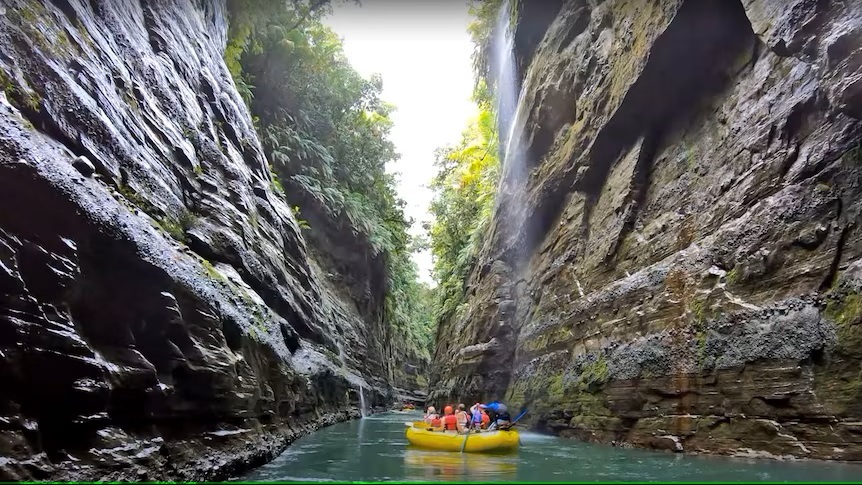
Photo: Rivers Fiji: YouTube. Retrieved from abc.net.au Locals call the Upper Navua River — which flows through a tropical canyon in Fiji — “the highway to our ancestors”. Kasimiro Taukeinikoro’s company Rivers Fiji offers rafting experiences along the river, but as visitors arrive he asks them to treat the place with the same respect they would their own homes. Concerned the area — located in one of Fiji’s most valuable mahogany forests — would be compromised by logging or mining, Mr Taukeinikoro said Rivers Fiji convinced the Indigenous land-owning clans, the Mataqali, that low-impact tourism would be a better economic investment. It was Fiji’s first public-private conservation tourism area focused on sustainable tourism and creating economic opportunities for local communities. “What we have here, it’s why the tourists come in the first place. They come because of our culture, they come because of our friendliness, they come because of our pristine environment,” Mr Taukeinikoro said. Tourism development has typically focused on coastal communities, but this initiative and others like it are providing an economic alternative to areas where mining or forestry would have been the only development option in the past. Rivers Fiji guides tell visitors about the ecosystem, cultural traditions, heritage sites, and local preservation issues, and offer tourists the opportunity to understand daily life of Indigenous Fijians in the rural highlands. Meanwhile, Rivers Fiji compensates landowners through employment opportunities, lease payments and protection of the area.

Read more
Caribbean comeback: The region’s post-pandemic tourism rebound leads the world
Tourism & Remote WorkMay 5, 2023

Caribbean comeback: The region’s post-pandemic tourism rebound leads the world

Photo:  A beach in the Caribbean island nation of Barbados. (Caribbean Hotel & Tourism Association). Retrieved from wlrn.org Few regions saw their tourism industries suffer more during the COVID-19 pandemic than the Caribbean did. But the region is now rebounding more strongly than any other — and for some surprising reasons. The Caribbean lost a full tenth of its collective GDP in 2020 — the worst year of the pandemic — and the big reason was that tourism, which accounts for a full 14 percent of that GDP, dropped by two-thirds. But travel data firms like ForwardKeys now show Caribbean tourism enjoying the world’s best post-pandemic recovery. In the first two months of this year, the Caribbean’s international arrivals numbers were down only 1% compared to the same period in 2019. By contrast, Europe’s numbers were still 25% behind — and Asia’s were 54% short. Leading the way was the U.S. Virgin Islands, which saw a 22% arrivals increase, although the U.S. territory’s pandemic recovery benefitted from U.S.-supplied vaccines and economic relief. “These are impressive results for our region,” said Nicola Madden-Greig, president of the Caribbean Hotel and Tourism Association. One key reason appears to be a jump in post-pandemic travel to the Caribbean from South America — a region that usually sends its tourists to Miami. That shift is due largely to the fact that Panama is now a more active airport connection hub for South Americans to Caribbean destinations.

Read more
Amid the rush for more tourist arrivals, Thai island Koh Mak is deliberately taking it slow
Tourism & Remote WorkApril 27, 2023

Amid the rush for more tourist arrivals, Thai island Koh Mak is deliberately taking it slow

(Photo: CNA/Jack Board). Retrieved from channelnewsasia.com Nestled off the coast, in the Gulf of Thailand, Koh Mak feels something like an odd sibling. In recent years, the islands in this part of the country have become increasingly developed and visited by tourists drawn to the calm aquamarine sea and idyllic island scenery. Where luxury awaits on Koh Kood and nightlife and entertainment abounds on Koh Chang, the third and smallest of the islands in this chain is trying to avoid the trappings of mass tourism. The approach of Koh Mak’s leaders is different and deliberately so. Stepping on the small island, home to just a few hundred residents, feels almost like time travel. Beach fronts with golden sand remain mostly undeveloped. Electric golf carts carry families along tidy streets in near silence. The 7-Elevens, Starbucks and cheap cocktail bars so ubiquitous throughout Thailand’s tourist hotspots are entirely absent. At night, the island falls silent early. Waves lap at the shoreline but very little else stirs. The efforts towards building the island’s green credentials have paid off. Koh Mak was recognised last year as one of the Top 100 sustainable destinations in the world, as judged by the Green Destinations Foundation. The Dutch organisation supports communities and businesses in sustainable destinations and runs certification and training programmes. It was one of three locations awarded the prize in Thailand, along with Mae Hong Son’s Ban Huay Pu Keng and Sapphaya in Chai Nat province. Koh Mak is also recognised as Thailand’s first low carbon tourism destination.

Read more
South Korea’s Jeju Island mulls entry fee for tourists amid environment, sustainability concerns: Report
Tourism & Remote WorkApril 25, 2023

South Korea’s Jeju Island mulls entry fee for tourists amid environment, sustainability concerns: Report

Photo: A photo taken on May 10, 2019 shows a general view of the Seongsan Ichulbong (Sunrise Peak) volcanic rock formation on Jeju island. (Photo: AFP/Ed Jones). Retrieved from channelnewsasia.com South Korea’s Jeju Island is considering imposing an entry fee for tourists in order to support environmental sustainability, The Korea Times reported on Tuesday (Apr 18). The popular tourist destination has been mulling the measure after locals raised concerns about garbage and sewage increasing beyond the island’s management capacity. If submitted and passed at the assembly, each visitor will have to pay an average of 8,170 won (US$6.20) a day, said the report. The fees include 1,500 won per night for tourists, 5,000 won per day for those renting a car, 10,000 won for a minivan and 5 per cent of the cost of renting a bus. The measure could send about 141 billion won to the government coffer after the first year, increasing to 154 billion won by the second year and 167 billion won the following year, said the report, citing the island’s government. The Jeju Special Self-Governing Province previously tried to introduce such a fee in 2012 but was thwarted by objectors, according to The Korea Times.

Read more
The King Tides of Tourism
Tourism & Remote WorkApril 11, 2023

The King Tides of Tourism

In the absence of firm controls, tourism is capitalism run amok. This county once funded a comparative study in order to avoid becoming another Nantucket Island. How are we doing? Soon, the reinvasion of our island will dominate another summer. Wholly unrestrained, except by the maximum carrying capacity of a faltering ferry fleet, the summer hordes and their cars will suck the easy-going spontaneity out of summer. Do we even have a composite “island culture”; a sturdy rudder by which to buck the tides of outside, upscale, faddy interests? Some wags, grumping about downtown parking, packed bars and eateries, standing in lines and dodging distracted visitors say that our eruption of tourism is like a case of flesh-eating bacteria. Not so. Threatening bacilli can be treated with antibiotics! Notwithstanding our inertia, inflationary delirium and the real threat of recession, we need to transition to economic resilience. Future challenges are mounting. The best path is to use the problem – like overheated real estate speculation – to fund the solution, like our County Home Fund. Are we determined enough to become the organ-grinder choosing the tunes as opposed to being monkeys dancing wildly for a few coins?

Read more