Content Library

News

Curated stories and analysis from islands and sustainability leaders worldwide.

Showing 9 of 87 news items in Water & Food
Comoros faces water shortages – here’s how the small island state is adapting
Water & FoodNovember 26, 2024

Comoros faces water shortages – here’s how the small island state is adapting

Photo courtesy: Riccardo Mayer/Shutterstock. Retrieved from preventionweb.net Comoros is truly a unique context. Comprising several small islands separated by vast distances, the country’s largest island, Grande Comore, is less than 1,200 square kilometers. With its limited land area, the country is reliant on small watersheds and aquifers that have very little capacity to store water. This makes these fragile systems highly sensitive to any shifts in rainfall patterns, leaving the nation vulnerable to droughts, flash floods, erosion, and soil salinization. Reduced rainfall directly affects river flow and groundwater recharge, particularly during the dry season. On Grande Comore, there are no permanent rivers. On the islands of Anjouan (Ndzuani) and Mwali, rivers that were once permanent are increasingly turning ephemeral, with some disappearing entirely. Presently, water security is a critical concern across all islands and the outlook is worsening with climate change. Projections point to greater rainfall variability, prolonged droughts, and an increase in both the frequency and intensity of storm flooding. Torrential rains not only erode watersheds, further depleting surface and groundwater resources, but also damage vital water supply infrastructure, exacerbating the crisis. Recognizing the urgency, the Government of Comoros has made water access a top priority, as reflected in the country’s Nationally Determined Contribution and Comoros’ Emerging Plan (PCE 2030), with the bold ambition of providing 100 percent of the population with reliable, climate-resilient water supplies by 2030, with no one left behind. To make this happen, the government is mobilizing efforts from international partners, local government and communities alike.

Read more
The Food and Agriculture Organization of the United Nations launches an app to support Indigenous pineapple farmers in Suriname
Water & FoodNovember 20, 2024

The Food and Agriculture Organization of the United Nations launches an app to support Indigenous pineapple farmers in Suriname

Dimitra, a global leader in agricultural technology and sustainability solutions, is supporting the Food and Agriculture Organization of the United Nations (FAO) to develop a smartphone application for Indigenous farmers in Suriname. FAO is working in the country to enhance organic pineapple production by leveraging blockchain technology to modernize cultivation practices, boost productivity, and secure market access. Leveraging Dimitra’s traceable and immutable technology, through this app local growers will access advanced techniques including mechanical land preparation and artificial flower induction to produce premium organic pineapples and meet market demands. Dimitra is deploying immutable blockchain and AI technology to support FAO providing Surinamese farmers with real-time comprehensive farming data on their crop production and supply chains from end-to-end. From creating digital farmer profiles and registration with their demographic and plot details, to tracking crop activities and managing harvests with traceability services, the platform aims to ensure that every step of the pineapple production process?from planting to harvesting?is traceable. By providing a secure record of sustainable practices through actionable data, Surinamese farmers can gain access to advanced technology to transform agricultural practices, enhance market competitiveness, and forge key alliances, opening doors to premium markets that require stringent compliance with international standards. FAO has been working in the country since 2018 with UNIDO, ILO and UNFPA through the ASTA Suriname initiative has been driving the pineapple sector’s growth in Suriname, a focal commodity for the country’s economic growth. Backed by the Joint United Nations Sustainable Development Group (UNSDG) Fund, the ASTA Suriname project has conducted in-depth analysis of farms and rolled out initial implementation activities. The project aims to empower indigenous and rural communities across Suriname’s pineapple belt to modernize organic pineapple production, transforming Suriname into a major producer and exporter of high-quality organic fresh and processed pineapples, and moving away from outdated practices with little value-addition and limited exports.

Read more
Costa Rica’s Cocos Island Leads the Fight Against Illegal Fishing
Water & FoodNovember 20, 2024

Costa Rica’s Cocos Island Leads the Fight Against Illegal Fishing

The Pew Charitable Trusts recently published an article highlighting the international reach of Costa Rica’s Cocos Marine Conservation Area Monitoring, Control, and Surveillance Center (MCCA). This center, which protects the UNESCO [World Heritage Site](https://whc.unesco.org/en/list/820/), is at the forefront of combating illegal fishing in one of the world’s most vital marine protected areas. Using advanced satellite tracking technology, such as Global Fishing Watch, authorities can monitor illegal fishing vessel activities in real-time around Cocos Island, an ecosystem critical to the biodiversity of the Pacific Ocean. This advanced monitoring is especially valuable in the eastern tropical Pacific, a region that hosts whales, tuna, sharks, rays, sea turtles, and hundreds of other marine species that either live or migrate through these waters. “The science is clear: Marine protected areas (MPAs) are essential to helping our ocean recover from human-inflicted damage and thrive far into the future. But for MPAs to work, marine managers need data that helps them monitor these areas to understand what is happening across vast, remote ocean spaces,” the article emphasized.

Read more
Drinking water outage hits half of Mayotte
Water & FoodNovember 20, 2024

Drinking water outage hits half of Mayotte

Photo: © AFP – Julien de Rosa. Retrieved from rfi.fr The “event of electrical origin” at the Ouroveni plant overnight from Monday to Tuesday “is leading to water cuts mostly located in the centre and south” of Mayotte’s main island Grande Terre, the prefecture said. Around half of [Mayotte’s](https://www.rfi.fr/en/tag/mayotte/) population of 320,000 depends on Ouroveni’s daily output of up to 20,000 cubic metres of drinking water. The island territory has for years been battling water shortages. Low rainfall and numerous leaks in the distribution system prompted authorities to cut [water](https://www.rfi.fr/en/tag/water/) supplies for as much as two out of every three days between August 2023 and January this year. Cuts are still in force for one in every three days as “daily consumption is estimated at 45,000 cubic metres, but the territory can only produce a maximum of 40,000,” said Jerome Josserand, head of the territory’s [DEALM](https://www.mayotte.developpement-durable.gouv.fr/) environment, planning, housing and maritime authority.

Read more
Kiribati fishermen bring expertise and song to Australia’s tuna farms
Water & FoodOctober 25, 2024

Kiribati fishermen bring expertise and song to Australia’s tuna farms

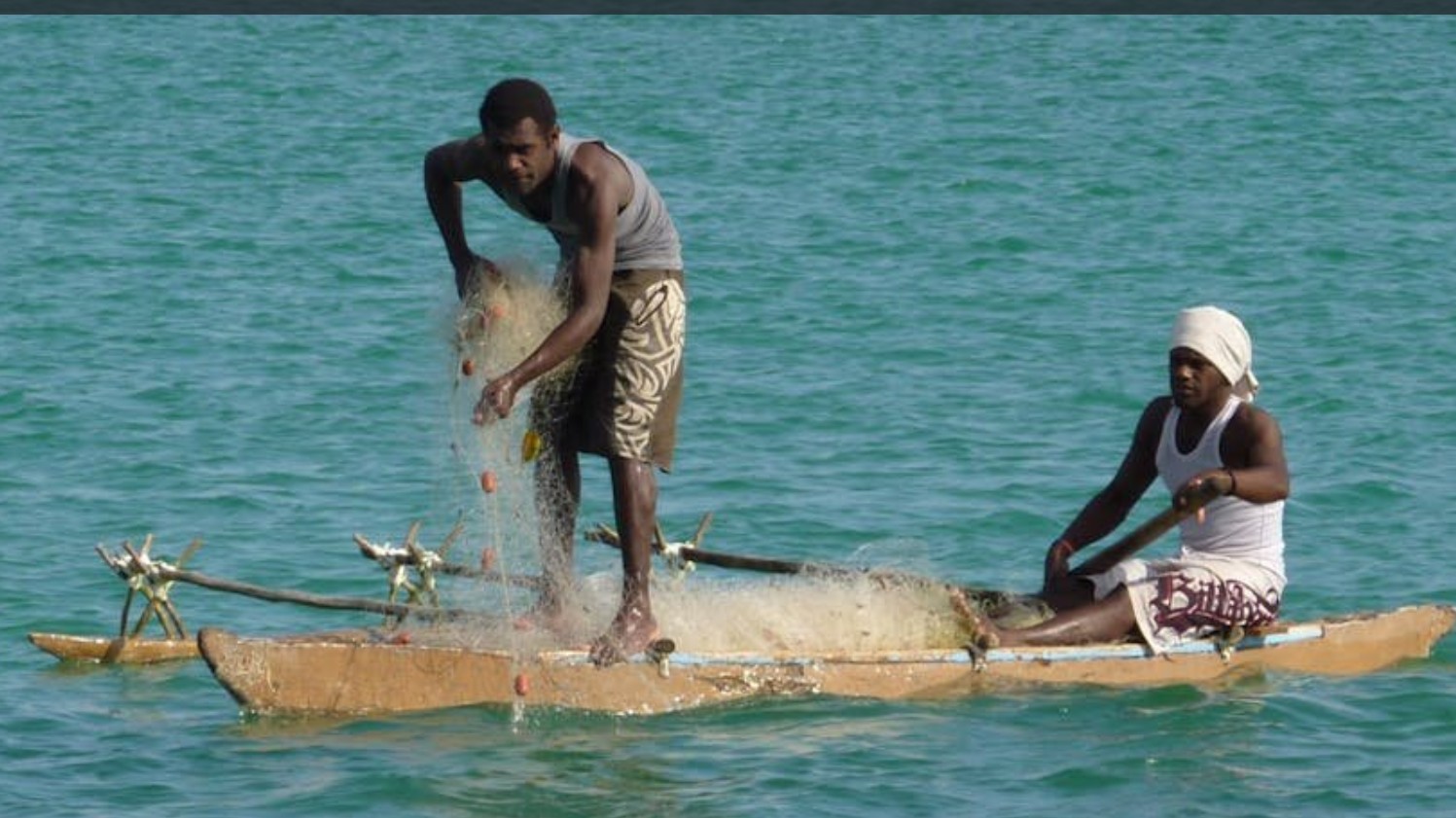
Photo courtesy: ABC Eyre Peninsula: Amelia Costigan. Retrieved from abc.net.au It’s not uncommon to hear Port Lincoln’s crew of Kiribati fishermen burst spontaneously into song while at work. Their sweet-sounding harmonies are reminders that despite being naturals on the water, the community of seasonal tuna industry workers have brought more than much-needed fishing expertise to Australia’s seafood capital. The 82-strong crew from the Micronesia sub-region of the Pacific Islands spend nine months of the year in the Eyre Peninsula town where South Australia’s $120 million tuna industry is concentrated. Kiribati seasonal worker Teraaka Toaraoi says the experience is mutually beneficial for the Australian and Kiribati employees. “It’s kind of quick when they show us how to do it, we learn it quickly because back home we’re fishing, so fixing something like nets, we know how to do it, how to tie things, we do it,” he said. “We really like working here because it’s the same as back home. We go early in the morning, we come back in the afternoons, same as back home.”

Read more
How diverse crops create a safety net for Solomon Islanders
Water & FoodOctober 11, 2024

How diverse crops create a safety net for Solomon Islanders

Photo source: IFAD/Barbara Gravelli. Retrieved from ifad.org The [Solomon Islands](https://www.ifad.org/en/web/operations/w/country/solomon-islands) are made up of about 1,000 islands spread over a vast expanse of the western Pacific Ocean. Like other [Small Island Developing States](https://www.un.org/ohrlls/content/about-small-island-developing-states) (SIDS), the country is particularly vulnerable to external shocks and environmental crises due to its small size, remote location and limited resources. This became especially apparent during the COVID-19 pandemic, when [60 per cent](https://openknowledge.worldbank.org/entities/publication/b41ee2ed-71ee-5709-8519-d8a7c461288d) of households reported running out of food. It wasn’t always this way. Traditional food systems in the archipelago were once characterized by the [trade and exchange of diverse foods](https://cgspace.cgiar.org/items/7d18c77e-78ca-4190-aa7f-0b6a94869809) grown in gardens or caught from the bountiful sea. It is only in recent decades that people have become dependent on imported foods, like refined rice, which are cheaper and less perishable but have seriously damaged local nutrition and agrobiodiversity. Bringing back that traditional dietary diversity is crucial to building resilience and ensuring Solomon Islanders can always access enough nutritious food, even in times of crisis. Sowing the seeds of resilience As Elsie Rayan Gideon patiently extracts aubergine seeds, she knows that this seemingly quotidian task has implications far beyond her family’s dinner table. As a member of the Ringgi Farmers’ Association on the island of Kolombangara, she is collecting them for the community germplasm centre. Supported by the IFAD-funded [PIRAS facility](https://www.ifad.org/en/initiatives/rural-poor-stimulus-facility/pacific-islands-rural-stimulus-facility) in partnership with the [Kastom Gaden Association](https://kastomgaden.org/), this vital resource stores seeds and cuttings of a range of locally adapted plants, including native species.

Read more
Empowering Women in Zanzibar: the Transformative Impact of Amaranth Farming
Water & FoodOctober 4, 2024

Empowering Women in Zanzibar: the Transformative Impact of Amaranth Farming

Excerpt and Photo from en.krishakjagat.org On Pemba Island, part of Tanzania’s Zanzibar archipelago, more women are engaging in vegetable production and value addition, bolstering household nutrition and income security. This movement is significant in areas where modern agricultural technology and awareness of nutrient-rich crops like amaranth—a vegetable high in fiber, protein, and essential micronutrients—are limited. Mariam Salim, who lives in Mjini Ole village on Pemba Island, is among the women embracing amaranth cultivation. Along with 272 other farmers, 53% of whom are women, she attended a three-day training course on vegetable cultivation and value addition. Funded by the United States Agency for International Development (USAID), through CIMMYT under the Southern Africa Accelerated Innovation Delivery Initiative (AID-I) project, and implemented by the World Vegetable Center, the training covered good agricultural practices, as well as the cultivation and processing of grain amaranth into flour. The training equipped Mariam with essential knowledge and skills to enhance her agricultural productivity and livelihood. Participants received seed kits containing eight varieties of nutritious traditional **African vegetables**, including African eggplant, African nightshade, amaranth, cowpea, and Ethiopian mustard. Farming a diverse range of crops supports food security and improves community nutrition.

Read more
Food resiliency and climate change in the San Juan Islands
Water & FoodSeptember 26, 2024

Food resiliency and climate change in the San Juan Islands

Excerpt and Photo from salish-current.org “We’re a very long way from producing all of our own food. Right now, only around 3.5% to 4% of the food that’s purchased in San Juan County is grown here,” explained Faith Van De Putte from Midnight’s Farm who also serves as the county’s Agricultural Resource Committee coordinator. In the San Juan Islands, food resiliency is a vital part of community members’ livelihoods — and it is more important than ever in the face of climate change. The changing climate creates new obstacles for agriculture in the islands. Farmers are facing wetter springs that delay planting and disrupt pollination, followed by hotter, drier summers that bring drought and the risk of total crop failures. Van De Putte recalled the devastating heat dome from three years ago which led to multiple farms losing their entire crops: “Those kinds of events can have a very big impact. Anytime we go outside our normal bounds, there’s going to be effects.” Nathan Hodges of Barn Owl Bakery concurred: “It’s really difficult to predict overall changes in weather patterns due to climate change.” Hodges and Sage Dilts grow some of their own grain for the bakery and shared that, to mitigate this unpredictability, they focus on building diversity within their grain seed bank. “Rather than relying on one very productive monocrop that is genetically identical across all the individuals…we rely on thousands of genetically distinct individual plants and seeds, so that in any given year, there’s always going to be some plant that will do well,” Hodges explained.

Read more
Iceland’s high-tech farm turning algae into food
Water & FoodSeptember 26, 2024

Iceland’s high-tech farm turning algae into food

Excerpt and Photo from bbc.com With short summers, a cold climate, and a landscape of lava fields and glaciers, Iceland’s not the first place you’d think of for farming. But pioneering entrepreneurs are growing some surprising crops and doing it sustainably. Adrienne Murray from BBC visits a high tech farm.

Read more