Content Library

News

Curated stories and analysis from islands and sustainability leaders worldwide.

Showing 9 of 123 news items in Connectivity & Digitization
Donors making a difference: Solar-powered internet to save lives in remote villages
Connectivity & DigitizationApril 16, 2025

Donors making a difference: Solar-powered internet to save lives in remote villages

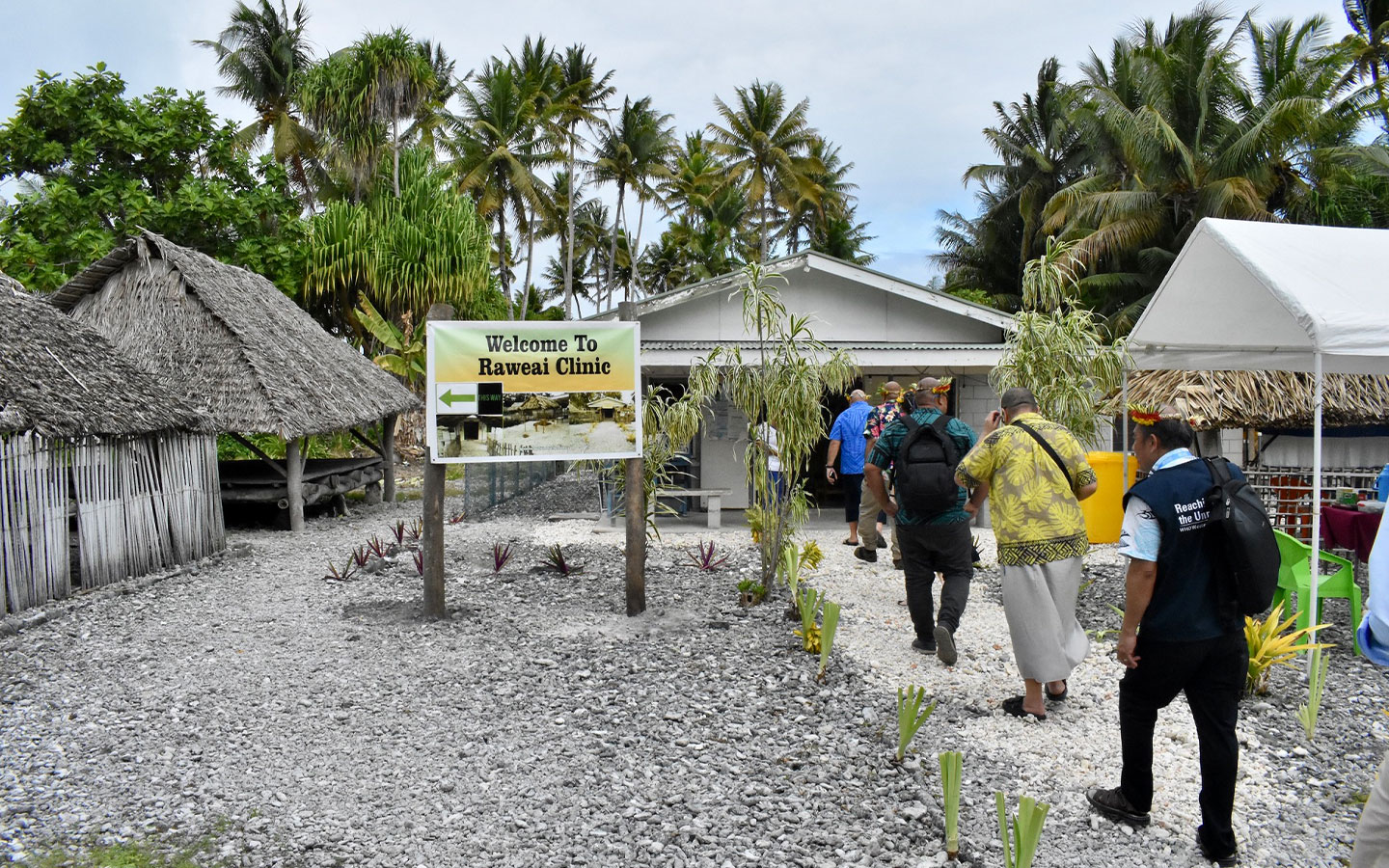
Image source: © Morrison Tabokai for WHO / via [who.int](https://cdn.who.int/media/images/default-source/western-pacific-(wpro)/countries/kiribati/kiribati-raweai-health-clinic.jpg?sfvrsn=4888a893_2) Excerpt from [who.int](https://www.who.int/westernpacific/newsroom/feature-stories/item/donors-making-a-difference--solar-powered-internet-to-save-lives-in-remote-villages) Motufia Ariniiti wakes early each morning with the rising sun to prepare for a busy day ahead. As the medical assistant at Rawannawi Health Center, on Marakei Island in Kiribati, Motufia is responsible for overseeing the busy health centre, as well as the island’s 4 other health facilities. Marakei is a ring-shaped atoll, 1 of 33 scattered across a vast distance in the central Pacific that make up the island nation of Kiribati. Working in such an isolated and unique setting means that Motufia’s work delivering health services can be quite challenging. Fortunately, a reliable high-speed internet connection, powered with solar 24/7, was recently installed to help alleviate some of the difficulties faced on the remote island. The Rawannawi Health Center is 1 of 15 health-care facilities to receive the installation of internet with solar power thanks to the Making Health Adaptation for the Future Resilient Islands – Kiribati Outer Islands for Climate Health Action (Te Mamauri Project), implemented through a partnership between the Kiribati Ministry of Health and Medical Services (MHMS) and the World Health Organization (WHO). This multi-year US$ 6 million project is generously funded by the Korea International Cooperation Agency (KOICA). The project aims to strengthen health systems, health-care facilities, schools, and communities in Kiribati – with an emphasis on outer islands like Marakei – to protect and improve population health in a changing climate. Health workers, such as Motufia, are on the frontlines facing the extraordinary pressure climate change puts on the communities of Kiribati. Rising sea levels, coastal flooding and erosion could render islands like Marakei uninhabitable this century. The threat to health includes water insecurity, food insecurity and exposure to severe weather and increased storm surges.

Read more
Strong Women, Strong Nation – Redefining Women’s Roles in Maldives and Timor-Leste
Connectivity & DigitizationMarch 31, 2025

Strong Women, Strong Nation – Redefining Women’s Roles in Maldives and Timor-Leste

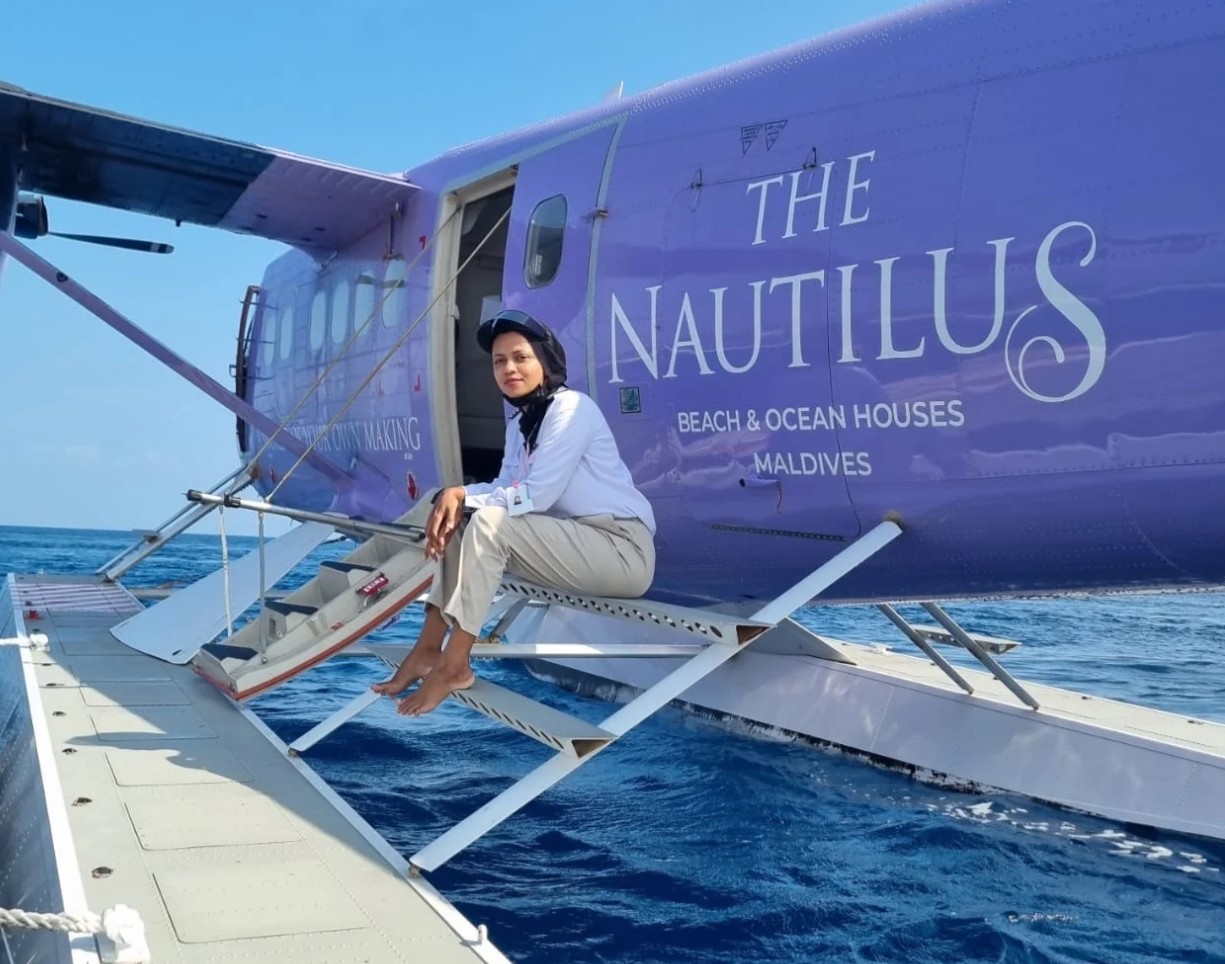
Photo by Fathimath Nathasha Latheef/IFC. For Fathimath Nathasha Latheef, the sky is the limit. When she was younger, Latheef was not sure if she could ever become a pilot: “The idea of a female pilot was foreign to me because I never thought it could be possible,” she says. Today, Latheef is the Maldives’ first female pilot to fly a commercial aircraft, the Airbus A320 – a remarkable feat in her 20-year aviation career. Her professional journey was not straightforward. “There was always the question of whether a female can handle both the family and the aircraft. It was not something that my male counterparts were subjected to,” says Latheef, who now also serves as a Flight Operations Inspector. In a country where only 43 percent of women are actively employed, and mostly in informal sectors, Latheef is a trailblazer in an industry that is traditionally dominated by men. On the other side of the Indian Ocean, Ligia Quiolia de Jesus B. Ferreira is on a unique journey of her own in Timor-Leste. She started her career as a civil engineer in 2016 and, like Latheef, is working in a traditionally male-dominated profession: the country’s infrastructure sector. Ferreira played a crucial role in developing critical projects, including the Dili-Ainaro road, a 110-kilometer road corridor that connected the north and the south of the country, and the [Tibar Bay Port](https://www.ifc.org/en/stories/2023/timor-leste-new-port), a state-of-the-art facility and Timor-Leste’s first public-private partnership (PPP), located on the outskirts of the capital, Dili. Reflecting on her journey, Ferreira, who now serves as a civil engineering supervisor at Timor Port S.A., leading the infrastructure department in the preventive and repair maintenance of port facilities, says, “Working in a male-dominated industry like infrastructure is never easy. The path is filled with challenges, but when you look back and see how far you have come, the sense of accomplishment and pride is incomparable.”

Read more
Hon. Dr. Joyelle Clarke Highlights the Global Sustainable Islands Summit at the Africa-Caribbean Investment Summit
Connectivity & DigitizationMarch 29, 2025

Hon. Dr. Joyelle Clarke Highlights the Global Sustainable Islands Summit at the Africa-Caribbean Investment Summit

**The Honourable Senator DR. JOYELLE TRIZIA CLARKE, Minister of Sustainable Development, Environment and Climate Action and Constituency Empowerment**, Saint Kitts and Nevis, brought the upcoming Global Sustainable Island Summit 2025 to the forefront during her presentation at the recent AFRI-CARIBBEAN INVESTMENT SUMMIT.

Read more
Premier of Montserrat Reuben Meade to present at sustainable island summit in St Kitts and Nevis
Connectivity & DigitizationMarch 27, 2025

Premier of Montserrat Reuben Meade to present at sustainable island summit in St Kitts and Nevis

Photo courtesy of the Office of the Premier/2024. Retrieved from montserratfocus.com Premier Reuben Meade has been named as one of the high-level speakers to present at an upcoming conference dedicated to sustainability in island nations. The three-day 2025 Global Sustainable Islands Summit (GSIS) is taking place in St Kitts and Nevis from 27 to 29 May and will feature high-level panel discussions, workshops, and networking opportunities. It is one of the only island-related sustainability conferences which showcases the innovative solutions island communities and stakeholders are developing. This year’s event is being hosted by the St Kitts and Nevis government in partnership with global, social enterprise Island Innovation. Joyelle Clarke, sustainable development, environment and climate action minister, said the country is honoured to host the summit and keen to showcase its Sustainable Island State Agenda. “Island communities hold the knowledge needed to tackle the climate and sustainability challenges we collectively face,” she added. “Being able to share our experiences and ideas across communities is critical to the long-term prosperity of islanders around the world.”

Read more
The island facing an exodus of young people
Connectivity & DigitizationMarch 24, 2025

The island facing an exodus of young people

Excerpt and Photo from bbc.com Surrounded by sea and golden sands, Alderney – the most northerly of the Channel Islands – is facing a challenge. With a population of just over 2,000, the island has an ageing demographic which is making some fear for its future. Those who live in Alderney said a lack of job opportunities, affordable transport and even things to do was leading to an exodus of young people. “If we can’t retain the younger generation, then we’ll be in big trouble trying to look after the older generation,” said charity worker Barbara Benfield. Ms Benfield, who was born in Alderney and runs the island’s Age Concern charity, which was hosting a bingo night when she spoke to the BBC, said: “It’s charities and goodwill that support a lot of the things those elderly people need. “I see every day how many elderly people are here.” As the game rolled on, she expressed concerns about the rising costs of long-term health benefits and predicted a future of “serious financial trouble” unless the burden eased. Adding to the financial worries, she said many young people were leaving the island to look for jobs and failing to return when they have their own children.

Read more
FAO empowers Cabo Verdean women through trainings in entrepreneurship and business management
Connectivity & DigitizationMarch 18, 2025

FAO empowers Cabo Verdean women through trainings in entrepreneurship and business management

Excerpt and Photo from FAO.ORG The fisheries sector in Cabo Verde is more than just a vital economic sector, it is deeply connected with the culture, lives and livelihoods of its people. Fishing plays a critical role in ensuring food security and nutrition, as well as in driving economic growth, particularly within local communities. Tuna and black mackerel are the two most significant species, forming the backbone of the Cabo Verdean diet and supporting both the domestic and export markets. Their importance extends beyond economics:  these species are essential to Cabo Verde’s fisheries sector, accounting for a significant share of the country’s catches and underpinning the canning industry. The active involvement of women in processing, distributing and managing these resources reflects their indispensable role within fishing communities making them key contributors to this industry’s revitalization. Recently, increased efforts have been made to improve the sustainability and profitability of this vital sector, focusing not only on economic viability but also on strengthening the essential role of women in these communities.

Read more
Breaking Barriers: Samoan Entrepreneurs Graduate to Greatness
Connectivity & DigitizationMarch 17, 2025

Breaking Barriers: Samoan Entrepreneurs Graduate to Greatness

Photo courtesy: Samoan Business Hub. Retrieved from undp.org “O le ala i le pule o le tautua”; the path to leadership is through service. This Samoan proverb was embodied by 44 entrepreneurs attending their final training graduation, marking a significant milestone in their professional and personal journeys in December 2024. What united them was their shared dedication over the past six months to earning the Samoa Business Hub Certificate II in Small Business Operations. Thanks to the support of the Markets for Change (M4C) programme, 25 students – all women – now possess the skills and certification needed to grow sustainable businesses in Samoa. The M4C Phase II project, implemented by UN Women in partnership with the United Nations Development Programme (UNDP), and funded by the Government of Australia since 2022, is a five-year initiative aimed at promoting the economic empowerment of women market vendors across five countries. The Green Climate Fund-Vaisigano Catchment Project (GCF-VCP) funded nine students to join the cohort, as part of their joint climate adaptation and human resilience objectives. The remaining 10 students were sponsored by the Samoa Qualifications Authority. **Promoting economic empowerment through learning** In Samoa, gender disparities in the labour market remain a significant barrier to women’s economic empowerment. Women represent only 35% of the employed population, as highlighted by the latest national labour survey ([Samoa Bureau of Statistics](https://www.sbs.gov.ws/documents/social/LFS/2022_SLFCLS_Report.pdf), 2024). This inequity is particularly stark in the private sector, where women make up just 39% of the workforce and are less likely to occupy full-time positions or leadership roles. Many women are relegated to unpaid family or volunteer positions, missing out on formal wages, social protection, and economic autonomy ([Pacific Private Sector Development Initiative](https://www.pacificpsdi.org/assets/Uploads/PSDI-LeadershipMatters-Web3.pdf), 2021).

Read more
Launch of Digital Health Architecture Blueprint
Connectivity & DigitizationMarch 11, 2025

Launch of Digital Health Architecture Blueprint

Excerpt and Photo from UNDP.org The Digital Health Architecture Blueprint was launched on 03 March 2025 in Ebène, by the United Nations Development Programme (UNDP) and the Ministry of Health and Wellness. The DHAB initiative will guide the creation of an inter-operable national digital health architecture that ensures continuity of care, and will serve as the foundation towards a unified, secure and accessible health information system in Mauritius. It will help reinforce health services into a modern, high performing quality health system that is patient-centered, equitable, efficient and innovative. **Strengthening Health Information Systems in Mauritius** Mauritius has a resilient healthcare system, but it faces challenges such as the growing burden of non-communicable diseases, an aging population, and the need for more patient-centered care. The COVID-19 pandemic further highlighted the need for digital transformation to enhance healthcare delivery and preparedness for future health crises. In this context, the UNDP has supported the development of a Digital Health Architecture Blueprint (DHAP), as part of the Digital Health Portfolio. It is a comprehensive, patient-centric initiative which focuses on security, interoperability, and accessibility, ensuring that digital health tools are effective and inclusive.

Read more
Model school for global education rooted on small Hiroshima island
Connectivity & DigitizationMarch 11, 2025

Model school for global education rooted on small Hiroshima island

Photo courtesy of Chugoku Shimbun. Retrieved from japantimes.co.jp Hiroshima Global Academy, a full-time boarding school on a remote island in Hiroshima Prefecture, is sending off its first graduating class this March. The junior and senior high school was established by the prefecture in April 2019 on the island of Osakikamijima as a model for education reform, and uses the International Baccalaureate (IB) curriculum — a globally recognized program that prepares students for international studies. The school, which has 255 students, including international students, says it focuses on fostering independent learning, aiming to nurture future leaders who have both a global perspective and a sense of maintaining ties with the local community. In mid-December, 45 third-year high school students received their results for the IB Diploma Program (DP), which they had been pursuing since their first winter in high school. The DP requires students to choose one subject each from six categories, including language and literature, mathematics and arts. Some subjects are conducted entirely in English, and students are expected to approach subjects with a strong sense of inquiry.

Read more