Content Library

News

Curated stories and analysis from islands and sustainability leaders worldwide.

Showing 9 of 235 news items in Ocean & Biodiversity
Turning the tide: enhancing ocean equity for Small Island Developing States
Ocean & BiodiversityJune 10, 2025

Turning the tide: enhancing ocean equity for Small Island Developing States

Small Island Developing States (SIDS) depend heavily on the ocean for their livelihoods, economies and climate resilience. Yet they face stark and growing inequities in how ocean resources are accessed, governed and financed. A new briefing paper from ODI Global’s Resilient and Sustainable Islands Initiative (RESI) calls for bold action to place equity at the heart of the international oceans agenda – and ensure SIDS can thrive as stewards of the sea. Despite their size, SIDS are ocean giants — custodians of vast Exclusive Economic Zones and biodiversity-rich waters. But when it comes to reaping the benefits of the blue economy, they face barriers to fully participating in and benefiting from marine innovation and investment. Countries with greater financial and technical capacity are typically better positioned to access these opportunities, while SIDS remain particularly vulnerable to ocean-related risks such as pollution, overexploitation and climate change.

Read more
UNOC – The Catch: Sustainable fisheries in oceania and beyond
Ocean & BiodiversityJune 10, 2025

UNOC – The Catch: Sustainable fisheries in oceania and beyond

Foreign Policy‘s hit fisheries podcast The Catch is headed to the United Nations Ocean Conference! Join us for a special live taping, in partnership with the Walton Family Foundation and Ocean Conservancy, to kick off our upcoming season on tuna in the Pacific Islands. Local fisheries around the world are under threat from a number of sources, including IUU fishing, climate change, and weak global governance that leaves local fishers vulnerable to multinational fleets. These dangers jeopardize both local economies and the biodiversity of the ocean. At the epicenter of these emerging threats is Oceania, where healthy fisheries are vital to the economies of its small Pacific Island nations.

Read more
For many island species, the next tropical cyclone may be their last
Ocean & BiodiversityJune 10, 2025

For many island species, the next tropical cyclone may be their last

**Simon Valle**, Bangor University and **David Jorge Pereira**, University of Birmingham When a major cyclone tears through an island nation, all efforts rightly focus on saving human lives and restoring livelihoods. However, these storms have permanent consequences for other species that are often forgotten. As the world continues to heat, cyclones are expected to become [more frequent, intense and unpredictable](https://www.ipcc.ch/report/ar6/wg1/chapter/chapter-11/). The International Union of Conservation of Nature (IUCN), the global authority on biodiversity, lists storms as one factor threatening species. But just how much of a threat is still poorly understood.

Read more
UNOC3: Azores bring to Nice the largest protected maritime zone in the North Atlantic
Ocean & BiodiversityJune 10, 2025

UNOC3: Azores bring to Nice the largest protected maritime zone in the North Atlantic

From June 9-13, the third United Nations Ocean Conference (UNOC3) is taking place in Nice, France. Political leaders from around the world, along with scientists, civil society organisations, and the private sector are gathering to discuss solutions for ocean preservation and sustainability. Located in the North Atlantic, the Azores archipelago plays a notable role: it has one of the largest Exclusive Economic Zones in Europe and has been strengthening its position as a model of commitment to marine conservation. A prime example of this is the Blue Azores program, an initiative of the Regional Government of the Azores, in partnership with the Oceano Azul Foundation and the international organisation Waitt Institute, as Luís Bernardo Brito e Abreu, Advisor to the President of the Government of the Azores and Coordinator of the Blue Azores Program, explained to RFI’s reporting team.

Read more
Four new snake species discovered in Papua New Guinea
Ocean & BiodiversityJune 10, 2025

Four new snake species discovered in Papua New Guinea

Photo Credit: Photo by Fred Kraus for [Mongabay.](https://imgs.mongabay.com/wp-content/uploads/sites/20/2025/06/05233410/The-Dendrelaphis-melanarkys-or-black-net-tree-snake-Fred-Kraus.jpg) Herpetology has long navigated through tangled terrain in Papua New Guinea, where species mislabeling and sparse sampling have clouded scientific understanding. But a recent revision has brought rare clarity—and four unexpected discoveries, [reports Akhyari Hananto](https://mongabay.co.id/2025/05/03/ilmuwan-temukan-spesies-ular-baru-yang-membelit-elang-hidup-hidup/) for Mongabay-Indonesia. In April 2025, Fred Kraus of the University of Michigan published [a study inZootaxa](https://www.miamiherald.com/news/nation-world/world/article304177086.html) identifying four new tree snakes in the genus Dendrelaphis, each endemic to a different island in the Louisiade and Woodlark archipelagos in PNG’s Milne Bay.

Read more
Coralligenous Ecosystems around Fourni Island Officially Recognised and Protected
Ocean & BiodiversityJune 10, 2025

Coralligenous Ecosystems around Fourni Island Officially Recognised and Protected

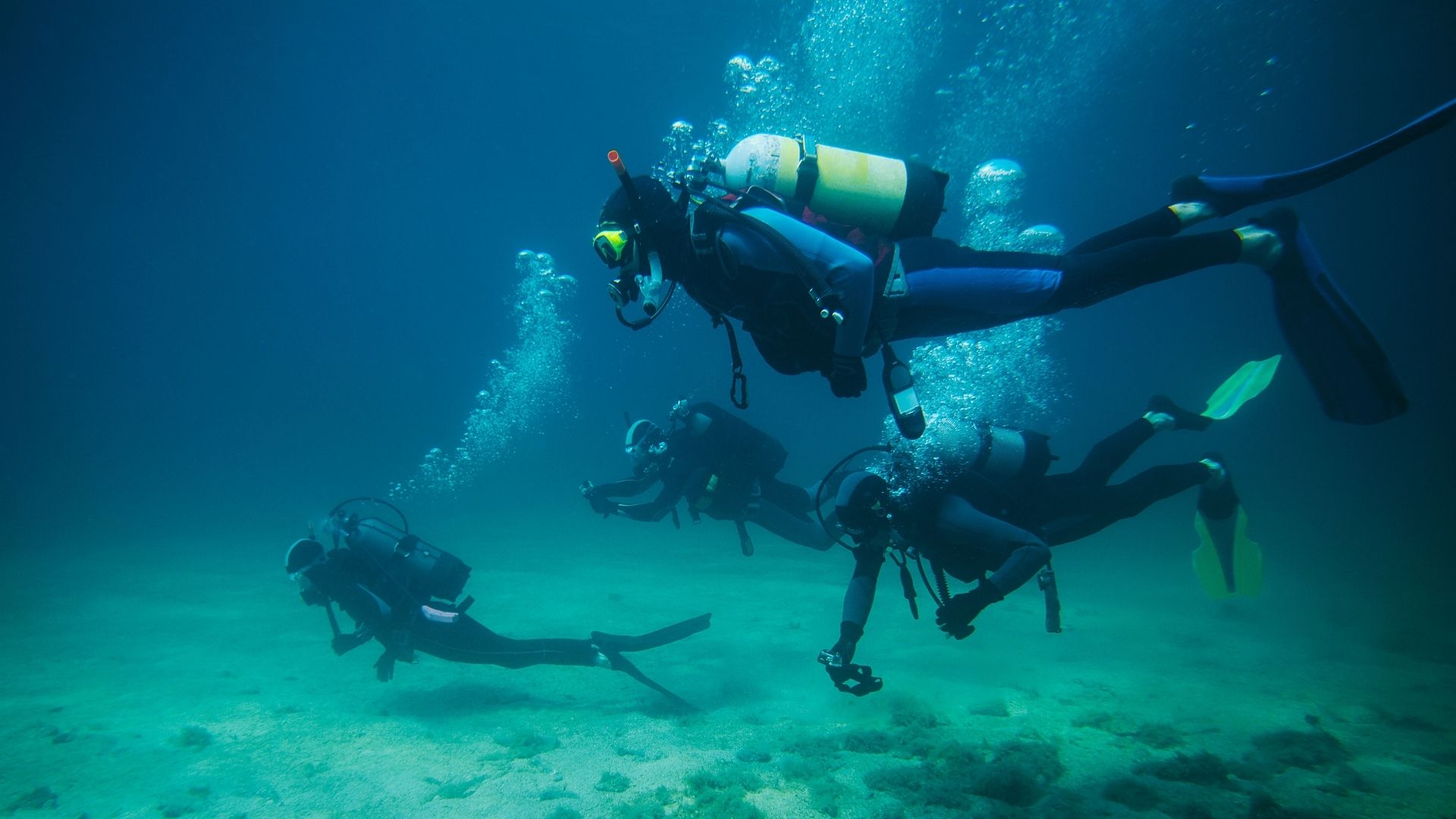
“The globally significant coralligenous ecosystems in the Fourni island complex have now been officially designated as a protected natural formation and landscape.” This marks a key milestone for marine conservation efforts in Greece, as it is the first time coralligenous ecosystems have received formal legal protection. Although relevant legislation existed for decades, it had never been enforced until now. The coralligenous ecosystems of the Fourni island complex are among the most ecologically rich yet least explored marine habitats in the Mediterranean. Found at depths of 60-150 meters, these underwater structures have formed over centuries or even millennia and serve as vital habitats for a rich marine biodiversity. So far, over 300 species across 113 taxonomic genera have been identified, and our research continues, as there are many more to be discovered. Red gorgonians (Paramuricea clavata) and black coral (Antipathella subpinnata) form extensive marine animal forests beneath these seas. The ecosystems are of international environmental importance and remain a central focus of our ongoing scientific efforts. This achievement follows years of ongoing research by Archipelagos Institute of Marine Conservation, in close collaboration with the Municipality of Fourni, local fishermen, and scientific partners, including [Oceana](https://oceana.org/), [Under the Pole](https://underthepole.org/?lang=en), and[Ionian University](https://ionio.gr/gr/). Supported by the Costas M. Lemos Foundation and [Pure Ocean](https://www.pure-ocean.org/en/), this effort was executed without any public funding. This research is ongoing, aiming to gather further data about these remote, understudied, yet ecologically critical marine ecosystems.

Read more
Islands are Solutions: the Case for Island-Ocean Coalitions
Ocean & BiodiversityJune 3, 2025

Islands are Solutions: the Case for Island-Ocean Coalitions

SEATTLE, Washington / SAN DIEGO, California / AUSTIN, Texas, May 26 (IPS) – As the world confronts escalating climate impacts, biodiversity loss, and ocean degradation, islands stand as critical test cases—not just as sites of vulnerability, but as living laboratories of resilience, restoration, and innovation. Too often, they are framed as victims of global circumstances, awaiting salvation from external forces. But they have long been proving grounds for ecological restoration, climate adaptation, and scalable conservation solutions that both draw from and help protect [Indigenous and local knowledge](https://www.islandconservation.org/stewards-in-community/), cultural practices, and local economies of island communities. From the [Republic of Seychelles’ pioneering blue bonds](https://www.worldbank.org/en/news/press-release/2018/10/29/seychelles-launches-worlds-first-sovereign-blue-bond), which finance marine protection in the Westen Indian Ocean, to New Zealand’s ambitious [Predator Free 2050](https://www.doc.govt.nz/nature/pests-and-threats/predator-free-2050/) initiative restoring native bird populations and ecosystems, to the [Galapagos Islands](https://www.islandconservation.org/return-of-the-rails-signs-of-recovery-on-floreana-island/) improving livelihoods and rewilding species on the brink of extinction, islands have time and again demonstrated that large-scale ecological recovery is both possible and rapid. Mona Island, Puerto Rico is one of the most ecologically and culturally important islands in the archipelago. Credit: Tommy Hall/Island Conservation

Read more
People and dogs team up to protect sea turtles in Cabo Verde
Ocean & BiodiversityMay 26, 2025

People and dogs team up to protect sea turtles in Cabo Verde

Photo credit: Luigi Avantaggiato. © Nature, 2025. [Source](https://media.nature.com/w1248/magazine-assets/d41586-025-01554-6/d41586-025-01554-6_50978912.jpg?as=webp) This picture was taken in August 2024 during a dog-training demonstration run by the Turtle Foundation, a non-governmental organization in Sal Rei in the Cabo Verde islands that is dedicated to sea-turtle conservation. I’m with Karetta, a five-year-old German Shepherd that I train and work with on the island of Boa Vista. The dogs help us to look for turtle poachers, who operate on this beach during hatching season. The illegal hunters usually leave something behind — a piece of clothing, or even a footprint. The dog can smell that evidence and lead law-enforcement officers to the poacher. I’ve always loved dogs, I grew up with two of them, but I never realized how smart they are before working as a dog trainer and handler.

Read more
In New Guinea, megadiverse lowland forests are most at risk of deforestation
Ocean & BiodiversityMay 26, 2025

In New Guinea, megadiverse lowland forests are most at risk of deforestation

Image courtesy of Christoph Parsch. © Mongabay, 2025**.** [Source](https://imgs.mongabay.com/wp-content/uploads/sites/20/2025/05/21020037/Forestscape-2048x1152.jpg) The island of New Guinea is famed for its eye-popping diversity of plants, animals and human cultures. Estimated to host one-tenth of Earth’s species, it’s the world’s second-largest island and has the third-largest intact expanse of tropical forest in the world, after the Amazon and the Congo. It’s where birds-of-paradise perform their effervescent courtship displays, tree kangaroos shimmy up trees to dizzying heights, and the world’s largest butterfly flits between foliage in the forest canopy. This extraordinary biodiversity is partly the result of centuries of evolutionary isolation at the edge of the western Pacific, where the biota of Asia and Australasia meet. It also comes from powerful tectonic activity that shaped a rugged and mountainous landscape, making many areas difficult for humans to access and develop.

Read more