Content Library

News

Curated stories and analysis from islands and sustainability leaders worldwide.

Showing 9 of 247 news items in Policy & Governance
Gran Canaria becomes a benchmark in ecological restoration with the European project NewLIFE4BioIslands
Policy & GovernanceJanuary 16, 2026

Gran Canaria becomes a benchmark in ecological restoration with the European project NewLIFE4BioIslands

Excerpt and Photo Credit: canarias7.es El Cabildo de Gran Canaria, a través de la Consejería de Medio Ambiente, Clima, Energía y Conocimiento, participa en el proyecto europeo NewLIFE4BioIslands, una iniciativa aprobada en el marco del programa LIFE de la Unión Europea destinada a acelerar la restauración ecológica en territorios insulares y mediterráneos, según informa la institución en un comunicado. El proyecto, coordinado por Gesplan, se extenderá hasta 2031 y dispone de una inversión total de 7,18 millones de euros, cofinanciados en un 60% por la Comisión Europea. NewLIFE4BioIslands se centra en la creación de islas de biodiversidad, pequeñas áreas restauradas con una alta diversidad de vegetación nativa que se distribuyen estratégicamente para reconectar ecosistemas fragmentados, restaurar funciones ecológicas y mejorar la resiliencia frente al cambio climático. Este innovador enfoque permitirá incrementar la abundancia y diversidad de polinizadores nativos, especialmente abejas, sírfidos y mariposas, grupos clave para la reproducción de muchas especies vegetales y para la sostenibilidad del modelo agroalimentario.

Read more
Nation’s first climate impact fee among new Hawaiʻi laws that went in effect in new year
Policy & GovernanceJanuary 15, 2026

Nation’s first climate impact fee among new Hawaiʻi laws that went in effect in new year

Excerpt from mauinow.com The long-discussed Hawaiʻi Green Fee, the nation’s first-of-its-kind climate impact fee, took effect on Jan. 1, and is expected to generate $100 million annually. Act 96, formerly Senate Bill 1396, increases the existing tax on hotel stays and rentals by 0.75% (raising the Transient Accommodations Tax to 11%), and applying this total tax to cruise ship passengers when a vessel is docked at a state harbor.

Read more
Local2030 Islands Network: SDGs in Developing Island States
Policy & GovernanceJanuary 15, 2026

Local2030 Islands Network: SDGs in Developing Island States

Excerpt from borgenproject.org The world’s small island territories and nations face unique development challenges and are collectively identified as Small Island Developing States by the United Nations (U.N.). These islands commonly experience high costs of living, limited financial opportunities, import dependence and climate vulnerability. Together, these factors create conditions for undiversified and vulnerable economies, contributing to high levels of poverty among island populations. With frequent climate hazards, these challenges become further exacerbated, disrupting both livelihoods and ecosystems that are essential for long-term island sustainability and income generation. The U.N. has emphasized the importance of advancing the Sustainable Development Goals (SDGs) in developing island states, as these states are at the forefront of making sustainable transitions.

Read more
Grace Road in Fiji: Investment engine or human rights headache?
Policy & GovernanceJanuary 15, 2026

Grace Road in Fiji: Investment engine or human rights headache?

Excerpt from islandsbusiness.com FIJI faces an uncomfortable reckoning as the United States threatens to cut millions of dollars in development aid over allegations of human trafficking tied to a South Korean sect. Grace Road is a prominent investor with supermarkets, restaurants, and service stations but arrived in Fiji initially to set up a commune on which its members hope to escape the end of the world. Its leader, Shin Ok-ju and three other members of the Grace Road Church were arrested at Seoul’s international airport in 2018 on charges of human trafficking in Fiji and the US. Shin was later convicted of assault, child abuse, and fraud. Since its arrival in Fiji in 2014, Grace Road Group has woven itself into the fabric of the nation’s economy. Its investments span supermarkets, restaurants, beauty salons, and ambitious agricultural projects. With hundreds of jobs created and new businesses injected into local supply chains, many Fijians see the group as a welcome source of economic energy and innovation.

Read more
The Transition from Small Island Developing States to Large Ocean States: The Promise and Problems in Pursuing the Blue Economy
Policy & GovernanceJanuary 7, 2026

The Transition from Small Island Developing States to Large Ocean States: The Promise and Problems in Pursuing the Blue Economy

Excerpt and Photo Credit: saisreview.sais.jhu.edu The earliest formal designation of Small Island Developing States (SIDS) as a distinct group of developing countries with their own set of specific challenges occurred in 1992 at the UN Conference on Environment and Development in Rio de Janeiro, Brazil, which is commonly referred to as the Earth Summit. There, the UN recognized the sustainable development challenges facing SIDS and the need to implement programs and measures to support them. Preceding the conference, small island states established the Alliance of Small Island States (AOSIS). Comprising nearly 20% of UN membership, the AOSIS provides SIDS a platform to pursue collective goals. They used this entity to lobby for the first UN conference devoted exclusively to SIDS in 1994 in Barbados, with the Global Conference on the Sustainable Development of Small Island Developing States. Since then, the UN has continued to focus attention on these countries as a “special case for sustainable development in view of their unique and particular vulnerabilities,” with its most recent conference on SIDS taking place in May 2024 on St. John’s, Antigua and Barbuda.

Read more
Grenada Officially Launches The Ministry Of The Blue Economy And Marine Affairs
Policy & GovernanceJanuary 7, 2026

Grenada Officially Launches The Ministry Of The Blue Economy And Marine Affairs

Excerpt from weefmgrenada.com The Government of Grenada on Monday December 15 officially launched the Ministry of the Blue Economy and Marine Affairs, on board the Esta Sea marking a major step toward sustainable ocean development and economic transformation. This new Ministry represents a strategic investment in Grenada’s future. By prioritizing the Blue Economy, Grenada signals its readiness to lead in building a sustainable, inclusive, and forward looking ocean economy—one that creates jobs, strengthens food and energy security, enhances climate resilience, and promotes social equity while safeguarding marine resources.

Read more
'United we stand, divided we fall:' Pacific island nations urged to create collective seabed regulations
Policy & GovernanceJanuary 7, 2026

'United we stand, divided we fall:' Pacific island nations urged to create collective seabed regulations

Excerpt from pacificislandtimes.com Recognizing that the march toward the use of seabed resources is nearly unstoppable at this point, a new paper urges Pacific island nations to create a “underwater constitution” to regulate resource extraction, safeguard their sovereignty and ensure that these countries share in the ocean’s riches. The policy paper, titled “United We Stand, Divided We Fall,” argues for a practical approach in the face of a rush for the Pacific seabed—a Pacific Seabed Stewardship Statement — to help countries agree on shared principles and guide future cooperation on sustainable seabed development.

Read more
Swiss court admits Indonesian islanders climate case against Holcim
Policy & GovernanceJanuary 7, 2026

Swiss court admits Indonesian islanders climate case against Holcim

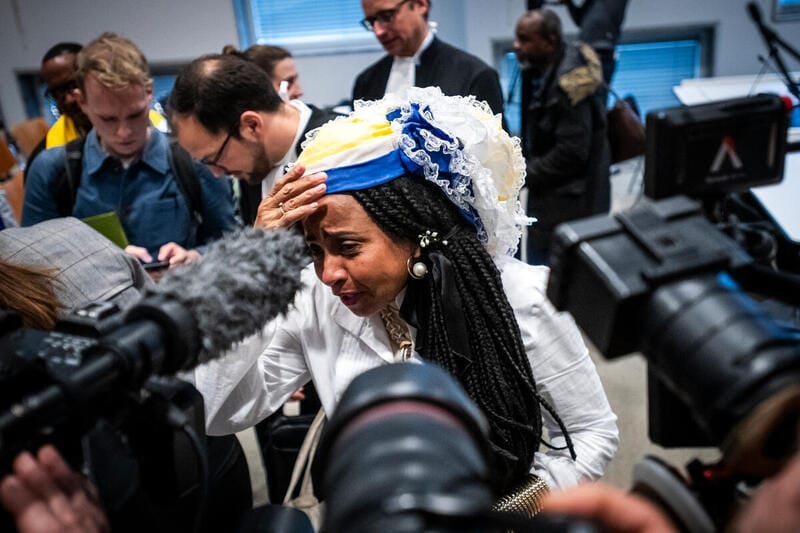
Excerpt from reuters.com A court in Switzerland said on Monday it would admit a legal complaint against Swiss cement maker Holcim (HOLN.S), opens new tab which alleges the company is doing too little to cut carbon emissions and hence contributing to global warming. Four residents of the low-lying Indonesian island of Pari, which has been repeatedly flooded as warmer temperatures push up sea levels, submitted a legal complaint in January 2023 to the cantonal court in Zug, Switzerland.

Read more
How Caribbean States Became Climate Mobility Policy Innovators
Policy & GovernanceMay 7, 2026

How Caribbean States Became Climate Mobility Policy Innovators

Photo credit: Marica van der Meer / Arterra / Universal Images Group via Getty Images / CarnegieEndowment.org Excerpt from CarnegieEndowment.org In a world increasingly dominated by narratives about the importance of border security and restrictive migration policies, regional integration models such as that of the Organisation of Eastern Caribbean States (OECS) offer a contrasting vision—one that views human mobility as a driver of economic growth, social development, and shared prosperity. Across many parts of the world, free movement agreements (FMAs) have become central to regional integration, enabling citizens to enter, work, and even settle in participating states. FMAs are provisions typically included in bilateral or multilateral economic trade and integration schemes, and over the past few decades, they have become standard policy tools through which states regulate cross-border movement with relative ease. While the European Union’s Schengen Area is world-renowned and remains the most well-known example, FMAs are far from limited to Europe. Since the 1985 Schengen Agreement, regional and subregional integration initiatives containing free movement provisions have grown significantly, now involving over 110 states. The legal instruments underpinning such provisions have grown exponentially, and the rights they guarantee have also expanded accordingly. Today, FMAs are an important tool for enabling safe, orderly, and regular migration.

Read more