Content Library

News

Curated stories and analysis from islands and sustainability leaders worldwide.

Showing 9 of 96 news items in Tourism & Remote Work
The wild interiors, cerulean blues, and winding rivers of Fiji
Tourism & Remote WorkNovember 27, 2023

The wild interiors, cerulean blues, and winding rivers of Fiji

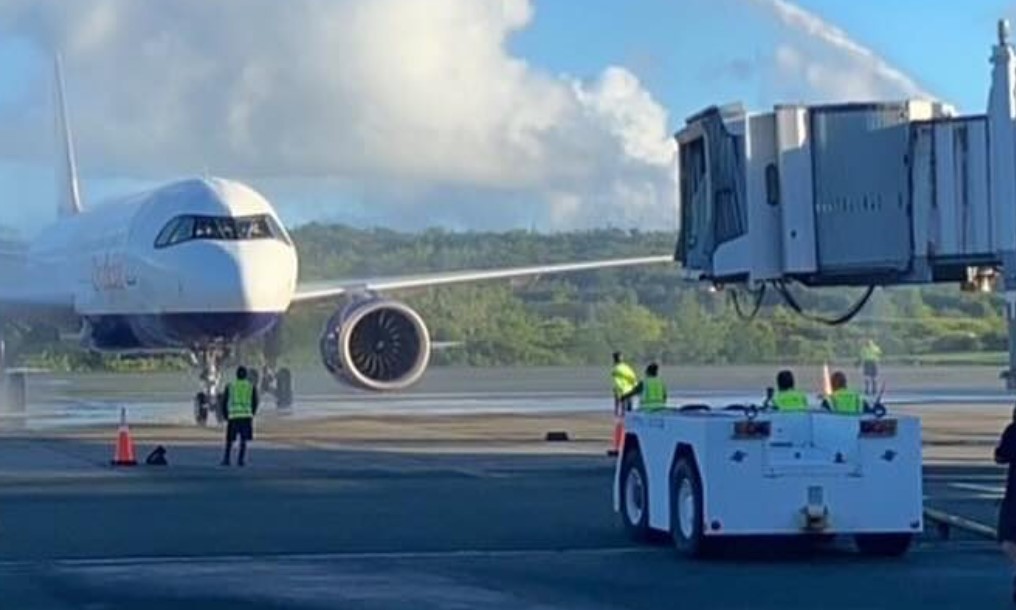
Photos Credit: Jack Johns. Retrieved from cntraveller.in. It’s true; nothing compares to the plosive enthusiasm of the Fijian greeting: “Bula!” It’s a word that floats like a bubble. Everyone says “Bula!” to everyone, even passing strangers. And historically, many have passed through here. A crossroads in the heart of the South Pacific, Fiji spans from eastern Melanesia, the region populated in prehistory by ethnically African people, into the western edge of Polynesia, which was inhabited later, by people who migrated from [Southeast Asia](https://www.cntraveller.in/story/old-trains-are-the-new-luxury-in-southeast-asia-orient-express-vietage-java-journey-by-train/) by outrigger and double-hulled canoe. A little more than half of Fiji’s 900,000 people are Indigenous, or iTaukei, and nearly 40 percent are ethnically Indian, descended from indentured laborers brought to work on sugar plantations during the British colonial rule. Captain Nox steered the jet boat back out into the middle of the placid Sigatoka, and we roared off. We were now on our way to the village (1 of the 17 this excursion visits), and someone asked—due diligence—what tabus we should know about. All the women had been given sarongs to wrap modestly around their waists, so there was that. And still no head touching, Nox said, and no hats. But things seem to have relaxed since the day of those ill-fated colonialists because as soon as we arrived in the village of Mavua, our guide, a local who said to call him Jerry, told us we could leave our hats on. “It’s okay,” he said. “It’s hot today.” Mavua is a humble place, typical of a rural iTaukei village: a few dozen brightly painted cement houses with corrugated roofs, a church, a community hall, and roaming chickens and children. Its residents are mostly subsistence farmers. On the weekends, women take surplus produce to local markets to sell, while the men hunt for wild pigs using dogs and spears. “We are trying to live in the life of our forefathers,” Jerry said.

Read more
Bird Tourism Market takes flight in the Turks and Caicos Islands
Tourism & Remote WorkNovember 13, 2023

Bird Tourism Market takes flight in the Turks and Caicos Islands

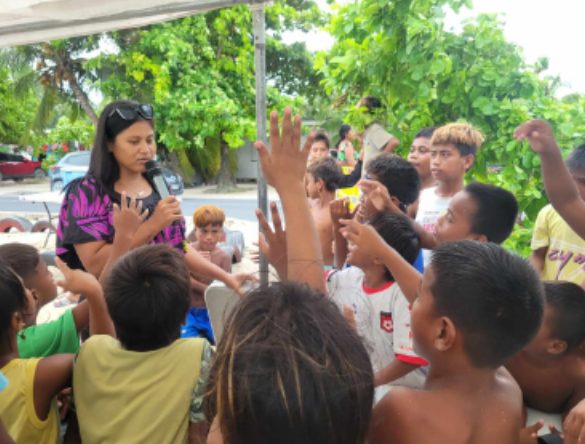
Photo credit: Christel Mohammed/BirdsCaribbean. Retrieved from caribbean.loopnews.com Twenty-four (24) bird and nature guides have been trained and certified in bird identification and guiding techniques in the recently concluded Sandals Foundation sponsored Caribbean Birding Trail Guide Training Program. The event, which took place October 23 to 27, forms part of the Caribbean Birding Trail Project – an initiative of BirdsCaribbean aimed at promoting nature-based, authentic experiences that benefit local people and encourage the protection of the Caribbean’s natural resources, including birds and their habitats. Lisa Sorenson, Executive Director at BirdsCaribbean says, “The 5-day interactive program targeted persons working as guides who would like to expand their businesses by adding birdwatching or “birding” to their tour offerings. The sessions were also open to those who work in outreach and education about birds and nature.” Participants explored the importance of preserving the Turks and Caicos Islands’ birds and nature while strengthening the island’s local ecotourism sector. They also learned bird identification, guiding techniques, and environmental interpretation—making connections to natural resources through story telling. Everyone received a package of materials including binoculars, a bird field guide, bird ID cards, CBT hat, endemic birds of the Caribbean, and many other resources.

Read more
Maui needs tourism to support its economy — here’s how to visit responsibly
Tourism & Remote WorkOctober 10, 2023

Maui needs tourism to support its economy — here’s how to visit responsibly

Photograph by JACOB BOOMSMA/GETTY IMAGES. Retrieved from thepointsguy.com As TPG has [previously reported](https://thepointsguy.com/guide/is-it-safe-to-travel-to-maui/), and you likely know all too well, the Maui wildfires caused significant damage to Lahaina, with more than 2,400 residences destroyed and far too many lives lost. Recovery efforts are still ongoing. And now, the community must deal with the reality of economic recovery while also rebuilding homes and businesses and managing the emotional toll. Gov. Josh Green’s most recent proclamation allows for parts of West Maui to reopen starting Oct. 8, but [Lahaina will remain off-limits](https://www.hawaiitourismauthority.org/maui-recovery/). Hawaii Tourism Authority visitor data shows that in August 2022, Maui welcomed 265,410 visitors. The Hawaii Department of Business, Economic Development and Tourism estimates that a reduction of 4,250 visitors per day has resulted in an estimated economic loss of $9 million per day. For a rough estimate, multiply those numbers for the last three weeks of August, and that’s a loss of 89,000 visitors and over $189 million dollars in economic activity. In [a statement](https://www.hawaiitourismauthority.org/news/news-releases/2023/hta-board-of-directors-approves-26-million-in-funding-for-maui-marketing-recovery-plan/), the Hawaii Tourism Authority said that West Maui alone accounts for 15% of Hawaii’s tourism economy. With that side of the island on the verge of reopening, you may be wondering if now is the time to go. And, if you are on social media at all, you’ve likely seen passionate and disparate answers to that question.

Read more
Fiji’s path to a sustainable tourism industry
Tourism & Remote WorkOctober 2, 2023

Fiji’s path to a sustainable tourism industry

Image retrieved from fijitimes.com World Tourism Day, celebrated (September 27th), holds great significance as it highlights tourism’s profound impact on global economies, cultures, and societies. Serving as a platform to highlight its value, the day emphasizes the multifaceted nature of tourism and its role in shaping economies worldwide.Tourism transcends borders, making it a pivotal player in global economies. Beyond revenue and employment generation, it stimulates diverse sectors like hospitality, transportation, and entertainment, fostering infrastructure and entrepreneurship. For Fiji, and indeed all Pacific Island Countries (PICs) it does even more, as tourism’s ability to alleviate poverty and directly provide much-needed employment and revenue-earning ability in rural and small communities is often greatly underestimated. The heightened demand now for deeper connections to nature, to people and communities to gain a richer, more fulfilling visitor experience has seen interests in diving, trekking, reef and coral protection, river rafting and explorations, cultural activities and community support programs continue to grow at a faster pace than ever before. World Tourism Day also highlights tourism’s deeper connection to global challenges. Aligned with the Sustainable Development Goals (SDGs), the sector contributes to poverty reduction, gender equality, and decent work. By creating jobs, promoting gender parity, and addressing inequalities, tourism becomes a force for equitable and sustainable development, but this is often underappreciated and this capacity is not always understood as a way to specifically address these issues.

Read more
Discover Saba: The Sustainable Jewel Of The Caribbean
Tourism & Remote WorkSeptember 18, 2023

Discover Saba: The Sustainable Jewel Of The Caribbean

Photo by M.Torres GETTY. Retrieved from forbes.com Tucked away in the Caribbean Sea, the five-square-mile island of Saba is arguably the region’s best-kept secret. Home to just four villages, a singular road that was dug out by a local with nothing but a shovel, pristine hiking trails, impeccable dive sites, breathtaking villas and locally-owned boutique hotels, the tiny but mighty island will take any well-traveled visitor by pleasant surprise. As the peak of a dormant volcano that pokes out from the ocean below, Saba appears to be just a speck on the map. But don’t be fooled It’s packed with loads of unexpected character. The smallest commercial runway in the world? Check. A field of solar panels that powers the whole island for 8-10 hours per day? Check. A population of 2,000 family-like residents that welcome all visitors with open arms into their close-knit community? That’s Saba. As more regions and countries develop their tourism industry, it produces significant impacts on natural resources, consumption patterns, pollution, and social systems. The island of Saba, also known as The Unspoiled Queen, has a goal to be a sustainable destination so tourism can live on and more visitors can enjoy what the hidden island has to offer. This year’s the island[Sea and Learn Foundation](https://www.seaandlearn.org/) will be turning 20 years old and there will be an event this October to commemorate the occasion. The Sea & Learn program has been able to make a slower tourism month into one of the busier times of year and it kicks off the “high season” on the island. Through its engaging programs and educational initiatives, this remarkable foundation has not only enriched the island’s high season but has also raised awareness about the importance of marine and environmental conservation.

Read more
The Faroe Islands is doing tourism on its own terms
Tourism & Remote WorkSeptember 12, 2023

The Faroe Islands is doing tourism on its own terms

Photo: Visit Faroe Islands. Retrieved from positive.news At first glance the Faroe Islands don’t seem to have much tourism to speak of. Single track roads, sheep and floating fish farms, yes. Waterfalls and towering mountains that wouldn’t look out of place in an action film? Again, yes. But tourists? The airport welcomes direct flights from Paris, Copenhagen, Edinburgh and a handful of other cities in Europe, but with its single grassy runway and compact terminal, it’s hardly Heathrow. Chances are, you haven’t visited the Faroe Islands. You might struggle to pinpoint them on a map. This handful of windswept volcanic rocks erupts out of the North Atlantic Ocean about 300km north of Scotland and 700km southeast of Iceland. But its status as an emerging tourist nation that has allowed the Faroes to do something unique in travel terms: it closes to tourists once a year. “The Faroe Islands had been successful in increasing tourism for a number of years, giving them a positive challenge,” says Rune Hørslev, a partner at Mensch, the Danish creative agency that came up with the ‘[Closed for Maintenance](https://visitfaroeislands.com/en/closed)’ concept. “On the one hand, tourism was up, but on the other, they wanted to manage tourism in a sustainable way so the local community would benefit not just in economic terms, but as a society. We came up with the concept of closing down for a weekend.” During weekends when the islands are closed, 100 places are available on a volunteer scheme where, in exchange for bed, board and a locally-made woolly hat, volunteers will come to work. Their tasks include repairing paths, building cairns, making signs, gates and ladders and creating easier and safer ways to navigate between towns and villages. It has taken off. The scheme is heavily oversubscribed, with only around 3 per cent of those who apply are accepted. When it launched in 2019, the World Economic Forum named it one of the world’s most innovative initiatives for tourism. Since then it has won multiple tourism and communications awards. The Faroes aren’t the only place to try out this kind of approach. On the other side of the globe In New Zealand, tourists come to take part in replanting programmes, organic farm work and native bird breeding programmes. And in the Pacific Island nation of Palau, the [Ol’au Palau](https://olaupalau.com/) app rewards positive tourism decisions like using reef-safe sunscreen with access to nature-based initiatives usually reserved for locals.

Read more
Revitalised Boracay island in the Philippines faces next challenge – the return of mass tourism
Tourism & Remote WorkSeptember 5, 2023

Revitalised Boracay island in the Philippines faces next challenge – the return of mass tourism

Photo: CNA/Jack Board. Retrieved from channelnewsasia.com The sunset in Boracay has a certain wonder to it. As the horizon starts to burn with colour, crowds are drawn out from their afternoon malaise to the shimmering foreshore in time for an inevitably spectacular show. Streaks of lilac and magenta fill the dusk sky, casting new shades on a beach that blinds with the whiteness of its powder-like sand throughout the day. Children splash in the shallows and couples pose for photos, silhouetted by the fading light. Further out, blue-sailed boats criss-cross the calm sea. These are the picture perfect moments that this tourist island has promised for decades. For much of the past five years though, the number of visitors on Boracay has been greatly reduced. Locals have watched the sun set and rise on their own. The Philippines’ holiday jewel has lurched from crisis to crisis. Its environment has undergone a radical revitalisation and its economy derailed by closures and evaporating tourist numbers. In 2018, then-president Rodrigo Duterte labelled the island a “cesspool”, a reaction to the island’s overcrowded beaches, wastewater being pumped into the sea, green tides of seaweed, congested roads and sprawling infrastructure. He ordered the island abruptly closed for a period of six months to allow it to be rehabilitated.  It was a controversial and radical option that shocked business operators, airlines and locals alike. The tap that brought millions to Boracay every year was switched off.It was just over a year after the island re-opened for visitors when the COVID-19 pandemic struck another blow to tourism here.

Read more
The mills and fountains on the island of Porto Santo brought back to life for visitors to enjoy
Tourism & Remote WorkAugust 8, 2023

The mills and fountains on the island of Porto Santo brought back to life for visitors to enjoy

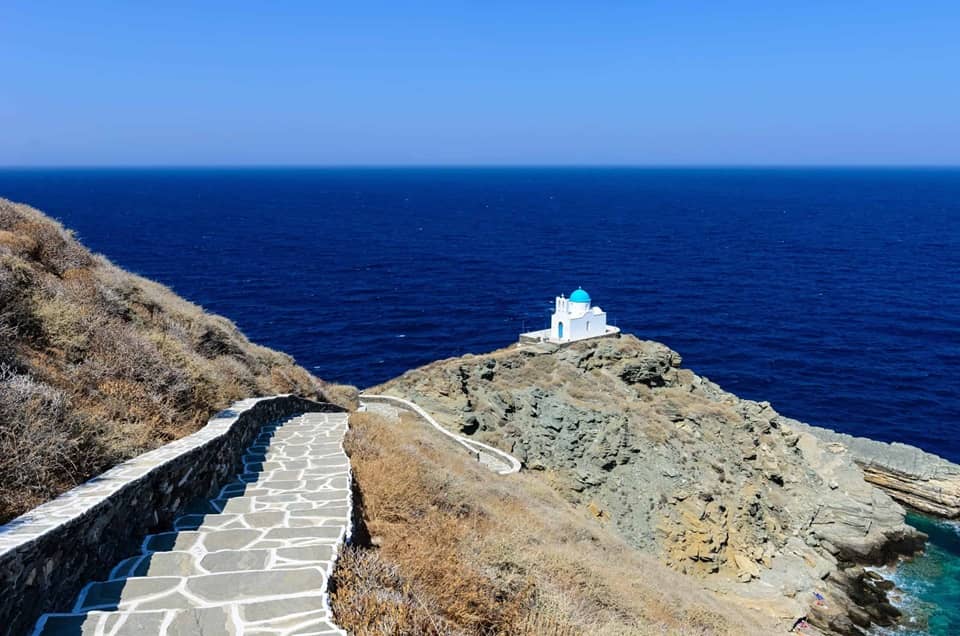
Photo: Retrieved from euronews.com Porto Santo, nicknamed the “Golden Island”, is now seeing its treasures of yesteryear revived thanks to an ambitious European project. Its windmills and old public fountains, emblematic symbols of its cultural identity, have been neglected for too long. Now, however, these traditional architectural features are being restored to offer locals and visitors alike a glimpse into the island’s past. Porto Santo was the temporary home of the famous navigator Christopher Columbus. Throughout its history, the Portuguese island played a key role as Madeira’s granary, which led to the construction of its famous windmills in the 19th century. Today, these restored mills allow visitors to step back in time and relive the era when grain was ground to meet the region’s food needs. The restoration project is not limited to the windmills. The municipality of Porto Santo has also taken the initiative to restore more than a dozen public fountains, water basins and drinking troughs. These water sources, which were once vital to the local population, are now back in use, offering residents and visitors the chance to reclaim their cultural heritage. Schoolchildren who came to discover the island were able to learn about the history of the fountains and mills and their importance to the local population.

Read more
Unlocking Gender Equality and Empowerment in Cabo Verde’s Tourism Sector: A Path to Sustainable Development
Tourism & Remote WorkAugust 2, 2023

Unlocking Gender Equality and Empowerment in Cabo Verde’s Tourism Sector: A Path to Sustainable Development

Photo: Mangue de Sete Ribeiras – Beach in the north of Santiago Island. **© Marco Medina Silva, World Bank. From worldbank.org** Gender equality and women empowerment are essential for inclusive and sustainable development. In Cabo Verde, significant progress has been made in gender-related policies and programs, yet challenges persist in achieving gender equality and women empowerment, particularly in the tourism sector, representing approximately 25% of GDP. [The Report on Gender-Responsive Tourism in Cabo Verde](https://documents1.worldbank.org/curated/en/099444104172396828/pdf/IDU0ef6f7bfd082c4040310a9ef068c9d8d0f2d7.pdf) analyzes the barriers and opportunities for women’s participation, access to better jobs, control of assets, and voice and agency within the tourism sector. The report proposes recommendations and actions to be considered under the [Resilient Tourism and Blue Economy Development in Cabo Verde Project.](https://projects.worldbank.org/pt/projects-operations/project-detail/P176981) Integrating gender equality in tourism will be key to improving the sector’s resilience in Cabo Verde, especially amidst COVID-19. Despite comprising 60% of the workforce in accommodation and restaurant businesses, women in these sectors earn 50% less than men and over half of them work in informal and short-term contract arrangements. Women-owned businesses make up 30% of all businesses, but they face significant barriers in education and training, particularly in advanced business planning and management skills.

Read more