Content Library

News

Curated stories and analysis from islands and sustainability leaders worldwide.

Showing 9 of 87 news items in Water & Food
Traditional Solomon Islands water well building methods facing challenges from climate change
Water & FoodJuly 12, 2024

Traditional Solomon Islands water well building methods facing challenges from climate change

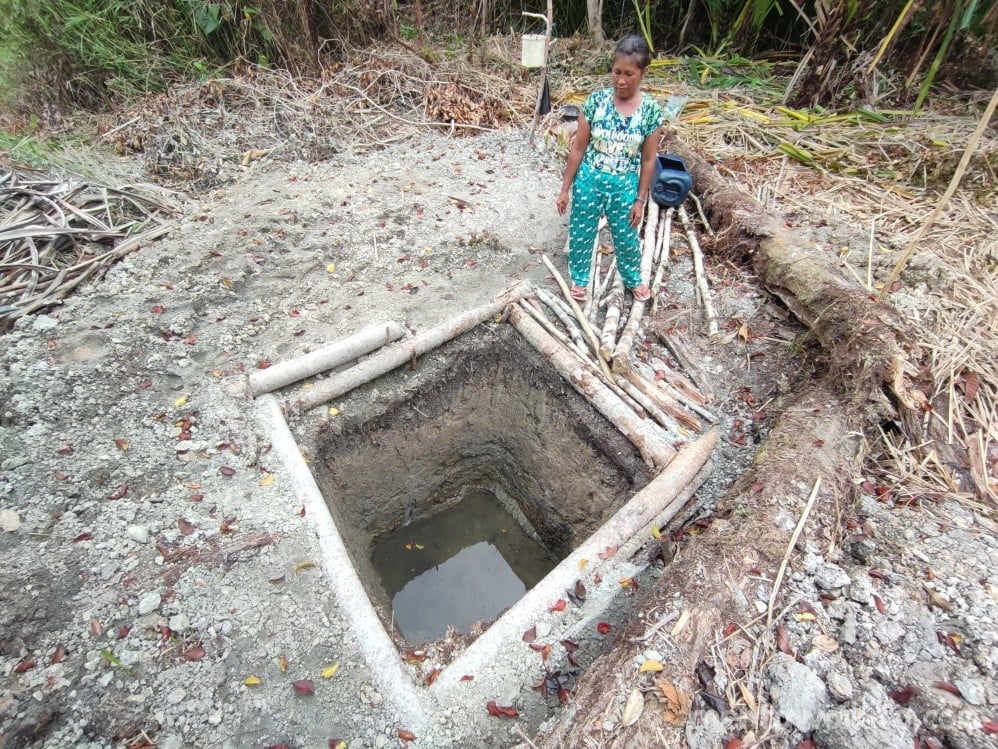
Excerpt and Photo from abc.net.au Traditional forms of water wells on Savo Island in Solomon Islands are stunning with wide open stone mouths that reach into the earth, giving access to fresh consumable water, but this method is under threat. As the climate changes, more of the water wells are unusable due to salination from the rising sea levels, something that local communities are concerned about. Victor Peter Kere is from Savo Island and acknowledges that the wells are facing a challenge due to rising sea levels but is desperate for the methods of building to be preserved. “I believe that the traditional way of building wells will be lost as people are looking at much better alternatives of getting water for consumption and use,” Mr Kere said. As a volcanic island, the traditional method of the wells has been a solid option for locals.

Read more
An Informal to Formal Fisher Story
Water & FoodJuly 1, 2024

An Informal to Formal Fisher Story

How can we promote sustainable fishing behavior if our worry is futures that can shock their daily routines? How can our fishers think of a future if they do not understand options for their own identified issues and risks? To better understand our fishers, we listened to their stories of adventures in the seas and oceans early in the morning as they returned to shore after an evening off the coasts to catch fish and other marine species as their livelihood. In our discussions, I started asking myself, “Does a Fisher need to fish forever?” I have always been in awe of our fishers. They can survive being at sea every night by their lonesome; their work is actually one of the riskiest jobs with the sea having the ability to turn violent within a few seconds notice. Why can’t we care for our fishers the way we do to our doctors, our lawyers, our drivers, our office workers? Any profession would have social and financial protection mechanisms for themselves and their families. What makes it so difficult for fishers to have social services, health insurance, housing insurance and life insurance when their profession is what we need most to feed and nourish ourselves? In our contemplation of this conundrum, my team started collaborating with many groups to check the possibility to design social protection mechanisms for our fishers. Under the guidance of Rare, we finally launched the FishForever Social Protection program in 2018 and began rolling out full social protection access a year later, right before the COVID-19 pandemic. This event, which many were not prepared for, especially the fishers, validated the need for our fishers to have social protection. The trust we’d earned with our fishers ensured they continued sustainable practices despite food scarcity fears and health concerns. Going out to sea for enforcement and monitoring within their community waters felt more secure than staying home.

Read more
Thirsty in paradise: Water crises are a growing problem across the Caribbean islands
Water & FoodMay 24, 2024

Thirsty in paradise: Water crises are a growing problem across the Caribbean islands

In the popular imagination, the Caribbean is paradise, an exotic place to escape to. But behind the images of balmy beaches and lush hotel grounds lies a crisis, the likes of which its residents have never experienced. Caribbean islands are in a [water crisis](https://www.paho.org/en/stories/thirst-change-caribbean-story-health-and-water-sustainability), and their governments have warned that [water scarcity may become the new norm](https://cwwa.net/news/water-scarcity-may-be-a-new-way-of-life-in-the-caribbean-warns-minister-of-public-infrastructure/). Within the past five years, every island in the region has experienced some sort of water scarcity. For example, Trinidad is experiencing its [worst drought in recent memory](https://newsday.co.tt/2024/03/05/updated-wasa-worst-drought-ever-new-water-restrictions-from-march-1-june-30/), and residents are under water restrictions through at least the end of June 2024, with [fines for anyone who violates](https://www.guardian.co.tt/news/wasa-begins-annual-water-restrictions-75-fine-for-violations-6.2.1942277.82d76552dd) the rules. Dominica, considered the [nature island of the Caribbean](https://www.travelandleisure.com/dominica-caribbean-island-guide-7109687) for its mountain rain forests, is seeing a [significant decrease](https://www.cijn.org/dominica-at-risk-of-losing-its-freshwater-resource/) in freshwater resources and increasingly frequent water shortages. In Grenada, known as the spice isle, [drought has affected](https://nowgrenada.com/2024/05/nawasa-declares-drought-emergency/) water systems throughout the island.

Read more
Primates creating headaches for pineapple farmer in Orange Hill
Water & FoodMay 10, 2024

Primates creating headaches for pineapple farmer in Orange Hill

Excerpt and Photo from barbadostoday.bb For the first time in the six years he has been farming, Devon Slater of Orange Hill, St James is faced with a monkey problem. The green, furry primates have been raiding his small pineapple farm causing him significant financial losses. Slater, 64, tells Barbados TODAY the attacks only started last week and three to four fruits are either eaten, bitten or destroyed daily. Although the losses are discouraging, he says he is implementing strategies to fight back against the monkeys. Slater has been growing thousands of pineapples at the edge of a gully near his home for all these years and never experienced a monkey attack, given that the primates usually live in forested areas. But the increasingly warm climate could be affecting the traditional food supply of the monkeys and scouting around for a new food source could have led to the discovery of his farm, he suggests. “They come in the morning between 7 and 7:30 and they come in a group of 20 or more. Some hang around in the top of the trees and others stay down bottom. The ones down bottom come and start to eat and the ones at the top that you don’t see, then come and join them,” he says.

Read more
Making Zanzibar’s famous spices more sustainable
Water & FoodMay 3, 2024

Making Zanzibar’s famous spices more sustainable

Photo and excerpt from dw.com At the spice markets of Zanzibar, the scent of cloves, cinnamon, and cardamom fills the air, a heady perfume that hints at ancient trade routes and exotic flavors. The spice trade has been an important way of making a living for Zanzibaris for centuries, a tradition woven into the very fabric of the island’s culture. Yet, among them today, are some locals who want to work in a more sustainable way, ensuring the rich legacy of the spice islands continues for generations to come.

Read more
UH researchers: Could fishponds help with islands’ food sustainability?
Water & FoodApril 25, 2024

UH researchers: Could fishponds help with islands’ food sustainability?

Photo Courtesy: Anne Innes-Gold. Retrieved from bigislandnow.com Indigenous aquaculture systems in Hawaiʻi, known as loko iʻa or fishponds, can increase the amount of fish and fisheries harvested both inside and outside of the pond. This is the focus of a [study published](https://esajournals.onlinelibrary.wiley.com/doi/10.1002/ecs2.4797) by a team of researchers at the University of Hawaiʻi at Mānoa Hawaiʻi Institute of Marine Biology. Today, aquaculture supplies less than 1% of Hawaiʻi’s 70 million pounds of locally available seafood, but revitalization of loko i‘a has the potential to significantly increase locally available seafood. According to historical accounts, loko i‘a can create surplus fish inside the pond, but their role as a nursery ground seeding surrounding fish populations has received less attention.

Read more
Hawaii is “on the verge of a greater catastrophe,” locals say, as water crisis continues
Water & FoodApril 17, 2024

Hawaii is “on the verge of a greater catastrophe,” locals say, as water crisis continues

Photo: LI COHEN/CBS NEWS. Retrieved from cbsnews.com In Hawaii, one of the most important sayings is ola i ka wai, “water is life” — a phrase that not only sums up what it means to exist on an island, but what it means to live, period. But now, one of the largest of the island chain’s land masses is facing a triple threat to its sole freshwater source, and if it isn’t addressed soon, one community member says, “we’re in deep trouble.” Despite being surrounded by seemingly endless ocean, freshwater on Oahu, the third-largest of Hawaii’s six major islands, is not easily accessible. The island relies on an underground aquifer for its water supply. Replenishing that aquifer is a decades-long natural process, as it takes a single drop of water roughly 25 years to make it there from the sky. And recent years have seen compounding problems: less rain, leading to [significant droughts](https://www.cbsnews.com/news/pond-mysteriously-turns-pink-kealia-pond-national-wildlife-refuge-hawaii/), and repeated jet fuel leaks and PFAS chemical spills contaminating water systems. All of this significantly limits available water use for locals, many of whom say tourism is only worsening the situation. Just months ago, the [world’s largest surfing wave pool](https://www.cbsnews.com/news/oahu-wave-pool-water-crisis/) opened up on the island — filled with freshwater. “They’re not using it to drink or to support life, they’re using it to make money. They’re commodifying it,” said Healani Sonoda-Pale, who is Native Hawaiian and a member of advocacy group O’ahu Water Protectors. “… We are on the verge of a greater catastrophe.”

Read more
Munda Market: Nurturing Community Empowerment in the Heart of the Solomon Islands’ Western Province
Water & FoodApril 11, 2024

Munda Market: Nurturing Community Empowerment in the Heart of the Solomon Islands’ Western Province

Excerpt and Photo from undp.org Munda, located in the Western Province of the Solomon Islands, is a community heavily reliant on agriculture and fisheries for livelihoods. Everyday market vendors and farmers from nearby villages in Munda travel to Munda Market to trade their farm produce and fisheries products. **Location and Significance** Munda, nestled at the southwestern tip of New Georgia Island, is a hub of activity and culture in the Western Province. The market stands as a focal point for the daily lives of over 2,000 residents, providing a platform for buying and selling; a place where people can come together to meet. Its strategic location makes it not only a local trading post but also a frequented destination for tourists exploring the natural wonders of the Solomon Islands. **Facilities and Development** The transformative changes in the Munda Municipal Market, thanks to collaborative efforts spearheaded by initiatives such as the Market for Change (M4C) Project, have resulted in significant enhancements, including the construction of two new market stalls, a public toilet, improved footpaths for accessibility, dedicated office space, per fencing for security in close collaboration with UN Women as M4C project lead. Now approximately more than 100 market vendors trade on a weekly basis from Munda Market, contributing to the community’s supply of fresh fruits, vegetables, root crops and fisheries as part of their daily livelihood.

Read more
Mangroves Treasures: Pate Islands Mud Crab Fattening Boom Brings New Hope For Fishermen
Water & FoodApril 4, 2024

Mangroves Treasures: Pate Islands Mud Crab Fattening Boom Brings New Hope For Fishermen

He used to spend endless hours on his boat, skimming the salty waters of the Indian Ocean, searching for his crustacean prey in the fish-rich areas of Pate, Manda, and Lamu islands, which make up the larger Lamu archipelago. With the invaluable guidance of Wetlands International aquaculture specialists, Abdalla undertook a pioneering initiative in July last year: the cultivation of giant mud crabs. With this endeavor, he hoped to outperform the meager returns from his old-fashioned crab hunts, which frequently produced only one catch per day. For the new venture, however, he was to buy crablets.

Read more