Content Library

News

Curated stories and analysis from islands and sustainability leaders worldwide.

Showing 9 of 87 news items in Water & Food
Mayotte, a group of French-controled African islands, is running out of water
Water & FoodNovember 27, 2023

Mayotte, a group of French-controled African islands, is running out of water

In Mayotte, a group of [French](https://blavity.com/black-owned-uncle-nearest-whiskey-grande-champagne-vineyard) territorial islands between Mozambique and Madagascar, residents face a severe shortage of clean water. According to many of the islands’ nearly 300,000 people, the response to a years-long drought has been lacking. [CNN](https://www.cnn.com/2023/11/19/climate/mayotte-water-crisis-drought-climate/index.html) reported that Mayotte is experiencing its worst drought in over 25 years, with its two water reserves operating at less than 10% of their capacities. Authorities are tightly rationing water in the island territory, with citizens having access for 18-hour stretches “every couple of days,” per a schedule the government issued on Oct. 9. Worse, even when the water is on for residents, it is often contaminated, exacerbating an outbreak of gastroenteritis among residents. The dire conditions have caused outrage among residents, who blame local officials and the French government. France colonized Mayotte in 1841 and declared it one of its five overseas departments in 2011. Despite being legally part of France, conditions in Mayotte are significantly worse than in mainland France. According to the [Associated Press](https://apnews.com/article/france-mayotte-water-crisis-protests-f079fb9b8f2b4057cd06687bb88d9fb9), Mayotte is “the poorest place in the European Union.” Most residents live below the French poverty line, half earning less than $170 monthly.

Read more
France’s poorest island is parched because of drought and underinvestment
Water & FoodNovember 27, 2023

France’s poorest island is parched because of drought and underinvestment

Photograph: [Gregoire Merot/AP Photo]. Retrieved from aljazeera.com Drop by disappearing drop, water is an ever more precious resource on Mayotte, the poorest place in the European Union. Taps flow just one day out of three in this French territory off Africa’s eastern coast, thanks to a drawn-out drought compounded by years of underinvestment and mismanagement. Diseases like cholera and typhoid are on the rebound, and the French army recently intervened to distribute water and quell tensions over supplies. The crisis is a wake-up call to the French government about the challenges and cost of managing human-caused climate change across France’s far-flung territories. Racha Mousdikoudine, a 38-year-old mother of two living in Labattoir, washes dishes with bottled water, when she can get it. When the water taps run, she says, “I have to choose between taking a shower or preserving my water supply.

Read more
Bali Is On A Mission To Become An Organic Island To Improve Tourism
Water & FoodOctober 30, 2023

Bali Is On A Mission To Become An Organic Island To Improve Tourism

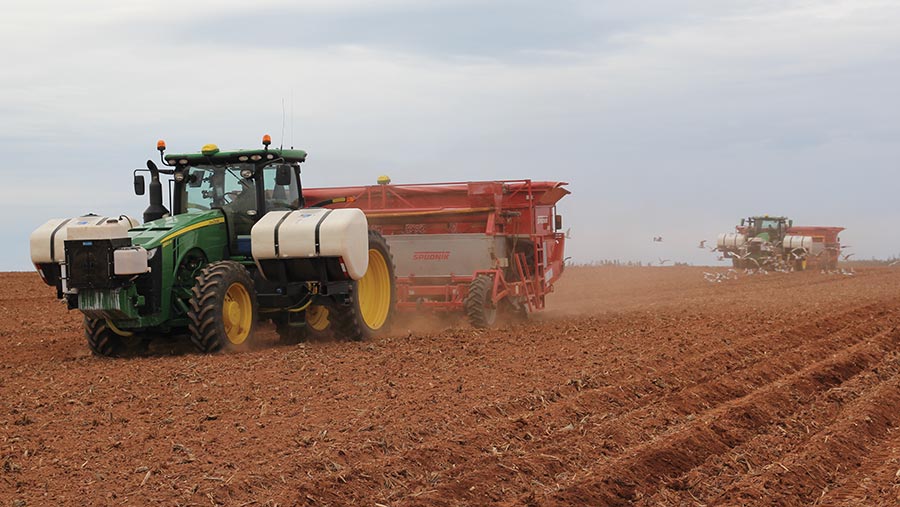
Photo Retrieved from thebalisun.com Bali is on a mission to become an organic island. Once upon a time, Bali was an island of integrated food forests and villages that spanned from the highest ridge lines down to the ocean reefs. Over the last few decades, farming methods have changed dramatically across the world. Local politician and ex-Governor of Bali, Made Mangku Pastika, has confirmed that Bali must start the transition to an organic-only model to help improve the fertility of the land and quality of the produce and, in turn, establish the island as an ‘expensive’, premier destination in the eyes of tourists. During a meeting with local farmers and agricultural leaders Pastika shared, “If we don’t use chemical fertilizers and pesticides, the quality of agricultural precuts will be[better and healthier for consumption](https://bali-antaranews-com.translate.goog/berita/328182/pastika-pulau-organik-jadikan-bali-lebih-mahal-dan-subur-di-mata-turis?_x_tr_sl=id&_x_tr_tl=en&_x_tr_hl=en&_x_tr_pto=wapp).” Members from the Simantri Integrated Agricultural System group, which is made up of farmers from around the province, joined Pastika to discuss the transition, or rather de-transition to organic farming as standard. Pastika shared, “When I was Governor of Simantri Group [the concept] was developed. The idea at the time was an effort to help care for Bali in the midst of a dense population.” He added that organic produce can be sold for higher prices and that international tourists have consistently shown interest in these more premium products, whether that be coffee, vegetables, fruits, grains, or meat.

Read more
Rampant Heatwaves Are A Growing Threat To Caribbean Food Security
Water & FoodOctober 3, 2023

Rampant Heatwaves Are A Growing Threat To Caribbean Food Security

Photo retrieved from forbes.com Record-breaking heat that has been beating down on the Caribbean for the past few months poses a grave threat to regional food security. Unprecedented temperatures are impacting soil and water, worker productivity and income, food prices and trade— with consequences for the availability, accessibility and affordability of major crops, fish stocks, livestock… and even imported food. Driven by climate change, a strong [El Niño](https://education.nationalgeographic.org/resource/el-nino/) climate pattern and a much warmer than usual tropical north Atlantic, heat waves—temperatures that exceed the 90th percentile of the region’s historical range— have affected both marine and terrestrial food sources. “Through successive COPs [United Nations Climate Change Conferences] we have heard repeated warnings about the imperative of limiting global temperatures to 1.5 degrees Celsius above pre-industrial levels,” says Dr. Didacus Jules, Director General of the Organization of Eastern European States (OECS). “Global warming is creating hell on earth for Small Island Developing States (SIDS)— a rapid onslaught apocalypse.” The Caribbean Regional Climate Center [reported](https://rcc.cimh.edu.bb/files/2023/08/caricofsondjf.pdf) record-breaking temperatures across the region between May and August 2023, with forecasts of continued heat stress in the region through October, with ongoing increasing temperatures, humidity and frequency of heatwaves expected to rival prior records. Higher than normal temperatures are forcasted to extend into 2024, and the World Meteorological Organization (WMO) warns that these weather extremes will become the “[new norm](https://public.wmo.int/en/media/news/extreme-weather-new-norm).”

Read more
Kiribati: The remote island nation facing a triple threat to health
Water & FoodJune 1, 2023

Kiribati: The remote island nation facing a triple threat to health

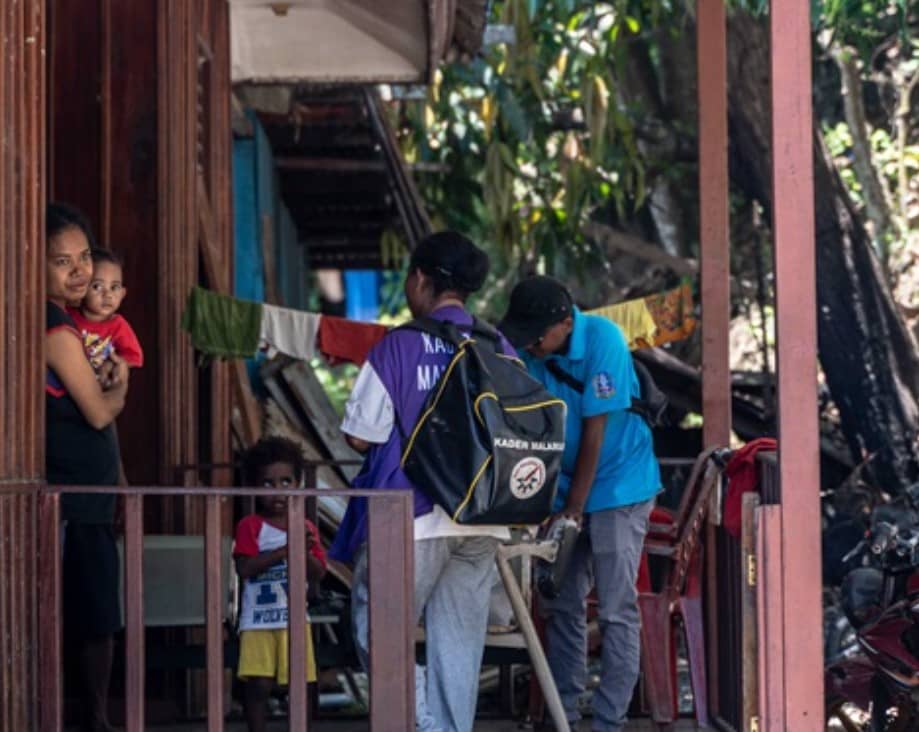
Photo: Retrieved from msfsouthasia.org Kiribati is one of the most remote and geographically dispersed countries in the world. It is also one of the most vulnerable countries to the impacts of the climate crisis. The country faces has described as a triple threat to health: communicable diseases, non-communicable diseases (NCDs), and the health impacts of climate change. Climate and environmental changes are exacerbating Kiribati’s high burden of disease. Kiribati faces air and sea temperature rises, storm surges and high winds, erosion, drought and flooding. This poses direct and indirect threats to human health, including injury, disease outbreaks and malnutrition. MSF has been working in Kiribati since October 2022, in partnership with the Ministry of Health and Medical Services, to improve maternal and paediatric care. An MSF paediatrician, obstetrician, midwife and paediatric nurse are working alongside i-Kiribati ministry of health staff to provide health care in the country’s main hospital and to help build capacity among local health staff. An MSF team has also worked on the outer islands, training nurses on neonatal care and screening for women who have high-risk pregnancies due to the very high rates of gestational diabetes.

Read more
Meet the Hawai’i Farmer Turning Island Waste into a Composting Community
Water & FoodMay 12, 2023

Meet the Hawai’i Farmer Turning Island Waste into a Composting Community

Photography by Ronit Fahl. Retrieved from modernfarmer.com In 2007, Emiko Chantal Chung was asked to help plan a multi-million-dollar civic center on land that was once a botanical garden she had wandered through as a child. The land had since turned into an illegal dumping ground. At the time, she was working for a Hawaiian culture-based preschool as a family advocate and, while the civic center was supposed to be for the community, Chung felt an intuitive nudge that the land was meant for something else. A year later, the recession hit and investors pulled out of the project. It was then that she and two of her friends, Hala Medeiros and Lovey Simmons, realized they wanted to build more for their children and opt into a decolonized system of living that favors people over profit. “So we started off with food. How can everybody be fed?” says Chung. Over the next four years, a grassroots effort of volunteers, neighbors and equipment donors helped clean up the land to prepare it for what was next: [Ma’ona Community Garden,](https://www.instagram.com/maonacommunity/)Hawai’i Island’s first community garden. Founded by Chung, Medeiros and Simmons, the garden grew out of an effort to create more community access to nutritious, sustainably grown food.

Read more
In Bahamas, conch fishing is way of life. But for how long?
Water & FoodApril 14, 2023

In Bahamas, conch fishing is way of life. But for how long?

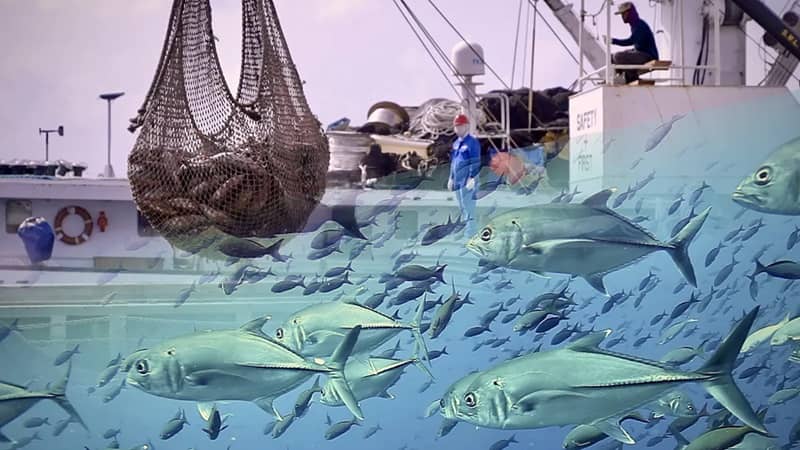
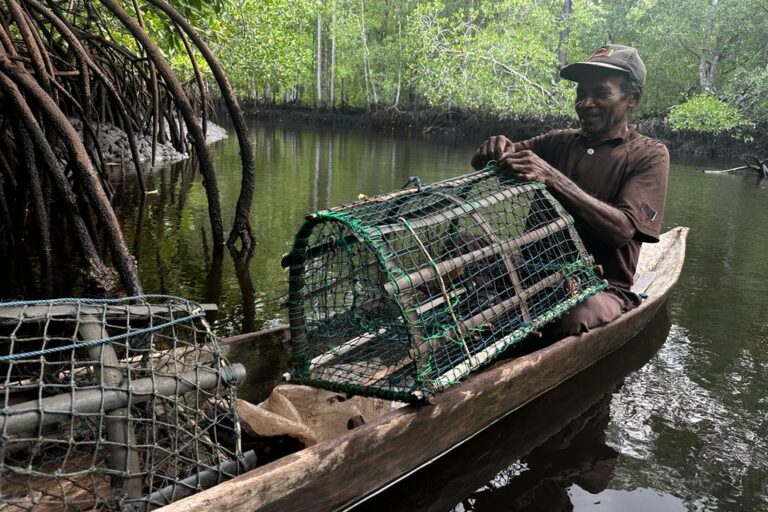
Scientists, international conservationists and government officials have sounded the alarm that the conch population is fading due to overfishing, and a food central to Bahamians’ diet and identity could cease to be commercially viable in as little as six years. “When I was a child, we never had to go that far to get conch,” said Davis, speaking at a Freeport market where she sold her catch. “Without conch, what are we supposed to do?” Conch’s potential demise reflects the threat overfishing poses around the world to traditional foods. Such losses are among the starkest examples of how overfishing has changed people’s lives – how they work, what they eat, how they define themselves. Governmental organizations and advocacy groups are working to stop [illegal, unreported and unregulated](https://apnews.com/article/corruption-threatens-ocean-fisheries-de31ff22caa73def5b7d6c8e299099a2) fishing that has expedited the loss of species. They blame poaching, poor regulations and lack of enforcement of existing laws. Regulators, such as the National Oceanic and Atmospheric Administration in the U.S., have said cutting down on illegal fishing is critical to prevent losing beloved food options.

Read more
Improving water access in remote and isolated communities
Water & FoodMarch 23, 2023

Improving water access in remote and isolated communities

Griffith University contributed to a [global review](https://www.thelancet.com/journals/langlo/article/PIIS2214-109X(23)00006-2/fulltext) highlighting the effects of racism, social exclusion and discrimination on achieving universal safe water and sanitation in high-income countries and published in The Lancet Global Health. Griffith Cities Research Institute and Coauthor Associate Professor Cara Beal said despite Australia being one of the richest per capita countries in the world, clean, reliable water and energy provision in Australia’s First Peoples communities has long been inadequate. “Australian First Peoples do not enjoy the same level of service for water and energy that the majority of non-Indigenous Australians do, and the issue is finally getting the attention it deserves,” Associate Professor Beal said. The findings in a recent water industry report released formally by Minister for Indigenous Australians Linda Burney prompted an announcement by the Federal Government to commit $150 million over four years to support First Nations water infrastructure. “Remote and isolated communities experience water insecurity in ways that are specific to location, climate and culture – it’s not enough to simplify the management of water and energy resources from a city management perspective – we must collaborate with the people who live it and experience it every day,” Associate Professor Beal said.

Read more
What is the UN 2023 Water Conference and why is it so important? Two experts explain
Water & FoodMarch 23, 2023

What is the UN 2023 Water Conference and why is it so important? Two experts explain

Our global water system is in crisis. Despite safe water and sanitation being a human right, billions of people lack access to these essentials for life, according to the United Nations. This month’s [UN 2023 Water Conference](https://sdgs.un.org/conferences/water2023) – the first in almost 50 years – could be a watershed moment for [UN Sustainable Development Goal 6](https://sdgs.un.org/goals/goal6): ensuring the sustainable management of water and sanitation for all. These are the critical foundations on which many of the 17 Sustainable Development Goals (SDGs) depend, especially health, food, gender equity, education, livelihoods, industry, climate and the environment. We hope it could result in a “Paris moment” for water – with outcomes as critical for water as the Paris Agreement has been for climate action. **The Conferencehas five themesthat support theSDG 6 Global Acceleration Framework:** 1. Water for Health: Access to ‘WASH’ (Global Water, Sanitation, & Hygiene) including the Human Rights to Safe Drinking Water and Sanitation 2. Water for Sustainable Development: Valuing water, the water-energy-food nexus and sustainable economic and urban development. 3. Water for Climate, Resilience and Environment: Source to sea, biodiversity, climate, resilience and disaster risk reduction. 4. Water for Cooperation: Transboundary and international water cooperation, cross sectoral cooperation and water across the 2030 Agenda. 5. Water Action Decade: Accelerating the implementation of the objectives of the Decade for Action, including through the UN Secretary-General’s Action Plan. 1. Water for Health: Access to ‘WASH’ (Global Water, Sanitation, & Hygiene) including the Human Rights to Safe Drinking Water and Sanitation 2. Water for Sustainable Development: Valuing water, the water-energy-food nexus and sustainable economic and urban development. 3. Water for Climate, Resilience and Environment: Source to sea, biodiversity, climate, resilience and disaster risk reduction. 4. Water for Cooperation: Transboundary and international water cooperation, cross sectoral cooperation and water across the 2030 Agenda. 5. Water Action Decade: Accelerating the implementation of the objectives of the Decade for Action, including through the UN Secretary-General’s Action Plan.

Read more