Content Library

News

Curated stories and analysis from islands and sustainability leaders worldwide.

Showing 9 of 235 news items in Ocean & Biodiversity
Survival at sea: Cuba is rewriting its coral story
Ocean & BiodiversityJuly 28, 2025

Survival at sea: Cuba is rewriting its coral story

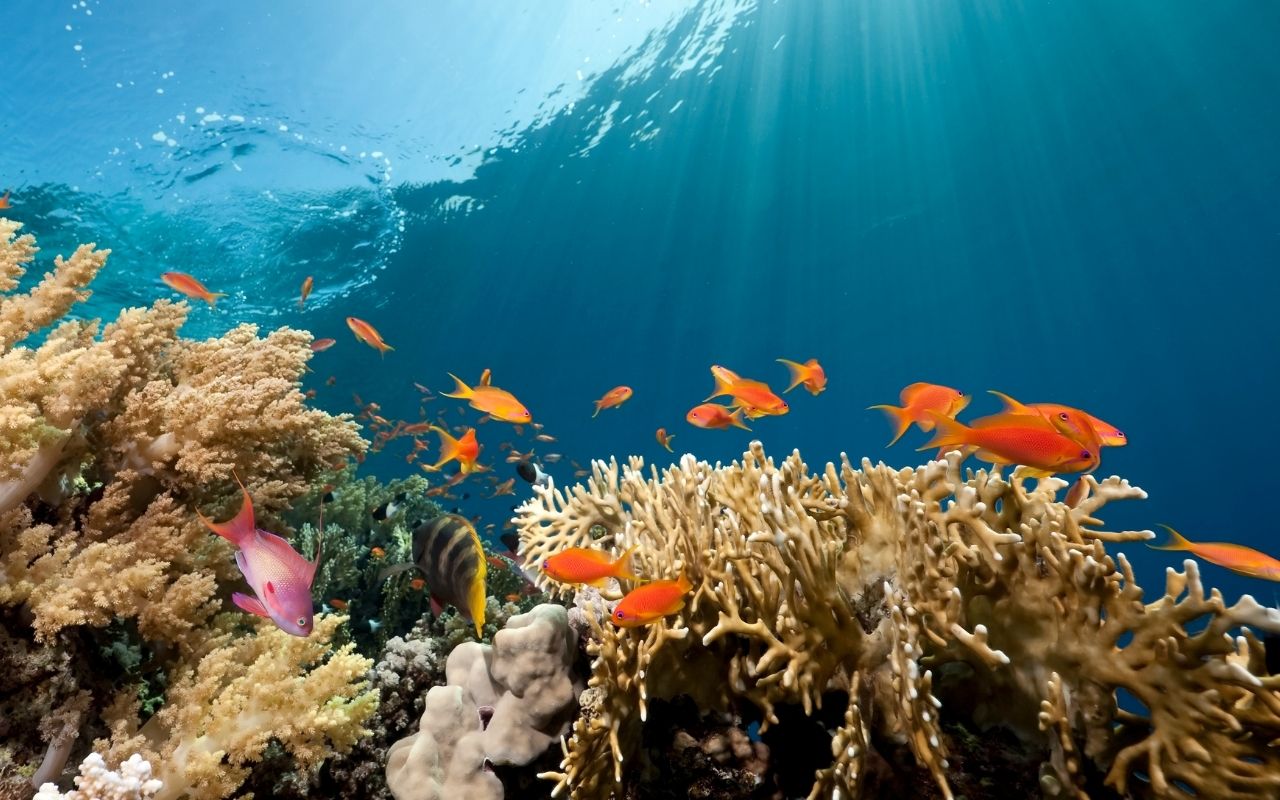
Excerpt from oceanographicmagazine.com It’s the middle of the night. The sky is dusty white with stars, so many that it’s difficult to distinguish one from another. The full moon hangs low above the ocean’s inky surface and creatures scuttle across the seafloor. Stripy lionfish dance their poisonous dance, fins fanned in dazzling display. And throughout the intricate passageways of an extensive reef, corals get ready to spawn. Each August, under the cover of darkness, a species of coral at Playa el Coral – off the northern coast of Cuba – releases a cloud of eggs and sperm. The underwater world comes to mirror the sky above, the sea sprinkled with millions of microscopic particles. Coral species reproduce either through “brooding” or “broadcasting.” The former release fully fertilised juveniles; the others, called broadcast spawners, release sperm and eggs separately. If all goes well, somewhere in the vast water column, a tiny sperm and egg will find each other. If by a moon dance miracle, the two gametes do connect, they become a planula, or coral larvae. They are carried by currents or settle on the reef below, trying to beat the odds: only 1% of corals survive their first year of life. Along the two square kilometres of Playa el Coral, hundreds of species reproduce this way: the vibrant purple fan coral, the branching orange elkhorn, and the boulder star coral that encrusts rocks in tiny green polka dots. The scientists and divers who know this spot well all agree: it is one of the healthiest reefs in the Caribbean, if not the world. Many narratives about coral reefs are centred on bleaching, death, and extinction. Which is, for the most part, accurate. According to the World Economic Forum, 14% of reefs have been lost since 2009. In Australia, over 70% of the Great Barrier Reef has bleached. In Florida, 90% of the reefs – stretching some 350 miles – have disappeared in just the past 40 years.

Read more
Nickel boom on an Indonesian island brings toxic seas, lost incomes, report say
Ocean & BiodiversityJuly 28, 2025

Nickel boom on an Indonesian island brings toxic seas, lost incomes, report say

Excerpt from news.mongabay.com JAKARTA — Kasman Amir grew up in a fishing family in a small coastal village on Kabaena Island in eastern Indonesia. The family home sat on stilts above the water, and he recalled waking up to the sound of the boat engine. The village, home to the nomadic Bajau sea tribe — whose culture inspired the Hollywood movie Avatar: The Way of Water — was once surrounded by clear waters that allowed children to play freely. “As kids, we loved playing in the water—swimming, paddling canoes. That was our fun,” Kasman told reporters at a recent press conference in Jakarta. But since 2010, the sea has turned red, allegedly due to runoff from nickel mining, which has expanded across the island. “Now, I never see children swim in the sea. They’re afraid of contamination,” Kasman said. “After school, we’d go fishing right in front of our homes. We’d catch ikan baronang [rabbitfish, genus Siganus], and sell them for pocket money. Children today no longer experience that freedom.”

Read more
Spectacular Red Crab Migration Unfolds on Christmas Island
Ocean & BiodiversityJuly 28, 2025

Spectacular Red Crab Migration Unfolds on Christmas Island

Photo credit: drifttravel.com Excerpt from drifttravel.com One of nature’s most awe-inspiring events is now underway on Christmas Island, captivating the imaginations of wildlife enthusiasts worldwide. The annual red crab migration, a remarkable spectacle orchestrated by celestial, tidal and meteorological forces, has commenced, offering a breathtaking display of natural wonder. Located 1500 km from the Australian mainland in the Indian Ocean Territories, Christmas Island is renowned for hosting this extraordinary phenomenon. The island’s rainforests come alive as tens of millions of red crabs embark on a journey from the forest to the coast for their annual mating and spawning ritual. This spectacular migration this year is set against the backdrop of a delayed wet season, attributed to El Niño weather patterns, resulting in limited rainfall this year. Despite the sporadic nature of this year’s event, locals and visitors are enthralled to witness the iconic “great scarlet curtain” of red crabs, a description immortalised by world-renowned naturalist Sir David Attenborough. Attenborough, who considered filming the migration among his top 10 TV moments, marvelled at the crabs moving down cliffs and rocks towards the sea. Each year the migration begins with the first rains of the wet season. The spawning event this year is anticipated around the 4th of February. During this second phase of the migration, each female red crab is expected to release up to 100,000 eggs into the Indian Ocean. Approximately one month later, baby red crabs hopefully return to the shore, initiating their journey back into the tropical forests of Christmas Island.

Read more
Something Strange Is Happening to Tomatoes Growing on the Galápagos Islands
Ocean & BiodiversityJuly 14, 2025

Something Strange Is Happening to Tomatoes Growing on the Galápagos Islands

Caption: Scientists are investigating the production of ancestral alkaloids by tomatoes in the Galápagos Islands. Image Credit: Adam Jozwiak / University of California, Riverside via [smithsonianmag.com](https://th-thumbnailer.cdn-si-edu.com/isv4Y3O0yIbBiWnQEl92FI0UlQU=/1026x684/https://tf-cmsv2-smithsonianmag-media.s3.amazonaws.com/filer_public/7d/0c/7d0c8b93-c980-4e1d-82fb-b8509b044946/img_5325_original.png) Excerpt from [smithsonianmag.com](https://www.smithsonianmag.com/smart-news/something-strange-is-happening-to-tomatoes-growing-on-the-galapagos-islands-180986956/) Some tomatoes growing on the Galápagos Islands appear to be going back in time by producing the same toxins their ancestors did millions of years ago. Scientists describe this development—a controversial process known as “reverse evolution”—in a June 18 paper published in the journal Nature Communications. Tomatoes are nightshades, a group of plants that also includes eggplants, potatoes and peppers. Nightshades, also known as Solanaceae, produce bitter compounds called alkaloids, which help fend off hungry bugs, animals and fungi. When plants produce alkaloids in high concentrations, they can sicken the humans who eat them. To better understand alkaloid synthesis, researchers traveled to the Galápagos Islands, the volcanic chain roughly 600 miles off the coast of mainland Ecuador made famous by British naturalist Charles Darwin. They gathered and studied more than 30 wild tomato plants growing in different places on various islands. The Galápagos tomatoes are the descendents of plants from South America that were probably carried to the archipelago by birds.

Read more
Pacific Island Countries Unite to Launch Regional Biodiversity Finance Programme
Ocean & BiodiversityJuly 14, 2025

Pacific Island Countries Unite to Launch Regional Biodiversity Finance Programme

Image courtesy of [UNDP](https://www.undp.org/sites/g/files/zskgke326/files/2025-07/undp_biofin_con_fiji.jpg) Pacific Harbour, Fiji – Government representatives from 15 Pacific Island Countries and Territories have convened this week at The Pearl Resort in Pacific Harbour to officially launch the GEF-8 funded Pacific Biodiversity Finance (BIOFIN) Umbrella Programme, a landmark initiative to strengthen biodiversity financing across the region. Hosted by the Government of Fiji, the four-day Inception Workshop marks the start of coordinated regional efforts to create an enabling environment that supports the design and implementation of National Biodiversity Finance Plans tailored to Pacific contexts and priorities, strengthens resource mobilization, and embeds gender equality and inclusivity at the core of future finance strategies. In his opening remarks, Fiji’s Permanent Secretary, Ministry of Environment and Climate Change, Dr. Sivendra Michael said: “Biodiversity is not a luxury. It is the foundation of our economies, our food systems, our resilience, and our identity. If we fail to finance it properly, we are not just failing nature—we are failing ourselves.” “If we do not innovate how we finance biodiversity in the Pacific at the scale, scope, and speed it deserves, we risk losing the very essence of who we are.” Deputy Resident Representative (OIC) of the UNDP Pacific Office in Fiji, Abduvakkos Abdurahmanov highlighted the importance of regional ownership and local leadership: “This is not just a workshop—it is the start of a new chapter for the Pacific. With BIOFIN, we are working together to unlock financing that reflects the true value of biodiversity. It is about bridging the gap between environmental protection and sustainable development.”

Read more
With coral-rich Churna Island now an MPA, Pakistan takes baby steps on ocean protection
Ocean & BiodiversityJuly 7, 2025

With coral-rich Churna Island now an MPA, Pakistan takes baby steps on ocean protection

KARACHI — From the sands of Manjhaar Beach on the far outskirts of Karachi, Pakistan, an island is just visible 10 kilometers, about 6 miles, offshore. Mist rising from the Arabian Sea often shrouds Churna Island from the view of sailors and tourists heading toward it for fishing or diving. Below the waves, the island harbors one of Pakistan’s biodiversity hotspots: a diverse coral community, including one of the country’s only documented reefs. In September 2024, Churna Island and the sea surrounding it became Pakistan’s second designated marine protected area (MPA), an area of around 98 square kilometers (38 square miles). It followed the 2017 designation of the country’s very first MPA around Astola Island, a haven for coral, birds and sea turtles to the east. While Pakistan’s first two MPAs are small and have yet to be fully implemented, they represent baby steps in the country’s nascent effort to protect its marine environment. “Given the growing anthropogenic and environmental threats to the biodiversity hotspots, it was inevitable to declare these areas marine protected areas,” Naeem Javid Muhammad Hassani, a wildlife conservator with the forest department of Balochistan province, which oversees both MPAs, told Mongabay. “Churna Island has vast coral biodiversity and Astola is home to both a variety of corals and avian species, especially the migratory birds, which needed to be protected.”

Read more
Indigenous divers on Chile’s island restore seabed to protect seafood sources
Ocean & BiodiversityJuly 1, 2025

Indigenous divers on Chile’s island restore seabed to protect seafood sources

Daniel Caniullán has been diving in the cold waters of the Guaitecas Archipelago in northern Patagonia, Chile, for more than 30 years. “Just by looking at the seabed landscape, you can tell what species you are going to find,” he says. Just as it is possible to recognize the loss of a diverse forest on land, Caniullán’s experience underwater allows him to quickly identify damaged areas. To undo the damage, local divers “repair or reorganize the seabed to restore biodiversity and interspecies relationships,” according to a recent [paper](https://besjournals.onlinelibrary.wiley.com/doi/10.1002/pan3.70004) published in the British Ecological Society.

Read more
Pacific island nations launch plan for world’s first Indigenous-led ocean reserve
Ocean & BiodiversityJune 24, 2025

Pacific island nations launch plan for world’s first Indigenous-led ocean reserve

The governments of the Solomon Islands and Vanuatu have announced their commitment to create a massive multinational [Melanesian Ocean Reserve](https://storymaps.arcgis.com/stories/82ea18c8f2874d8fa85ad572a844f52f). If implemented as envisioned, the reserve would become the world’s first Indigenous-led ocean reserve, covering an area nearly as big as the Amazon Rainforest. Speaking at the U.N. Ocean Conference underway in Nice, France, representatives of both countries said the vision for the ocean reserve is to cover at least 6 million square kilometers (2.3 million square miles) of ocean and islands. The reserve will include the combined national waters of the Solomon Islands, Vanuatu and Papua New Guinea, and extend to the protected waters of New Caledonia’s exclusive economic zone. All of the island countries, largely inhabited by Indigenous Melanesians, are located in the southwestern Pacific Ocean, within the region known as Melanesia. “The Melanesian Ocean Reserve will give the governments and peoples of Melanesia the ability to do much more to protect our ancestral waters from those who extract and exploit without concern for our planet and its living beings. We hope our Indigenous stewardship of this vast reserve will create momentum for similar initiatives all over the world,” Vanuatu’s environment minister, Ralph Regenvanu, said in a [joint press release](https://www.prnewswire.co.uk/news-releases/melanesian-leaders-announce-worlds-largest-indigenous-led-marine-reserve-302479997.html).

Read more
A Deep-Sea Expedition Unearths Unimaginable Lifeforms in the South Sandwich Islands
Ocean & BiodiversityJune 24, 2025

A Deep-Sea Expedition Unearths Unimaginable Lifeforms in the South Sandwich Islands

A recent deep-sea expedition to one of the most remote locations on Earth, the South Sandwich Islands in the South Atlantic, has uncovered stunning new ecosystems surrounding hydrothermal vents. The discovery, which includes vibrant coral gardens and new species, was part of a 35-day mission aboard the [Schmidt Ocean Institute’sresearch vesselFalkor](https://schmidtocean.org/new-coral-gardens-hydrothermal-vents-found-south-sandwich-islands/)(too). This expedition is part of the Ocean Census project, a global initiative focused on documenting marine life before it is lost due to climate change, deep-sea mining, and other environmental threats. The scientific team faced severe challenges including subsea earthquakes, hurricane-force winds, towering waves, and icebergs, but their efforts were rewarded with groundbreaking discoveries. The expedition to the South Sandwich Islands revealed several hydrothermal vent systems previously unknown to science. These vents, which are located on the northeast side of the Quest Caldera, play a crucial role in deep-sea ecosystems. The research team was particularly excited to uncover a vibrant vermillion coral garden thriving near shallow hydrothermal vents around 700 meters deep (nearly 2,300 feet) on Humpback Seamount. While tropical coral reefs are often associated with warm waters, these cold-water coral gardens in the deep sea are a testament to the richness of marine life in unexpected environments.

Read more