VIS 2026VIS 2026 — Virtual Island Summit|Also: GSIS 2027GSIS 2027
Island Innovation Logo
About
Services
The Network
Events
Content Library
Contact Us

Subscribe to our newsletter. By submitting, you agree to our Privacy Policy.

Island Innovation

Island Innovation works with governments, institutions, and partners worldwide to support island-led sustainable economic development.

We Support The UN Development Goals

SDG 9: Industry, Innovation and Infrastructure
SDG 11: Sustainable Cities and Communities
SDG 12: Responsible Consumption and Production
SDG 13: Climate Action
SDG 14: Life Below Water
SDG 17: Partnerships for the Goals

Explore

AboutServicesNetworkEvents

Content

ArticlesNewsCareers

Ready to Connect?

Join the island innovation community

Get in Touch

About

  • About us
  • Case Studies
  • FAQs
  • Press
  • Careers
  • Contact

Services

  • Services Overview
  • Public & Media Relations
  • Strategic Communications

Network

  • The Island Network
  • Academic Council
  • Newsletter

Events

  • Our Events
  • Watch Past Events

Content

  • All Content Library
  • Videos
  • Articles
  • News
Privacy PolicyTerms of ServiceContact

© 2025 Island Innovation. All rights reserved.

    News

    Curated stories and analysis from islands and sustainability leaders worldwide.

    Filter by Core Theme

    All ThemesCircular EconomyClimate ActionConnectivity & DigitizationCulture & CommunityEnergy & TransportGreen Finance & EconomyOcean & BiodiversityPolicy & GovernanceTourism & Remote WorkWater & Food
    Showing 9 of 2068 news items
    How Island Nations Can Harness Tourist Dollars for Conservation
    Tourism & Remote WorkApril 1, 2026

    How Island Nations Can Harness Tourist Dollars for Conservation

    Excerpt from pew.org The Small Island Developing States (SIDS)—a group of 57 United Nations members and associate members—are home to 65 million people across 1,000 islands, 20% of global biodiversity, and 40% of the world’s coral reefs. (See Figure 1.) The SIDS share a common set of significant challenges to preservation and protection of the natural marine and coastal treasures their economies depend on. Financial constraints, including high debt burdens that often exceed 60% of gross domestic product, consume substantial portions of national budgets and leave limited funding for conservation investments, climate adaptation, or environmental management. These debt challenges are exacerbated by small but growing populations that increase demand for housing, infrastructure, and services, and by the effects of climate change—which all put pressure on fragile coastal ecosystems and limited land resources.

    Read more
    12345678910
    More tourists, less value: Sicily's fragile model
    Tourism & Remote WorkMarch 25, 2026

    More tourists, less value: Sicily's fragile model

    Excerpt from ilsole24ore.com According to the Prometeia-UniCredit report, in 2025, there were 22.5 million visitors: the number of Italians is decreasing, while the number of foreigners is increasing. Tourism accounts for 4.2% of the island's economy, but remains weak in terms of spending and industrial structure. Growing in numbers, declining in quality. Tourism in Sicily continues to move along an ambiguous path: on the one hand, steady flows, on the other, a progressive weakening of the capacity to generate value. This is the picture emerging from the Prometeia study presented in Palermo during the Economies Forum organized by UniCredit in collaboration with Federalberghi Sicilia. A sector that, according to the numbers, already has a significant impact: 4.2% of the Sicilian economy and 4.8% of the national tourism sector, thanks to a system that encompasses transportation, trade, agri-food, and cultural and natural attractions. The meeting, opened with remarks by Salvatore Malandrino, Regional Manager for Sicily at UniCredit, and Nico Torrisi, President of Federalberghi Sicilia, included a presentation of the study by Andrea Dossena, associate partner at Prometeia, followed by a roundtable discussion with industry professionals and scholars.

    Read more
    The growing allure — and danger — of glacier tourism
    Climate ActionMarch 25, 2026

    The growing allure — and danger — of glacier tourism

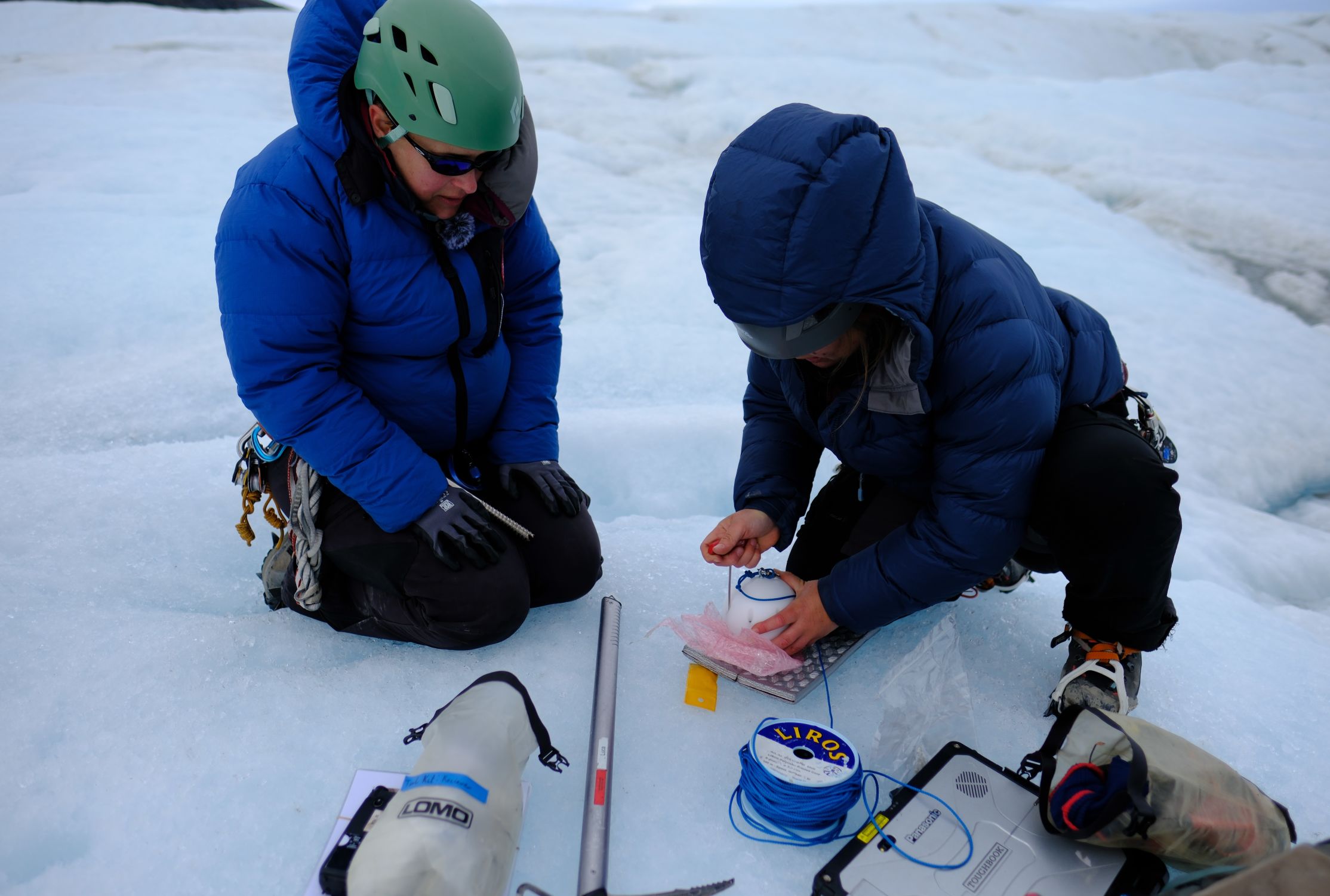
    Excerpt from grist.org Upstairs, right outside my toddler’s room, hangs this striking, blue-blue print of an Icelandic glacier ice cave: the Crystal Ice Cave, circa 2015, long since vanished. My friend Þorri took the image and gifted it to me during one of my many stays over the last 20 years. My son visits the print often. When he was about a year-and-a-half, he pointed to it and confirmed, “blue.” Add two more years and the name of the glacier, “Breiðamerkurjökull,” rolls off his tongue. Lately, just like he asks about my husband and me and our cats and the mailbox and the couch, he asks about the glacier in the picture. How is Breiðamerkurjökull feeling today? Sad? Hungry? Happy? OK? \ This gets fraught quickly. I’m a writer and a glacier scientist — I’ve spent the bulk of my career working on, in, and around this particular glacier system, trying to understand what is happening to it, how people and communities respond to its changes, and how the future of this glacier impacts humanity worldwide.

    Read more
    No rivers, no lakes: Discover how Bermuda built a 400-year-old water system that still functions
    Water & FoodMarch 25, 2026

    No rivers, no lakes: Discover how Bermuda built a 400-year-old water system that still functions

    Excerpt from timesofindia.indiatimes.com Bermuda is an island in the middle of the North Atlantic Ocean, and it has no rivers, no lakes, and no natural springs of fresh water. For more than 400 years, the islanders have been relying on a brilliant but simple idea: Every roof is a collector of drinking water. The island’s famous white, stepped roofs are not just a picturesque postcard image; they are a rainwater–harvesting system that has quietly and successfully served the islanders through storms, droughts, and centuries of change. Modern research in the Journal of the American Water Resources Association (JAWRA) still points to Bermuda as a living example of how traditional design. The system is resilient and sustainable.

    Read more
    Greening quality learning: how climate education is driving curriculum reform in Madagascar
    Culture & CommunityMarch 25, 2026

    Greening quality learning: how climate education is driving curriculum reform in Madagascar

    Excerpt from unesco.org As part of ongoing efforts supported by UNESCO to strengthen climate education, educators and communities are confronting these challenges through learning that connects environmental protection with livelihoods and local realities. For educators in the region, these realities raise an urgent question: how can schools help young people understand, protect and sustain the environment, and the livelihoods, they depend on? Strengthening curriculum responses to climate challenges Education plays a critical role in building long-term resilience. Through the Climate Smart Education Systems Initiative, UNESCO is supporting Madagascar’s curriculum reform by leading the integration of climate change education across curricula, teaching and teacher professional development. This work is carried out in collaboration with Save the Children and the International Institute for Educational Planning (IIEP), with support from the Global Partnership for Education.

    Read more
    Micronesia advances disaster readiness with its first sovereign humanitarian warehouse in Palikir
    Climate ActionMarch 25, 2026

    Micronesia advances disaster readiness with its first sovereign humanitarian warehouse in Palikir

    Excerpt from islandsbusiness.com POHNPEI, Federated States of Micronesia – Last month, leaders gathered in Palikir for the groundbreaking of the Federated States of Micronesia’s (FSM) first sovereign humanitarian warehouse, a facility designed to strengthen the country’s ability to organise, manage, and move relief supplies in anticipation of and during the early stages of disaster response. His Excellency Wesley W Simina, President of FSM, the Honourable Stevenson A Joseph, Governor of Pohnpei and leaders of FSM, joined by Dr. Paula Vivili, Director-General of the Pacific Community (SPC), and Her Excellency Jenny Grant, Australian Ambassador to FSM, took part in the ceremonial digging and consecration of the land. The warehouse will be constructed on government-allocated land, aptly located behind the Department of Environment, Climate Change and Emergency Management (DECEM) office in Palikir. The proximity of the warehouse to the country’s central emergency coordination hub at DECEM will allow for activation, decision-making and dispatch to occur from one locality. This integrated set-up is intended to shorten the time required to organise and move items to communities across all four states. The President of FSM, H.E. Simina, said, “Our responsibility is to protect lives and support communities when hardship strikes. This warehouse will help us organise and deploy essential supplies more efficiently across our states. By placing this capability beside DECEM, we are strengthening a national system that serves every community, including those most distant and most affected.” SPC Director-General, Paula Vivili said, “SPC acknowledges the Government’s strong commitment to national readiness through the allocation of land and the leadership of His Excellency President Wesley W Simina to proactively strengthen approach to disaster preparedness.” He added, “Through the work with DECEM and our humanitarian partners, we are supporting a system that prepositions supplies and logistics where activation and decision making occur, so that communities receive help more quickly and in a more coordinated manner.” Australian Ambassador to FSM, Her Excellency Jenny Grant, said, “Today’s groundbreaking is not simply about concrete and steel. It is about a shared commitment to a resilient Blue Pacific.”

    Read more
    Fukushima town launches rice-based carbon credit project under Japan’s J-Credit scheme
    Water & FoodMarch 25, 2026

    Fukushima town launches rice-based carbon credit project under Japan’s J-Credit scheme

    Excerpt from eco-business.com Japanese agricultural decarbonisation firm Faeger said it will partner with the town of Hirono in Fukushima Prefecture to generate carbon credits from rice cultivation and develop a premium rice brand produced using climate-friendly farming methods. The agreement aims to cut agricultural greenhouse gas emissions while boosting crop quality and farmers’ incomes, the Tokyo-based company said in a statement last week. Under the partnership, farmers will extend the mid-season drainage period of paddy fields – a technique known to reduce methane emissions – and adopt other measures such as biochar use to generate government-certified J-Credits. Revenue from the credits will be reinvested in heat-resilience measures and improvements to the cultivation environment, the company said.

    Read more
    Position Paper: Bridge the Climate Finance Gap for the BES Islands
    Green Finance & EconomyMarch 25, 2026

    Position Paper: Bridge the Climate Finance Gap for the BES Islands

    Excerpt from clean-energy-islands.ec.europa.eu The special municipalities of Bonaire, Sint Eustatius, and Saba (BES islands) are located in the Caribbean and part of the Kingdom of the Netherlands. The BES islands face growing challenges in securing the financing needed for a clean, reliable, and affordable energy transition. Energy transition financing is not only an environmental imperative for economic stability and energy security. The BES islands are highly motivated and have a robust pipeline of projects to meet their climate goals. By streamlining access to the right funding mechanisms, these initiatives can be unlocked. Clearer, scale-appropriate investment pathways will accelerate the transition to clean, reliable, and affordable energy, ensuring long-term stability and prosperity for households, utilities, and public budgets alike. As special municipalities, the position of the local governments and the utilities of the islands of Bonaire, Sint Eustasius, and Saba differs from that of autonomous OCTs, and as a result, they face specific challenges in financing their energy transition. In this position paper, the Clean energy for EU islands secretariat presents those challenges and proposes recommendations for European and national policymakers to improve access to funding for the energy transition in the BES islands.

    Read more
    3 Lessons From Dominica’s Race To Be The First Climate-Resilient Nation
    Climate ActionMarch 19, 2026

    3 Lessons From Dominica’s Race To Be The First Climate-Resilient Nation

    Excerpt from forbes.com Dominica, a small Caribbean island nation, has faced several extreme climate events in the last few years. Tropical Storm Erica in 2015 and Hurricane Maria in 2017 have both caused extensive damage to housing, infrastructure and agriculture, requiring years of recovery and rebuilding efforts. Hurricane Maria alone caused around $930.9 million worth of damage across Dominica, according to the Global Facility for Disaster Reduction and Recovery. This included a 100% loss of power and 90% of buildings being damaged or destroyed, among other infrastructure impacts. Dominica’s agricultural sector was severely harmed as well, which resulted in high food insecurity and vulnerability for more than 24,000 people.

    Read more