VIS 2026VIS 2026 — Virtual Island Summit|Also: GSIS 2027GSIS 2027
Island Innovation Logo
About
Services
The Network
Events
Content Library
Contact Us

News

Curated stories and analysis from islands and sustainability leaders worldwide.
Loading news...

Subscribe to our newsletter. By submitting, you agree to our Privacy Policy.

Island Innovation

Island Innovation works with governments, institutions, and partners worldwide to support island-led sustainable economic development.

We Support The UN Development Goals

SDG 9: Industry, Innovation and Infrastructure
SDG 11: Sustainable Cities and Communities
SDG 12: Responsible Consumption and Production
SDG 13: Climate Action
SDG 14: Life Below Water
SDG 17: Partnerships for the Goals

Explore

AboutServicesNetworkEvents

Content

ArticlesNewsCareers

Ready to Connect?

Join the island innovation community

Get in Touch

About

  • About us
  • Case Studies
  • FAQs
  • Press
  • Careers
  • Contact

Services

  • Services Overview
  • Public & Media Relations
  • Strategic Communications

Network

  • The Island Network
  • Academic Council
  • Newsletter

Events

  • Our Events
  • Watch Past Events

Content

  • All Content Library
  • Videos
  • Articles
  • News
Privacy PolicyTerms of ServiceContactManage email preferences

© 2025 Island Innovation. All rights reserved.

    Filter by Core Theme

    All ThemesCircular EconomyClimate ActionConnectivity & DigitizationCulture & CommunityEnergy & TransportGreen Finance & EconomyOcean & BiodiversityPolicy & GovernanceTourism & Remote WorkWater & Food
    Showing 9 of 250 news items in Ocean & Biodiversity
    Restoration, Protection Aim to Save Belize’s Coral Reef From Extreme Heat and Disease
    Ocean & BiodiversityAugust 20, 2026

    Restoration, Protection Aim to Save Belize’s Coral Reef From Extreme Heat and Disease

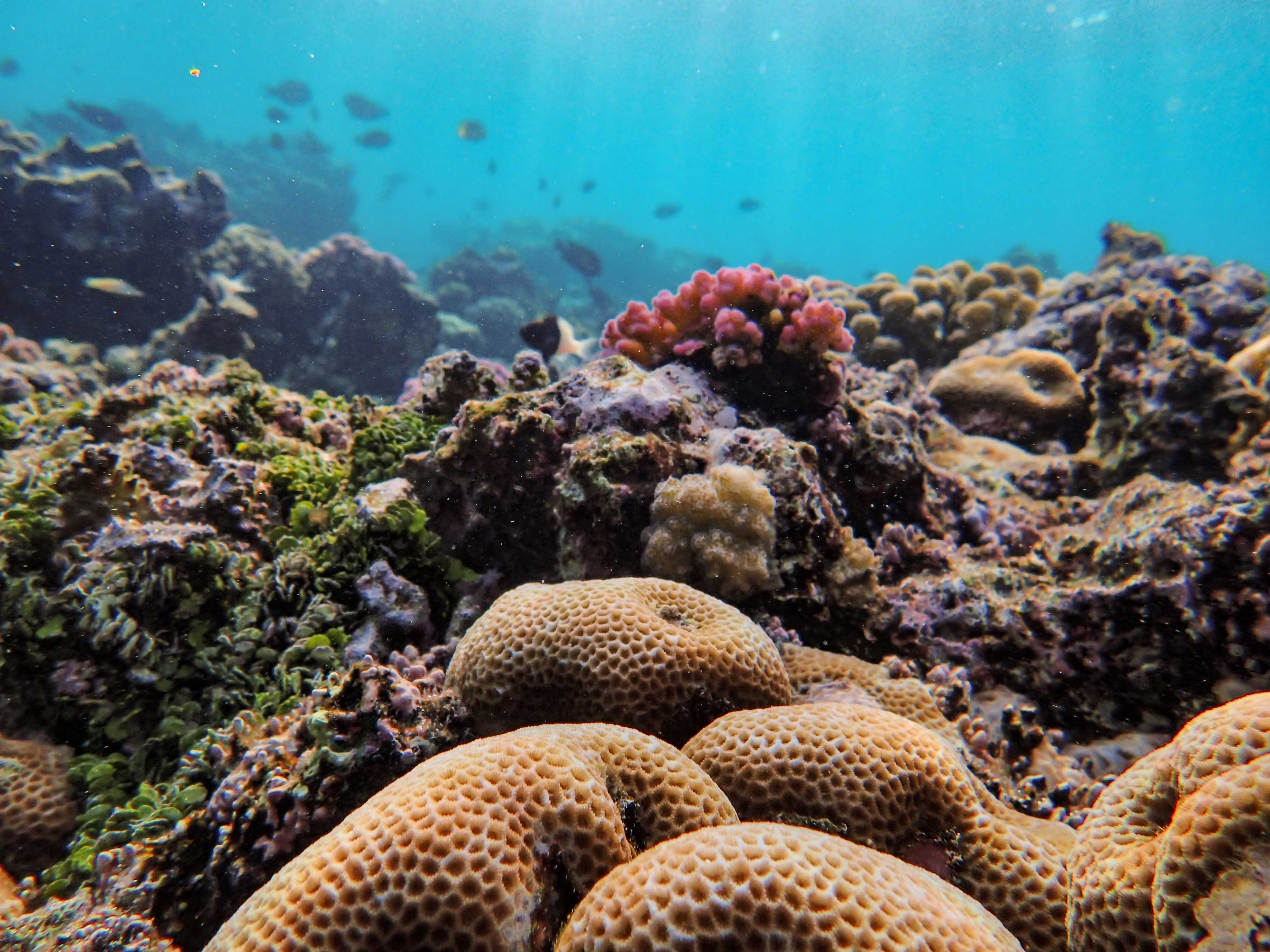
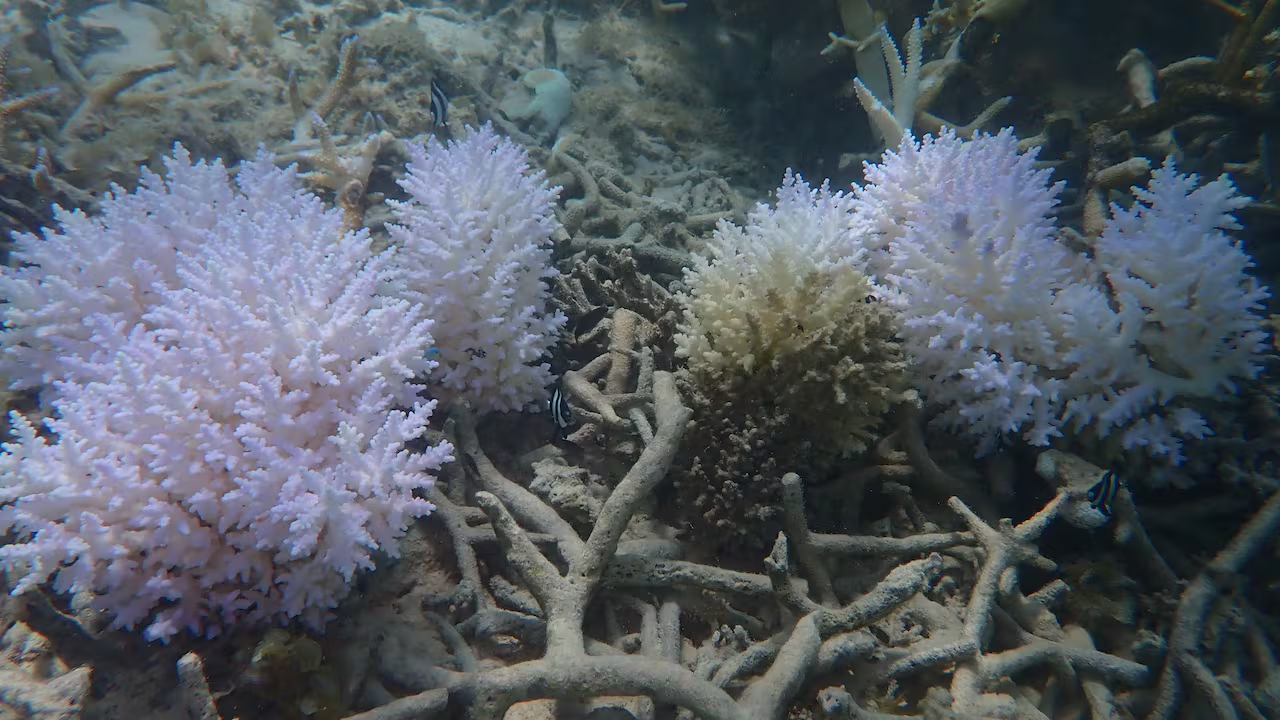
    After Hurricane Iris decimated the coral reef at Laughing Bird Caye National Park in 2001, many wrote off the UNESCO World Heritage site as a coral graveyard. But a small group from the coastal village of Placencia, Belize, about 18 kilometers (11 miles) from the island, saw hope. In 2006, the park had just 6% live coral cover. By 2023, it had reached approximately 60% — the result of the group planting more than 92,000 fragments of coral within the 1-hectare (2.5-acre) shallow fringing reef. The group, Fragments of Hope (FOH), is a Belize-based nonprofit organization focused on restoring coral reef habitats. Their work at Laughing Bird Caye is widely regarded as the best example of reef restoration in the Caribbean. But while the park stands as a beacon of hope for coral restoration, it has not been immune to the onslaught of record-breaking temperatures occurring globally. “2024 was the worst bleaching event since we’ve been recording around 2008,” Lisa Carne, FOH’s founder, said during an interview with Mongabay. Many of the corals planted at Laughing Bird have succumbed to extreme heat stress and disease. At Moho Caye, another restoration site, live coral cover dropped from more than 50% to less than 5%, “likely reflecting similar declines at Laughing Bird,” Carne said. It’s not just Laughing Bird and Moho. Unprecedented coral bleaching, a relatively new illness called stony coral tissue loss disease (SCTLD), and other threats to corals are negatively impacting reef health across Belize, and it forced FOH to shift tactics. “Over the past two years, it’s been getting hotter and hotter, and we haven’t been able to plant coral, which is what we would normally do,” Monique Vernon, a coral reef restoration practitioner trained by FOH who has been conducting restoration and monitoring activities with the group for years, told Mongabay. Instead, the group focused on conducting monitoring surveys and collecting data on the rate of coral bleaching and coral diseases at restored sites in Belize. “We’re trying to host two trainings per year so that we can get more Belizeans on board helping us to survey corals,” Vernon said. In March, when Mongabay spoke with her, Vernon was doing just that: serving as a trainer for a FOH workshop in Placencia to teach a group of Belizeans the basics of coral monitoring and data collection. This scientific effort is pivotal to identifying site variability and corals that show genetic resistance to stressors, according to Carne. She called these resilient corals “winners” and said finding them will inform future coral restoration and protection activities. FOH will eventually transplant fragments from these winners to sites with fewer stressors, with the hope that their proven resilience in harsher conditions will increase their chances of survival and growth. “We need to keep an eye on everything with monitoring,” Esther Peters, an expert on coral reefs and their diseases at George Mason University in Virginia, U.S., told Mongabay. “Often, there are not too many laboratories and not too many researchers. We need to bring in more people and get them involved and being able to report what they see to researchers,” said Peters, who has conducted research in Belize over the years and has recently been working close by, in Roatan, Honduras.

    12345678910
    Read more
    Madeira Study: Artificial Reefs Cannot Replace Natural Habitats
    Ocean & BiodiversityAugust 13, 2026

    Madeira Study: Artificial Reefs Cannot Replace Natural Habitats

    Artificial reefs created from sunken ships in Madeira and Porto Santo help support marine biodiversity, but cannot reproduce all the ecological functions of natural reefs, a scientific study has concluded. The findings are based on nine years of fish monitoring by Madeira’s marine biodiversity programme, BioMa, which has been operating across the archipelago since 2016. Pedro Neves, a researcher at the Oceanic Observatory of Madeira, said the study compared two natural reefs and one artificial reef on each island. The research was carried out in partnership with Madeira’s Institute of Forests and Nature Conservation and the University of Las Palmas. The two artificial reefs studied were created by sinking former Portuguese Navy corvettes: the Afonso Cerqueira off Madeira and the General Pereira d’Eça off Porto Santo. “We concluded that artificial reefs behave like natural reefs in some respects, because more or less the same species are found in both places,” Neves told Lusa. “However, the species living around the artificial reefs do not perform all the same ecological functions as those found on natural reefs. Artificial reefs remain very important, for example for diving, tourism and the local economy, but we cannot regard them as substitutes for natural reefs,” he said. In Madeira, where fish communities are richer and more functionally diverse, the differences between natural and artificial reefs were less pronounced. The artificial structures appear to act mainly as an extension of the island’s existing network of marine habitats. In Porto Santo, however, the differences between sites were more evident. The artificial reef displayed high levels of functional diversity compared with a natural reef exposed to greater fishing pressure. Researchers recorded 52 fish species during the study, including several considered particularly important for conservation and the functioning of the marine ecosystem. These included large predators and ecologically distinct species such as grouper, triggerfish, dogfish and several types of ray. Neves said artificial reefs are valuable because they create additional habitats, but stressed that natural environments must continue to be protected, warning that conservation decisions should not be based solely on the number of species found in one location. Instead, marine protected areas should encompass a mosaic of different environments, including sandy seabeds, rocky reefs and kelp fields. “We cannot protect only a natural reef because it has more species than a sandy bottom, or just an artificial reef because it has a higher density than a natural reef,” he said. “We have to try to preserve a little of everything.”

    Read more
    How Social Media and Parrotfish Poop are Protecting the Maldives
    Ocean & BiodiversityAugust 13, 2026

    How Social Media and Parrotfish Poop are Protecting the Maldives

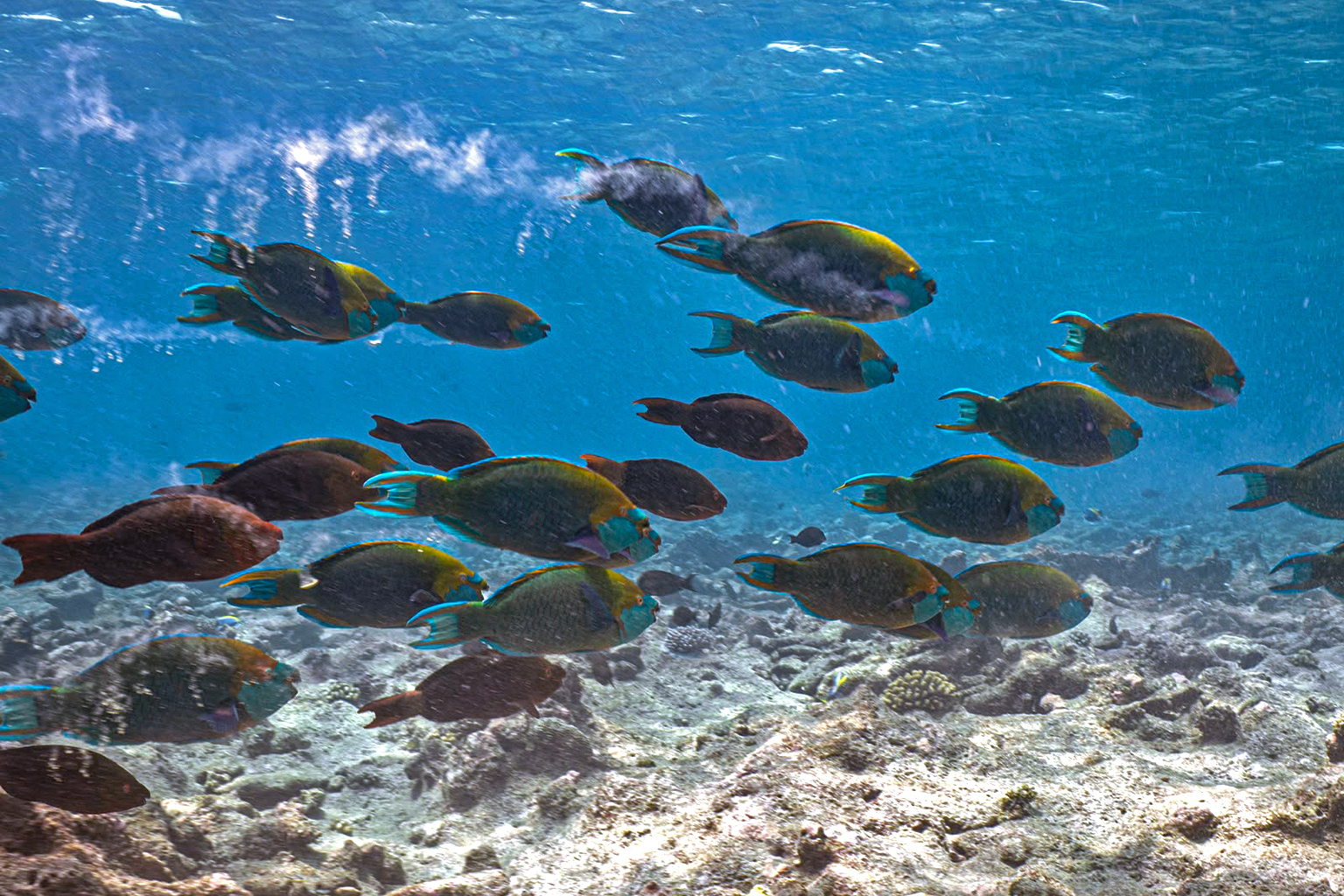
    It started six years ago when Shaha Hashim began seeing posts across social media: Vulnerable and protected species were being fished throughout the atoll islands of the Maldives, and some were even turning up in fish markets. This included animals like the giant clam (genus Tridacna), Napoleon wrasse (Cheilinus undulatus), and even species of parrotfish (subfamily Scarinae). These species weren’t historically targeted by Maldivian fishers, but were rising in popularity over the last decade. This came to a head in the midst of the COVID-19 pandemic, as tourism workers were being let go from their jobs at resorts, and fishing became more popular recreationally, as well as a means of earning money and providing food. “This was the only way for them to earn an income at that time,” Hashim told Mongabay by video call. Today, she’s the co-founder and executive director of Maldives Resilient Reefs (MRR). Hashim said the parrotfish were particularly concerning. At the time, they weren’t a protected species, though they played a key role in recycling sediment and generating new habitat for coral reefs. Protecting them means safeguarding accretion: An important sedimentary process that is intertwined with the resiliency and natural management of atolls. “Accretion really is the deposition of sediment above the water level,” said Paul Kench, a coastal scientist and the pro vice-chancellor of Te Wānanga Pūtaiao Division of STEM at the University of Waikato in New Zealand. He told Mongabay by video call that accretion allows atolls to naturally combat climate change by rising with the sea level and growing horizontally. Parrotfish help in multiple ways In 2015, Kench co-authored a paper that found parrotfish responsible for generating upwards of 85% of the new sand-grade sediment produced in outer reefs surrounding reef islands. They use their beak-like teeth to grind through coral exoskeletons to get to the algae — or sometimes the soft, living coral polyps — inside. They then excrete any ingested coral chunks as fine sand It’s one of many ways sediment can be generated and make its way to islands, in order for accretion to take place. A study published in the journal Geology in 2015 found that parrotfish were responsible for producing upwards of 85% of sand in the outer reefs surrounding the islands of the Maldives. Beyond generating sediment, parrotfish contribute to reef expansion by eating algae off of prime surfaces where baby coral called planulas can anchor and grow. Coral reefs are ultimately sediment factories, said Sebastian Steibl, a postdoctoral researcher at the University of Auckland and the Naturalis Biodiversity Center in the Netherlands. He has studied Maldivian coastal ecosystems for the last decade. He told Mongabay by video call that when it comes to these ecosystems, protecting biodiversity and sedimentary processes are intertwined. “It comes in a package,” Steibl said. #FishForTomorrow campaign is a success With the Blue Marine Foundation, MRR launched an educational campaign over social media: #FishForTomorrow. Their goal was to broadcast information about the important ecological roles of the different species that were starting to show up in markets. They posted facts about parrotfish life spans, the amount of sediment they produce, and how they help make room for baby coral. The community campaign went viral on social media, Hashim told Mongabay. Community members began posting videos with the hashtag of them releasing parrotfish that accidentally ended up on their lines; local scientists spoke out in support of the campaign; fishers began reaching out to Hashim’s NGO to thank them for their work. An online poll from MRR garnered 27,000 responses in the final days of the four-week campaign: Around 70% of responders supported the legal protection of parrotfish. “It was really exciting to see that other people were appreciating what we were trying to do, and they were willing to join for free, voluntarily,” Hashim said.

    Read more
    The Big Island’s Communities Mobilise To Protect Vanishing Coastal Pools
    Ocean & BiodiversityAugust 6, 2026

    The Big Island’s Communities Mobilise To Protect Vanishing Coastal Pools

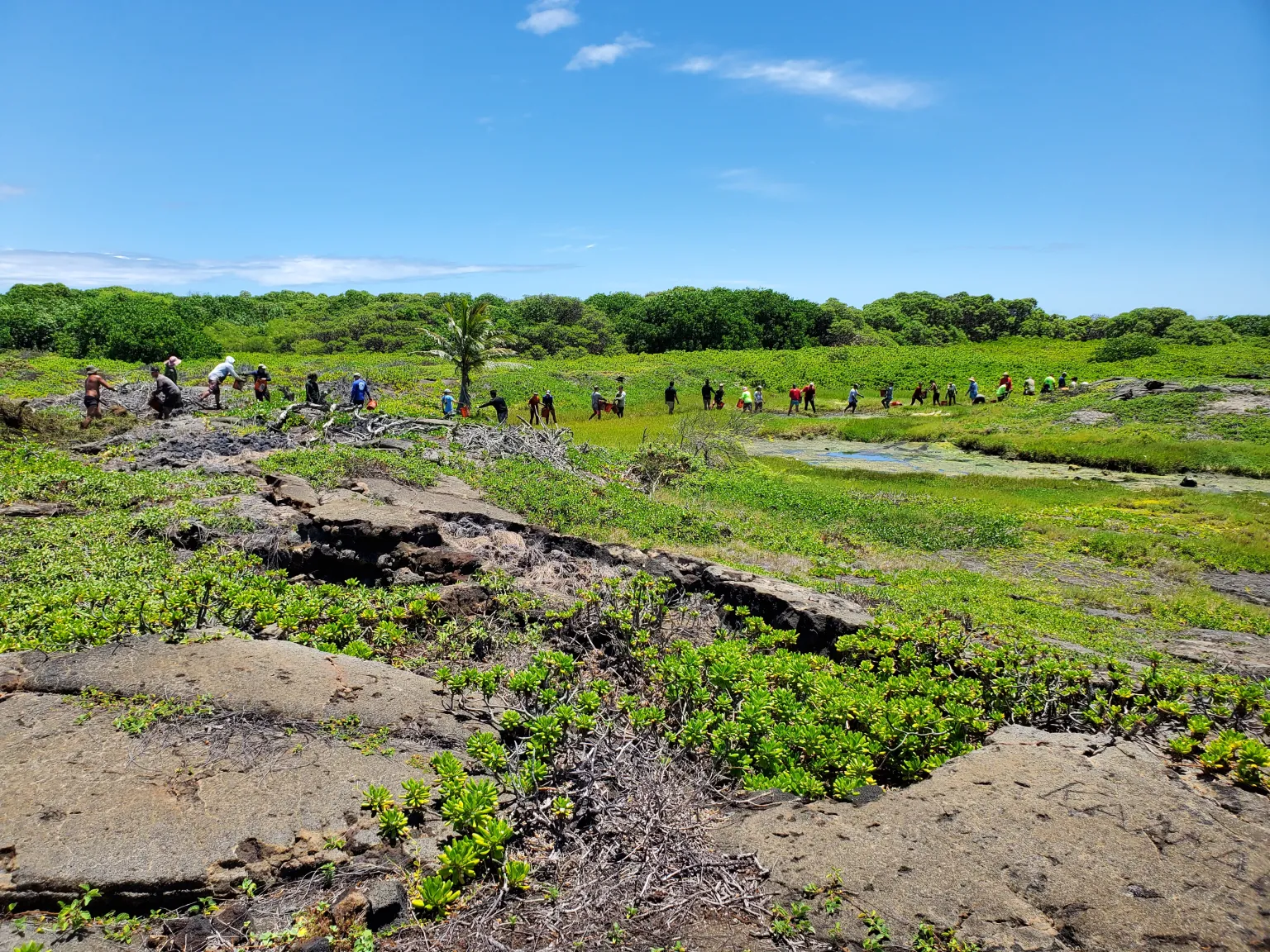
    Rising seas are changing Hawaiʻi Island's anchialine pools, rare brackish ecosystems connected to the ocean and fed by groundwater. More than 400 occur on the Kona Coast, where they support endemic species including ʻōpae ʻula shrimp, yet stronger waves, invasive fish, wastewater runoff and coastal development are putting them under growing pressure. Hui Loko, a collective of 23 groups, is restoring and protecting the pools through actions such as removing invasive weeds and fish while building public awareness of their ecological and cultural importance.

    Read more
    Turning the Tide: Hong Kong Seagrass Project Transforms Mudflats into Underwater Grassland
    Ocean & BiodiversityAugust 6, 2026

    Turning the Tide: Hong Kong Seagrass Project Transforms Mudflats into Underwater Grassland

    On Hong Kong's Lamma Island, researchers from the University of Hong Kong's Swire Institute of Marine Science are working with local people to restore seagrass in the waters off Sok Kwu Wan. Decades of coastal development had left parts of the seabed as bare mudflat, and the project is cultivating the native paddle grass, Halophila ovalis, for transplantation into marine meadows. Seagrass can improve water quality, reduce coastal erosion and provide nursery habitat for young marine life.

    Read more
    New Seychelles-EU Fisheries Deal Worth €23 Million Secures Local Jobs and Investment
    Ocean & BiodiversityJuly 30, 2026

    New Seychelles-EU Fisheries Deal Worth €23 Million Secures Local Jobs and Investment

    Seychelles and the European Union have signed a four-year protocol to their Sustainable Fisheries Partnership Agreement, allowing EU vessels to resume fishing for tuna and other migratory species in Seychelles' Exclusive Economic Zone. The agreement provides €23 million over four years, including €3 million for sustainable fisheries-sector support, alongside licence and catch fees paid by shipowners. By sustaining activity at Port Victoria and providing a reliable supply for tuna processing, the protocol is expected to safeguard maritime and shore-based jobs while supporting infrastructure, safety and modernisation for artisanal fishers.

    Read more
    Coral Reefs in Mauritius are Turning Ghostly White. Can Nurseries Rescue Them From Climate Change?
    Ocean & BiodiversityJuly 23, 2026

    Coral Reefs in Mauritius are Turning Ghostly White. Can Nurseries Rescue Them From Climate Change?

    Mauritius has lost roughly half of its coral cover since the 1970s as ocean warming, bleaching events and pollution place intense pressure on reefs that support biodiversity, fisheries, tourism and coastal protection. A national restoration project, backed by the Adaptation Fund and UNDP, is using coral nurseries and both sexual and asexual reproduction to restore degraded reef areas in Blue Bay Marine Park. Researchers are growing fragments before transplanting them to the seabed, while also exploring coral spawning as a route to resilient new colonies.

    Read more
    How a Community is Helping Sea Turtles Hatch in the Philippines' Palawan
    Ocean & BiodiversityJuly 23, 2026

    How a Community is Helping Sea Turtles Hatch in the Philippines' Palawan

    Community patrollers and researchers in Santo Nino, Palawan are helping protect vulnerable olive ridley turtles and their nests from dogs, storms and growing development pressure. During nesting season, local teams patrol the beach in shifts, document turtles and move threatened eggs to hatcheries where nests can be monitored and safely released. The project, led with the Large Marine Vertebrates Research Institute Philippines, combines local knowledge, conservation science and community participation to give hatchlings a stronger chance of reaching the sea.

    Read more
    A New Island Rose From the Sea in Iceland, But Everyone Except Scientists is Banned From Setting Foot. Here's Why.
    Ocean & BiodiversityJuly 14, 2026

    A New Island Rose From the Sea in Iceland, But Everyone Except Scientists is Banned From Setting Foot. Here's Why.

    A barren stretch of volcanic rock rising from the Atlantic Ocean may not sound like one of the world's most protected places, yet almost nobody is allowed to set foot on Iceland's Surtsey island. There are no permanent residents, hotels or tourist attractions, and even scientists need special permission to visit. Formed by an undersea volcanic eruption, Surtsey is one of the few places on Earth where researchers have been able to watch an ecosystem develop entirely from scratch.

    Read more